


Page 1800 - Williams Hematology ( PDFDrive )
P. 1800
1774  Part XI:  Malignant Lymphoid Diseases         Chapter 108:  Immunoglobulin Light-Chain Amyloidosis             1775


                                                                         TABLE 108–2.  Amyloid Syndromes Seen at the Mayo
                                                                         Clinic
                                                                                                       % Present
                                                                         Kidney                        67
                                                                         Heart                         47
                                                                         Peripheral nerve              12
                                                                         Liver                         12
                                                                         Autonomic nerve               4
                                                                         Carpal tunnel                 12
                                                                         Tongue                        9


                                                                            Table 108–2 gives the frequency of amyloid syndromes seen in
                                                                        patients at the Mayo Clinic. If an oncologist sees a patient with one
                                                                        of these five syndromes, or an internist is faced with an undiagnosed
                                                                        patient, laboratory evaluation is indicated, as outlined below.

                                                                        LABORATORY FEATURES

                                                                        The best screening tests for initial evaluation of patients with suspected
                                                                        amyloidosis are immunoelectrophoresis and immunofixation of both
                                                                        serum and urine and a serum immunoglobulin free light-chain assay
                                                                        (both κ and λ). Systemic immunoglobulin AL amyloidosis is a plasma
                                                                        cell dyscrasia, and 99 percent of patients will have a detectable abnor-
                                                                        mality of one of these three tests, reflecting synthesis by a clonal pop-
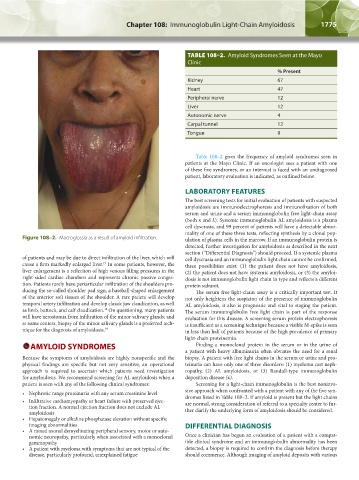
                  Figure 108–2.  Macroglossia as a result of amyloid infiltration.  ulation of plasma cells in the marrow. If an immunoglobulin protein is
                                                                        detected, further investigation for amyloidosis as described in the next
                                                                        section (“Differential Diagnosis”) should proceed. If a systemic plasma
                  of patients and may be due to direct infiltration of the liver, which will   cell dyscrasia and an immunoglobulin light chain cannot be confirmed,
                  cause a firm markedly enlarged liver.  In some patients, however, the   three possibilities exist: (1) the patient does not have amyloidosis,
                                             17
                  liver enlargement is a reflection of high venous filling pressures in the   (2) the patient does not have systemic amyloidosis, or (3) the amyloi-
                  right-sided cardiac chambers and represents chronic passive conges-  dosis is not immunoglobulin light chain in type and reflects a different
                  tion. Patients rarely have periarticular infiltration of the shoulders pro-  protein subunit.
                  ducing the so-called shoulder pad sign, a baseball-shaped enlargement   The serum free light-chain assay is a critically important test. It
                  of the anterior soft tissues of the shoulder. A rare patient will develop   not only heightens the suspicion of the presence of immunoglobulin
                  temporal artery infiltration and develop classic jaw claudication, as well   AL amyloidosis, it also is prognostic and vital to staging the patient.
                  as limb, buttock, and calf claudication.  On questioning, many patients   The serum immunoglobulin  free light chain  is part  of the  response
                                             18
                  will have xerostomia from infiltration of the minor salivary glands; and   evaluation for this disease. A screening serum protein electrophoresis
                  at some centers, biopsy of the minor salivary glands is a preferred tech-  is insufficient as a screening technique because a visible M-spike is seen
                  nique for the diagnosis of amyloidosis. 19            in less than half of patients because of the high prevalence of primary
                                                                        light-chain proteinemia.
                     AMYLOID SYNDROMES                                      Finding  a  monoclonal  protein  in  the  serum  or  in  the  urine  of
                                                                        a patient with heavy albuminuria often obviates the need for a renal
                  Because the symptoms of amyloidosis are highly nonspecific and the   biopsy. A patient with free light chains in the serum or urine and pro-
                  physical findings are specific but not very sensitive, an operational   teinuria can have only one of three disorders: (1) myeloma cast neph-
                  approach is required to ascertain which patients need investigation   ropathy, (2) AL amyloidosis, or (3) Randall-type immunoglobulin
                  for amyloidosis. We recommend screening for AL amyloidosis when a   deposition disease (κ).
                  patient is seen with any of the following clinical syndromes:  Screening for a light-chain immunoglobulin is the best noninva-
                  •  Nephrotic range proteinuria with any serum creatinine level  sive approach when confronted with a patient with any of the five syn-
                  •  Infiltrative cardiomyopathy or heart failure with preserved ejec-  dromes listed in Table  108–2. If amyloid is present but the light chains
                                                                        are normal, strong consideration of referral to a specialty center to fur-
                    tion fraction. A normal ejection fraction does not exclude AL
                    amyloidosis                                         ther clarify the underlying form of amyloidosis should be considered.
                  •  Hepatomegaly or alkaline phosphatase elevation without specific
                    imaging abnormalities                               DIFFERENTIAL DIAGNOSIS
                  •  A mixed axonal demyelinating peripheral sensory, motor or auto-
                    nomic neuropathy, particularly when associated with a monoclonal   Once a clinician has begun an evaluation of a patient with a compat-
                    gammopathy                                          ible clinical syndrome and an immunoglobulin abnormality has been
                  •  A patient with myeloma with symptoms that are not typical of the   detected, a biopsy is required to confirm the diagnosis before therapy
                    disease, particularly profound, unexplained fatigue  should commence. Although imaging of amyloid deposits with various


          Kaushansky_chapter 108_p1773-1784.indd   1775                                                                 9/18/15   9:53 AM

