


Page 45 - Williams Hematology ( PDFDrive )
P. 45
20  Part I:  Clinical Evaluation of the Patient                       Chapter 2:  Examination of Blood Cells            21


                  RED CELL MORPHOLOGY                                   densely stained and appear smaller because of their rounded shape, and
                  Normal erythrocytes on dried films are nearly uniform in size, with a   show decreased or absent central pallor. A red cell with a spot or disc
                  mean diameter of approximately 7.5 μm (normal and abnormal red cells   of hemoglobin within the central pale area is a target cell, in reality a
                  are described in more detail in Chap. 31). The normal-sized erythrocyte   cup-shaped cell that distorts as it is flattened on the glass slide. These
                  is about the diameter of the nucleus of a small lymphocyte. The MCV is   cells are typically found in disorders of hemoglobin synthesis (e.g., tha-
                  a more sensitive measure of red cell volume than the red cell diameter;   lassemia), liver disease, and postsplenectomy where the cell-surface-to-
                  however, an experienced observer should be able to recognize abnor-  cell-volume ratio is high. Chapter 31 describes the inclusions that may
                  malities in average red cell size when the MCV is significantly elevated   be observed in erythrocytes on blood films.
                  or decreased. Anisocytosis is the term that describes variation in ery-  Erythrocytes are usually distributed evenly throughout the blood
                  throcyte size, and is the morphologic correlate of the RDW. Macrocytes   film.  In some cases the  cells become aligned in  overlapping stacks,
                  and microcytes are red cells larger or smaller than normal, and their   referred to as rouleaux (Chap. 109), resembling overlapping rows of
                  presence consistent with the measured MCV suggests certain diagnos-  coins. Rouleaux are normal in the thick part of the film, but when found
                  tic possibilities. Early (“shift” or “stress”) reticulocytes (i.e., those with   in the optimal viewing portion of the film, suggest a pathologic increase
                  the most residual RNA) appear in stained films as large, slightly blu-  in immunoglobulin (Ig), particularly IgM-macroglobulinemia. Occa-
                  ish cells, referred to as polychromatophilic cells (Chap. 32). These cells   sionally, high concentrations of IgA or IgG in patients with myeloma
                  are roughly the morphologic counterpart of the immature reticulocyte   may also produce rouleaux.
                  fraction identified by automated instruments.             The blood film is also useful to identify red cells with basophilic
                     The normal erythrocyte on a blood film is circular with central   stippling (evidence of dyserythropoiesis), siderotic granules (evidence
                  pallor. Poikilocytosis is a term used to describe variations in the shape   of sideroblastic erythropoiesis), Heinz bodies (evidence of unstable
                  of erythrocytes. The predominant appearance of a specific abnormality   hemoglobins), and Howell-Jolly bodies (nuclear remnants). Microor-
                  in red cell shape can be an important diagnostic clue in patients with   ganisms other than malaria parasites also may be found in or attached
                  anemia (Fig. 2–5). Erythrocytes with evenly spaced spikes (echinocytes   to red cells (Chap. 53).
                  or crenated cells) can be an artifact caused by prolonged storage, or may
                  reflect metabolic erythrocyte abnormalities.          PLATELET MORPHOLOGY
                     The normal erythrocyte appears as a disc with a rim of hemoglobin   Platelets appear in normal stained blood film as small blue or colorless
                  and a clear central area, which normally occupies less than one-half the   bodies with red or purple granules (see Fig. 2–4). Normal platelets aver-
                  cell diameter. Increased central pallor (hypochromia) is associated with   age approximately 1 to 2 μm in diameter, but show wide variation in
                  disorders characterized by diminished hemoglobin synthesis, such as   shape, from round to elongated, cigar-shaped forms. In improperly pre-
                  iron deficiency (Chap. 42). Evaluation of red cell hemoglobin content,   pared films, platelets may form large aggregates in some areas and appear
                  as well as red cell size, is dependent on examining the proper part of   to be diminished or absent in others. The frequent occurrence of giant
                  the blood film. Cells at the far “feathered edge” will always be large and   platelets or platelet masses may indicate a myeloproliferative neoplasm
                  lack central pallor, whereas cells in the thick part of the film will look   or improper collection of the blood specimen. The latter circumstance
                  small and rounded and will also lack central pallor. A sharp refractile   can occur when venipuncture technique is faulty and platelets become
                  border demarcating the central area of pallor is an artifact secondary   activated before the blood sample is thoroughly mixed with anticoag-
                  to inadequate drying of the film before staining (associated with high   ulant. These platelet masses are apparent typically in the thin “feath-
                  humidity, and more common in anemic samples). Spherocytes are more   ered edge” of the film, with corresponding fewer platelets elsewhere.


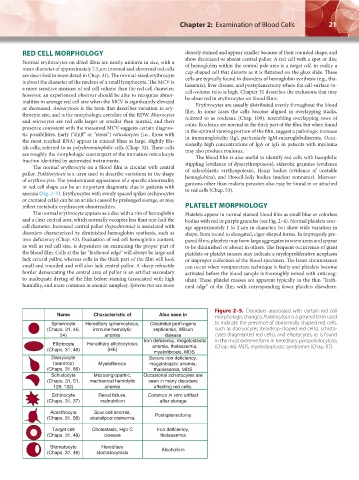
                                                                                  Figure 2–5.  Disorders associated with certain red cell
                             Name         Characteristic of     Also seen in      morphologic changes. Poikilocytosis is a general term used
                            Spherocyte  Hereditary spherocytosis,  Clostridial perfringens  to indicate the presence of abnormally shaped red cells,
                          (Chaps. 31, 46,  immune hemolytic   septicemia, Wilson  such as dacryocytes (teardrop-shaped red cells), schisto-
                              54)            anemia               disease         cytes (fragmented red cells), and elliptocytes, as is found
                                                          Iron deficiency, megaloblastic  in the most extreme form in hereditary pyropoikilocytosis
                            Elliptocyte  Hereditary elliptocytosis  anemia, thalassemia,  (Chap. 46). MDS, myelodysplastic syndromes (Chap. 87).
                          (Chaps. 31, 46)     (HE)            myelofibrosis, MDS
                            Dacryocyte                      Severe iron deficiency,
                            (teardrop)     Myelofibrosis    megaloblastic anemia,
                          (Chaps. 31, 86)                     thalassemia, MDS
                           Schistocyte    Microangiopathic,  Occasional schistocytes are
                          (Chaps. 31, 51,  mechanical hemolytic  seen in many disorders
                            129, 132)        anemia           affecting red cells.
                            Echinocyte     Renal failure,   Common in vitro artifact
                          (Chaps. 31, 37)   malnutrition        after storage
                           Acanthocyte    Spur cell anemia,
                          (Chaps. 31, 56)  abetalipoproteinemia  Postsplenectomy

                            Target cell  Cholestasis, Hgb C    Iron deficiency,
                          (Chaps. 31, 48)    disease            thalassemia
                           Stomatocyte      Hereditary
                          (Chaps. 31, 46)  stomatocytosis       Alcoholism


          Kaushansky_chapter 02_p0011-0026.indd   21                                                                    17/09/15   5:35 pm

