


Page 794 - Williams Hematology ( PDFDrive )
P. 794
768  Part VI:  The Erythrocyte  Chapter 49:  Disorders of Hemoglobin Structure: Sickle Cell Anemia and Related Abnormalities  769


                                                                        Hydroxyurea should be offered to all patients with any of the risk factors
                                                                        for increased mortality described above. 162
                                                                            Asthma, Abnormal Pulmonary Function  Tests, and Airway
                                                                        Hyperreactivity.  Asthma is a common comorbidity with high-
                                                                        er-than-average prevalence in patients with SCD and is associated with
                                                                        increased risk of ACS, VOE, stroke, and mortality. Airway hyperreac-
                                                                        tivity as evidenced by a positive bronchodilator response on pulmonary
                                                                        function testing, irrespective of baseline function, and in response to cold
                                                                        air or methacholine challenge, is seen in approximately two-thirds of
                                                                        SCD patients. Inflammation, hypoxemia, and increased oxidative stress
                                                                        associated with asthma may contribute to the vasculopathy of SCD. 163
                                                                            Pulmonary function tests collected as part of the Cooperative Study
                                                                        of Sickle Cell Disease (CSSCD) revealed abnormalities in 90 percent of
                                                                        the 310 patients, with the majority having restrictive lung disease .
                                                                            Asthma treatment follows general treatment guidelines as in the
                                                                        non-SCD populations. 164,165

                                                                        Cardiac Manifestations
                                                                        Anemia in SCD results in an elevated cardiac output secondary to
                                                                        an increased stroke volume with minimal increase in heart rate. 166,167
                                                                        Clinical manifestations of a hyperdynamic circulation include a force-
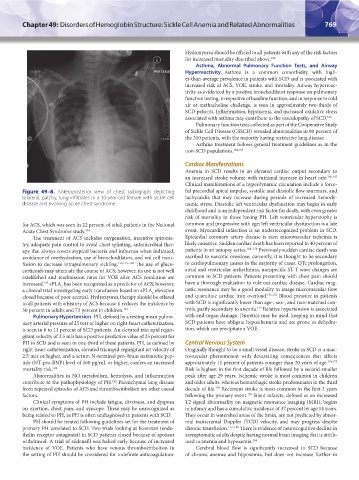
                  Figure 49–8.  Anteroposterior view of chest radiograph depicting   ful precordial apical impulse, systolic and diastolic flow murmurs, and
                  bilateral, patchy, lung infiltrates in a 30-year-old female with sickle cell   tachycardia that may increase during periods of increased hemody-
                  disease and evolving acute chest syndrome.            namic stress. Diastolic left ventricular dysfunction may begin in early
                                                                        childhood and is an independent risk factor for death, with even greater
                                                                        risk of mortality in those having PH. Left ventricular hypertrophy is
                  for ACS, which was seen in 22 percent of adult patients in the National   common and progressive with age; left ventricular dysfunction is a late
                  Acute Chest Syndrome study. 154                       event. Myocardial infarction is an underrecognized problem in SCD.
                     The treatment of ACS includes oxygenation, incentive spirome-  Epicardial coronary artery disease is rare; microvascular ischemia is
                  try, adequate pain control to avoid chest splinting, antimicrobial ther-  likely causative. Sudden cardiac death has been reported in 40 percent of
                  apy that always covers atypical bacteria and influenza when indicated,   patients in an autopsy series. 168–170  Previously sudden cardiac death was
                  avoidance of overhydration, use of bronchodilators, and red cell trans-  ascribed to narcotic overdose; currently, it is thought to be secondary
                  fusion to decrease intrapulmonary sickling. 152,155–160  The use of gluco-  to cardiopulmonary causes in the majority of cases. QTc prolongation,
                  corticoids may attenuate the course of ACS; however, its use is not well   atrial and ventricular arrhythmias, nonspecific ST-T wave changes are
                  established and readmission rates for VOE after ACS resolution are   common in SCD patients. Patients presenting with chest pain should
                  increased.  sPLA  has been recognized as a predictor of ACS; however,   have a thorough evaluation to rule out cardiac disease. Cardiac mag-
                         153
                               2
                  a clinical trial investigating early transfusion based on sPLA  elevation   netic resonance may be a good modality to image microvascular flow
                                                             2
                  closed because of poor accrual. Hydroxyurea therapy should be offered   and quantitate cardiac iron overload. 171,172  Blood pressure in patients
                  to all patients with a history of ACS because it reduces the incidence by   with SCD is significantly lower than age-, sex-, and race-matched con-
                                                                                                 173
                  50 percent in adults and 73 percent in children. 161  trols, partly secondary to anemia.  Relative hypertension is associated
                     Pulmonary Hypertension  PH, defined by a resting mean pulmo-  with end-organ damage. Diuretics may be used, keeping in mind that
                  nary arterial pressure of 25 torr or higher on right-heart catheterization,   SCD patients have obligate hyposthenuria and are prone to dehydra-
                  is seen in 6 to 11 percent of SCD patients. An elevated tricuspid regur-  tion, which can precipitate a VOE.
                  gitant velocity of 2.5 m/s has a positive predictive value of 25 percent for
                  PH in SCD and is seen in one-third of these patients. PH, as defined by   Central Nervous System
                  right-heart catheterization, elevated tricuspid regurgitant jet velocity of   Originally thought to be a small vessel disease, stroke in SCD is a mac-
                  2.5 m/s or higher, and a serum N-terminal pro–brain natriuretic pep-  rovascular phenomenon with devastating consequences  that affects
                  tide (NT-pro-BNP) level of 160 pg/mL or higher, confers an increased   approximately 11 percent of patients younger than 20 years of age. 174,175
                  mortality risk. 162                                   Risk is highest in the first decade of life followed by a second smaller
                     Abnormalities in NO metabolism, hemolysis, and inflammation   peak after age 29 years. Ischemic stroke is most common in children
                  contribute to the pathophysiology of PH.  Parenchymal lung disease   and older adults, whereas hemorrhagic stroke predominates in the third
                                                162
                                                                                   175
                  from repeated episodes of ACS and thromboembolism are other causal   decade of life.  Recurrent stroke is most common in the first 2 years
                  factors.                                              following the primary event.  Silent infarcts, defined as an increased
                                                                                             176
                     Clinical symptoms of PH include fatigue, dizziness, and dyspnea   T2 signal abnormality on magnetic resonance imaging (MRI), begins
                  on exertion, chest pain, and syncope. These may be unrecognized as   in infancy and has a cumulative incidence of 37 percent by age 14 years.
                  being related to PH, as PH is often undiagnosed in patients with SCD.  They occur in watershed areas of the brain, are not predicted by abnor-
                     PH should be treated following guidelines set for the treatment of   mal transcranial Doppler (TCD) velocity, and may progress despite
                  primary PH unrelated to SCD. Two trials looking at bosentan (endo-  chronic transfusion. 177–180  There is evidence of neurocognitive decline in
                  thelin receptor antagonist) in SCD patients closed because of sponsor   asymptomatic adults despite having normal brain imaging that is attrib-
                  withdrawal. A trial of sildenafil was halted early because of increased   uted to anemia and hypoxemia. 154
                  incidence of VOE. Patients who have venous thromboembolism in   Cerebral blood flow is significantly increased in SCD because
                  the setting of PH should be considered for indefinite anticoagulation.   of chronic anemia and hypoxemia, but does not increase further in


          Kaushansky_chapter 49_p0759-0788.indd   769                                                                   9/18/15   3:01 PM

