


Page 790 - Williams Hematology ( PDFDrive )
P. 790
764  Part VI:  The Erythrocyte  Chapter 49:  Disorders of Hemoglobin Structure: Sickle Cell Anemia and Related Abnormalities  765


                                                                        adhesion molecules are upregulated, including VCAM, selectins, inte-
                                                                        grins, the acute phase reactants C-reactive protein, secretory phospho-
                                                                        lipase A  (sPLA ), and coagulation factors are activated. 64–76  Placenta
                                                                              2
                                                                                    2
                                                                        growth factor (PIGF) released from erythrocytes activates monocytes
                                                                        to produce inflammatory cytokines and upregulates endothelin-1 sig-
                                                                        naling via the endothelin B receptor. Endothelin-1 is a potent vasocon-
                                                                        strictor and upregulation is associated with adverse outcomes in SCD.
                                                                        Placental growth factor has independently been shown to be correlated
                                                                        with disease severity as well. 77,78  Hemin has been demonstrated to acti-
                                                                        vate PIGF in mice via the erythroid Kruppel-like factor; consequently,
                                                                        PIGF may play an important role in the pathophysiology of iron over-
                                                                        load as well.  It is an open question whether inflammation is caused by
                                                                                 79
                                                                        abnormally adhesive red cells to the vascular endothelium or whether
                                                                        inflammation causes abnormal red cell adhesiveness. It is likely both
                                                                        occur, given that red cell adhesiveness incites endothelial activity, and
                                                                        infection-induced inflammation precipitates clinically significant vas-
                                                                        cular events in patients.
                                                                            The vascular beds in sickle cell anemia display changes akin to
                                                                        atherosclerotic vascular disease: large vessel intimal hyperplasia and
                                                                        smooth muscle proliferation. 80,81  However, the characteristic lipid laden
                                                                        plaques of atherosclerotic vascular disease are not present. 64

                                                                        Ischemia–Reperfusion Injury
                                                                        Akin to other disease states, such as myocardial infarction, resolution of
                                                                        vasoocclusion results in reperfusion injury characterized by increased
                                                                        oxygen free radical formation via activation of xanthine oxidase, gener-
                                                                        ation of oxidant stress, lipid peroxidation, upregulation of cellular adhe-
                                                                        sion molecules, and nuclear factor-κB, a key player in the inflammatory
                                                                        process. 64,82,83  iNKT cells propagate the inflammatory cascade in ischemia
                                                                        reperfusion injury and are increased and activated in patients with SCD.
                                                                        Agonists to adenosine 2A receptor (A R) on iNKT cells downregulate
                                                                                                    2A
                                                                        their activation and attenuate inflammation in mouse models of SCD. 84
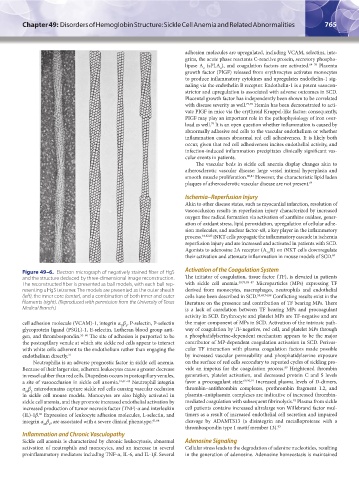
                  Figure 49–6.  Electron micrograph of negatively stained fiber of HgS   Activation of the Coagulation System
                  and the structure deduced by three-dimensional image reconstruction.   The initiator of coagulation, tissue factor (TF), is elevated in patients
                  The reconstructed fiber is presented as ball models, with each ball rep-  with sickle cell anemia. 40,74,85–87  Microparticles (MPs) expressing TF
                  resenting a HgS tetramer. The models are presented as the outer sheath   derived from monocytes, macrophages, neutrophils and endothelial
                  (left), the inner core (center), and a combination of both inner and outer   cells have been described in SCD. 58,68,74,88  Conflicting results exist in the
                  filaments (right). (Reproduced with permission from the University of Texas   literature on the presence and contribution of TF bearing MPs. There
                  Medical Branch.)                                      is a lack of correlation between TF bearing MPs and procoagulant
                                                                        activity in SCD. Erythrocyte and platelet MPs are TF-negative and are
                  cell adhesion molecule (VCAM)-1, integrin α β , P-selectin, P-selectin   the major component of MPs in SCD. Activation of the intrinsic path-
                                                   V 3
                  glycoprotein ligand (PSGL)-1, E-selectin, Lutheran blood group anti-  way of coagulation by TF-negative, red cell, and platelet MPs through
                  gen, and thrombospondin. 55–60  The site of adhesion is purported to be   a phosphatidylserine-dependent mechanism appears to be the major
                  the postcapillary venule at which site sickle red cells appear to interact   contributor of MP-dependent coagulation activation in SCD. Perivas-
                  with white cells adherent to the endothelium rather than engaging the   cular TF interaction with plasma coagulation factors made possible
                  endothelium directly. 31                              by  increased  vascular  permeability  and  phosphatidylserine  exposure
                     Neutrophilia is an adverse prognostic factor in sickle cell anemia.   on the surface of red cells secondary to repeated cycles of sickling pro-
                  Because of their larger size, adherent leukocytes cause a greater decrease   vide an impetus for the coagulation process.  Heightened thrombin
                                                                                                          89
                  in vessel caliber than red cells. Diapedesis occurs in postcapillary venules,   generation, platelet activation, and decreased protein C and S levels
                  a site of vasoocclusion in sickle cell anemia. 31,61–63  Neutrophil integrin   favor a procoagulant state. 69,90,91  Increased plasma levels of D-dimers,
                  α β  microdomains capture sickle red cells causing vascular occlusion   thrombin–antithrombin complexes, prothrombin fragment 1.2, and
                   M 2
                  in sickle cell mouse models. Monocytes are also highly activated in   plasmin–antiplasmin complexes are indicative of increased thrombin-
                  sickle cell anemia, and they promote increased endothelial activation by   mediated coagulation with subsequent fibrinolysis.  Plasma from sickle
                                                                                                             92
                  increased production of tumor necrosis factor (TNF)-α and interleukin   cell patients contains increased ultralarge von Willebrand factor mul-
                  (IL)-1β.  Expression of leukocyte adhesion molecules, L-selectin, and   timers as a result of increased endothelial cell secretion and impaired
                       60
                  integrin α β , are associated with a severe clinical phenotype. 61,64  cleavage by ADAMTS13 (a disintegrin and metalloprotease with a
                         M 2
                                                                        thrombospondin type 1 motif member 13). 93
                  Inflammation and Chronic Vasculopathy
                  Sickle cell anemia is characterized by chronic leukocytosis, abnormal   Adenosine Signaling
                  activation of neutrophils and monocytes, and an increase in several   Cellular stress leads to the degradation of adenine nucleotides, resulting
                  proinflammatory mediators including TNF-α, IL-6, and IL-1β. Several   in the generation of adenosine. Adenosine homeostasis is maintained


          Kaushansky_chapter 49_p0759-0788.indd   765                                                                   9/18/15   3:01 PM

