


Page 81 - Williams Hematology ( PDFDrive )
P. 81
56  Part II:  The Organization of the Lymphohematopoietic Tissues  Chapter 5:  Structure of the Marrow and the Hematopoietic Microenvironment  57


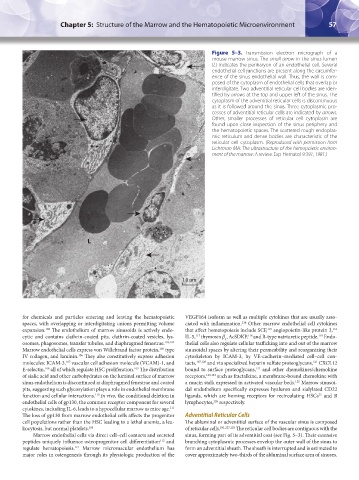
                                                                                 Figure 5–3.  Transmission  electron micrograph of a
                                                                                 mouse marrow sinus. The small arrow in the sinus lumen
                                                                                 (L) indicates the perikaryon of an endothelial cell. Several
                                                                                 endothelial cell junctions are present along the circumfer-
                                                                                 ence of the sinus endothelial wall. Thus, the wall is com-
                                                                                 posed of the cytoplasm of endothelial cells that overlap or
                                                                                 interdigitate. Two adventitial reticular cell bodies are iden-
                                                                                 tified by arrows at the top and upper left of the sinus. The
                                                                                 cytoplasm of the adventitial reticular cells is discontinuous
                                                                                 as it is followed around the sinus. Three cytoplasmic pro-
                                                                                 cesses of adventitial reticular cells are indicated by arrows.
                                                                                 Other, smaller processes of reticular cell cytoplasm are
                                                                                 found upon  close  inspection  of the sinus periphery and
                                                                                 the hematopoietic spaces. The scattered rough endoplas-
                                                                                 mic reticulum and dense bodies are characteristic of the
                                                                                 reticular cell cytoplasm. (Reproduced with permission from
                                                                                 Lichtman MA: The ultrastructure of the hemopoietic environ-
                                                                                 ment of the marrow: A review. Exp Hematol 9:391, 1981.)


                                        L


                                                                       1.0 µm


                  for chemicals and particles entering and leaving the hematopoietic   VEGF164 isoform as well as multiple cytokines that are usually asso-
                  spaces, with overlapping or interdigitating unions permitting volume   ciated with inflammation.  Other marrow endothelial cell cytokines
                                                                                           114
                  expansion.  The endothelium of marrow sinusoids is actively endo-  that affect hematopoiesis include SCF,  angiopoietin-like protein 3,
                                                                                                                          116
                                                                                                    115
                          102
                  cytic and contains clathrin-coated pits, clathrin-coated vesicles, lys-  IL-5,  thymosin β , AcSDKP,  and B-type natriuretic peptide.  Endo-
                                                                                                                     119
                                                                                             118
                                                                            117
                                                                                      4
                  osomes, phagosomes, transfer tubules, and diaphragmed fenestrae. 103,104    thelial cells also regulate cellular trafficking into and out of the marrow
                  Marrow endothelial cells express von Willebrand factor protein,  type   sinusoidal spaces by altering their permeability and reorganizing their
                                                                105
                  IV collagen, and laminin.  They also constitutively express adhesion   cytoskeleton by ICAM-3, by VE-cadherin–mediated cell–cell con-
                                     106
                  molecules: ICAM-3,  vascular cell adhesion molecule (VCAM)-1, and   tacts, 107,120  and via specialized heparin sulfate proteoglycans,  CXCL12
                                107
                                                                                                                   121
                  E-selectin,  all of which regulate HSC proliferation.  The distribution   bound to surface proteoglycans,  and other chemokines/chemokine
                                                                                                122
                                                       109
                         108
                  of sialic acid and other carbohydrates on the luminal surface of marrow   receptors, 123,124  such as fractalkine, a membrane-bound chemokine with
                  sinus endothelium is discontinued at diaphragmed fenestrae and coated   a mucin stalk expressed in activated vascular beds.  Marrow sinusoi-
                                                                                                             125
                  pits, suggesting such glycosylation plays a role in endothelial membrane   dal endothelium specifically expresses hyaluron and sialylated CD22
                  function and cellular interactions.  In vivo, the conditional deletion in   ligands, which are homing receptors for recirculating HSCs  and B
                                          110
                                                                                                                     75
                  endothelial cells of gp130, the common receptor component for several   lymphocytes,  respectively.
                                                                                  126
                  cytokines, including IL-6, leads to a hypocellular marrow as mice age.
                                                                   111
                  The loss of gp130 from marrow endothelial cells affects the progenitor   Adventitial Reticular Cells
                  cell populations rather than the HSC leading to a lethal anemia, a leu-  The abluminal or adventitial surface of the vascular sinus is composed
                  kocytosis, but normal platelets. 108                  of reticular cells. 101,127,128  The reticular cell bodies are contiguous with the
                     Marrow endothelial cells via direct cell–cell contacts and secreted   sinus, forming part of its adventitial coat (see Fig. 5–3). Their extensive
                  peptides uniquely influence osteoprogenitor cell differentiation  and   branching cytoplasmic processes envelop the outer wall of the sinus to
                                                                112
                  regulate hematopoiesis.  Marrow microvascular endothelium has   form an adventitial sheath. The sheath is interrupted and is estimated to
                                   113
                  major roles in osteogenesis through its physiologic production of the   cover approximately two-thirds of the abluminal surface area of sinuses.
          Kaushansky_chapter 05_p0051-0084.indd   57                                                                    9/19/15   12:10 AM

