


Page 877 - Williams Hematology ( PDFDrive )
P. 877
852            Part VI:  The Erythrocyte                                                                                                          Chapter 55:  Alloimmune Hemolytic Disease of the Fetus and Newborn               853


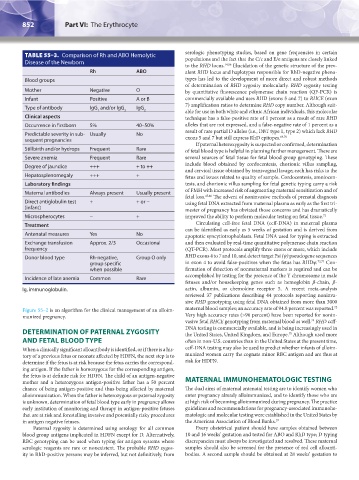
                TABLE 55–3.  Comparison of Rh and ABO Hemolytic       serologic phenotyping studies,  based on  gene frequencies in certain
                                                                      populations and the fact that the C/c and E/e antigens are closely linked
                Disease of the Newborn
                                                                      to the RHD locus. 14,56  Elucidation of the genetic structure of the prev-
                                      Rh              ABO             alent RHD locus and haplotypes responsible for RhD-negative pheno-
                Blood groups                                          types has led to the development of more direct and robust methods
                                                                      of determination of RHD zygosity molecularly. RHD zygosity testing
                Mother                Negative        O               by quantitative fluorescence polymerase chain reaction (QF-PCR) is
                Infant                Positive        A or B          commercially available and uses RHD (exons 5 and 7) to RHCE (exon
                                                                      7) amplification ratios to determine RHD copy number. Although suit-
                Type of antibody      IgG  and/or IgG  IgG
                                         1        3     2             able for use in both white and ethnic African individuals, this molecular
                Clinical aspects                                      technique has a false-positive rate of 1 percent as a result of rare RHD
                Occurrence in firstborn  5%           40–50%          alleles that are not expressed, and a false-negative rate of 1 percent as a
                                                                      result of rare partial D alleles (i.e., DBT type 1, type 2) which lack RHD
                Predictable severity in sub- Usually  No                                              69,70
                sequent pregnancies                                   exons 5 and 7 but still express RhD epitopes.
                                                                          If paternal heterozygosity is suspected or confirmed, determination
                Stillbirth and/or hydrops  Frequent   Rare            of fetal blood type is helpful in planning further management. There are
                Severe anemia         Frequent        Rare            several sources of fetal tissue for fetal blood group genotyping. These
                Degree of jaundice    +++             + to ++         include blood obtained by cordocentesis, chorionic villus sampling,
                                                                      and cervical tissue obtained by transvaginal lavage; each has risks to the
                Hepatosplenomegaly    +++             +               fetus and issues related to quality of sample. Cordocentesis, amniocen-
                Laboratory findings                                   tesis, and chorionic villus sampling for fetal genetic typing carry a risk
                Maternal antibodies   Always present  Usually present  of FMH with increased risk of augmenting maternal sensitization and of
                                                                      fetal loss. 45,46  The advent of noninvasive methods of prenatal diagnosis
                Direct antiglobulin test   +          + or −          using fetal DNA extracted from maternal plasma as early as the first tri-
                (infant)                                              mester of pregnancy has obviated those concerns and has dramatically
                Microspherocytes      −               +               improved the ability to perform molecular testing on fetal tissue. 71
                Treatment                                                 Circulating cell-free fetal DNA (ccff-DNA) in maternal plasma
                                                                      can be identified as early as 5 weeks of gestation and is derived from
                Antenatal measures    Yes             No              apoptotic syncytiotrophoblasts. Fetal DNA used for typing is extracted
                Exchange transfusion   Approx. 2/3    Occasional      and then evaluated by real-time quantitative polymerase chain reaction
                frequency                                             (QT-PCR). Most protocols amplify three exons or more, which include
                Donor blood type      Rh-negative,    Group O only    RHD exons 4 to 7 and 10, and detect target Psi (ψ) pseudogene sequences
                                      group specific                  in exon 4 to avoid false-positives when the fetus has RHDψ. 72,73  Con-
                                      when possible                   firmation of detection of nonmaternal markers is required and can be
                                                                      accomplished by testing for the presence of the Y chromosome in male
                Incidence of late anemia  Common      Rare
                                                                      fetuses and/or housekeeping genes such as hemoglobin  β-chain,  β-
               Ig, immunoglobulin.                                    actin,  albumin, or chemokine receptor 5. A recent meta-analysis
                                                                      reviewed 37 publications describing 44 protocols reporting noninva-
                                                                      sive RHD genotyping using fetal DNA obtained from more than 3000
                                                                                                                        72
               Figure 55–2 is an algorithm for the clinical management of an alloim-  maternal blood samples; an accuracy rate of 94.8 percent was reported.
               munized pregnancy.                                     Very high accuracy rates (>96 percent) have been reported for nonin-
                                                                                                                74
                                                                      vasive fetal RHCE genotyping from maternal blood as well.  RHD ccff-
               DETERMINATION OF PATERNAL ZYGOSITY                     DNA testing is commercially available, and is being increasingly used in
                                                                                                         75
                                                                      the United States, United Kingdom, and Europe.  Although used more
               AND FETAL BLOOD TYPE                                   often in non-U.S. countries than in the United States at the present time,
               When a clinically significant alloantibody is identified, or if there is a his-  ccff-DNA testing may also be used to predict whether infants of alloim-
               tory of a previous fetus or neonate affected by HDFN, the next step is to   munized women carry the cognate minor RBC antigen and are thus at
               determine if the fetus is at risk because the fetus carries the correspond-  risk for HDFN.
               ing antigen. If the father is homozygous for the corresponding antigen,
               the fetus is at definite risk for HDFN. The child of an antigen-negative
               mother and a heterozygous antigen-positive father has a 50 percent   MATERNAL IMMUNOHEMATOLOGIC TESTING
               chance of being antigen-positive and thus being affected by maternal   The dual aims of maternal antenatal testing are to identify women who
               alloimmunization. When the father is heterozygous or paternal zygosity   enter pregnancy already alloimmunized, and to identify those who are
               is unknown, determination of fetal blood type early in pregnancy allows   at high risk of becoming alloimmunized during pregnancy. The practice
               early institution of monitoring and therapy in antigen-positive fetuses   guidelines and recommendations for pregnancy-associated immunohe-
               that are at risk and forestalling invasive and potentially risky procedures   matologic and molecular testing were established in the United States by
               in antigen negative fetuses.                           the American Association of Blood Banks. 57
                   Paternal zygosity is determined using serology for all common   Every obstetrical patient should have samples obtained between
               blood group antigens implicated in HDFN except for D. Alternatively,   10 and 16 weeks’ gestation and tested for ABO and RhD type; D typing
               RBC genotyping can be used when typing for antigen systems where   discrepancies must always be investigated and resolved. These maternal
               serologic reagents are rare or nonexistent. The probable RHD zygos-  samples should also be screened for the presence of red cell alloanti-
               ity in RhD-positive persons may be inferred, but not definitively, from   bodies. A second sample should be obtained at 28 weeks’ gestation to


          Kaushansky_chapter 55_p0847-0862.indd   852                                                                   9/18/15   11:52 PM

