


Page 878 - Williams Hematology ( PDFDrive )
P. 878
852  Part VI:  The Erythrocyte       Chapter 55:  Alloimmune Hemolytic Disease of the Fetus and Newborn               853


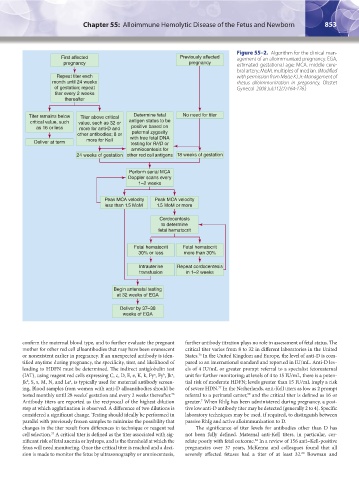
                                                                                          Figure 55–2.  Algorithm for the clinical man-
                               First affected                          Previously affected  agement of an alloimmunized pregnancy. EGA,
                                pregnancy                                 pregnancy       estimated gestational age; MCA, middle cere-
                                                                                          bral artery; MoM, multiples of median. (Modified
                             Repeat titer each                                            with permission from Moise KJ Jr: Management of
                            month until 24 weeks                                          rhesus alloimmunization in pregnancy.  Obstet
                             of gestation; repeat                                         Gynecol  2008 Jul;112(1):164-176.)
                             titer every 2 weeks
                                thereafter


                    Titer remains below  Titer above critical  Determine fetal  No need for titer
                    critical value, such  value, such as 32 or  antigen status to be
                      as 16 or less  more for anti-D and  positive based on
                                                       paternal zygosity
                                    other antibodies; 8 or  with free fetal DNA
                      Deliver at term  more for Kell  testing for RHD or
                                                      amniocentesis for
                                    24 weeks of gestation other red cell antigens 18 weeks of gestation


                                                      Perform serial MCA
                                                     Doppler scans every
                                                         1–2 weeks

                                             Peak MCA velocity  Peak MCA velocity
                                             less than 1.5 MoM  1.5 MoM or more

                                                                Cordocentesis
                                                                to determine
                                                               fetal hematocrit

                                                       Fetal hematocrit  Fetal hematocrit
                                                         30% or less    more than 30%

                                                         Intrauterine  Repeat cordocentesis
                                                         transfusion     in 1–2 weeks

                                                Begin antenatal testing
                                                 at 32 weeks of EGA

                                                   Deliver by 37–38
                                                   weeks of EGA


                  confirm the maternal blood type, and to further evaluate the pregnant   further antibody titration plays no role in assessment of fetal status. The
                  mother for other red cell alloantibodies that may have been evanescent   critical titer varies from 8 to 32 in different laboratories in the United
                  or nonexistent earlier in pregnancy. If an unexpected antibody is iden-  States.  In the United Kingdom and Europe, the level of anti-D is com-
                                                                             76
                  tified anytime during pregnancy, the specificity, titer, and likelihood of   pared to an international standard and reported in IU/mL. Anti-D lev-
                  leading to HDFN must be determined. The indirect antiglobulin test   els of 4 IU/mL or greater prompt referral to a specialist fetomaternal
                  (IAT), using reagent red cells expressing C, c, D, E, e, K, k, Fy , Fy , Jk ,   unit for further monitoring; at levels of 4 to 15 IU/mL, there is a poten-
                                                                 b
                                                                    a
                                                              a
                  Jk , S, s, M, N, and Le , is typically used for maternal antibody screen-  tial risk of moderate HDFN; levels greater than 15 IU/mL imply a risk
                   b
                                  a
                  ing, Blood samples from women with anti-D alloantibodies should be   of severe HDN.  In the Netherlands, anti-Kell titers as low as 2 prompt
                                                                                    77
                  tested monthly until 28 weeks’ gestation and every 2 weeks thereafter.    referral to a perinatal center,  and the critical titer is defined as 16 or
                                                                                             59
                                                                    76
                  Antibody titers are reported as the reciprocal of the highest dilution   greater.  When RhIg has been administered during pregnancy, a posi-
                                                                              7
                  step at which agglutination is observed. A difference of two dilutions is   tive low anti-D antibody titer may be detected (generally 2 to 4). Specific
                  considered a significant change. Testing should ideally be performed in   laboratory techniques may be used, if required, to distinguish between
                  parallel with previously frozen samples to minimize the possibility that   passive RhIg and active alloimmunization to D.
                  changes in the titer result from differences in technique or reagent red   The significance of titer levels for antibodies other than D has
                  cell selection.  A critical titer is defined as the titer associated with sig-  not been fully defined. Maternal anti-Kell titers, in particular, cor-
                           57
                  nificant risk of fetal anemia or hydrops, and is the threshold at which the   relate poorly with fetal outcome.  In a review of 156 anti–Kell-positive
                                                                                                62
                  fetus will need monitoring. Once the critical titer is reached and a deci-  pregnancies over 37 years, McKenna and colleagues found that all
                  sion is made to monitor the fetus by ultrasonography or amniocentesis,   severely affected fetuses had a titer of at least 32.  Bowman and
                                                                                                               60
          Kaushansky_chapter 55_p0847-0862.indd   853                                                                   9/18/15   11:52 PM

