


Page 97 - Williams Hematology ( PDFDrive )
P. 97
72  Part II:  The Organization of the Lymphohematopoietic Tissues  Chapter 5:  Structure of the Marrow and the Hematopoietic Microenvironment  73


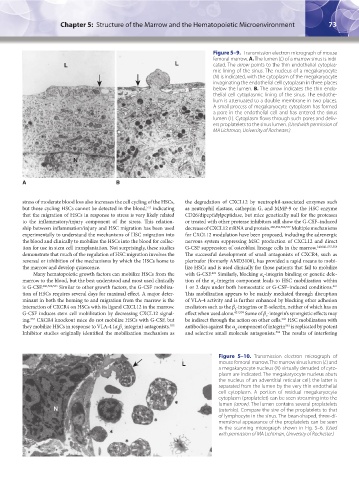
                                                                                  Figure 5–9.  Transmission electron micrograph of mouse
                                                                                  femoral marrow. A. The lumen (L) of a marrow sinus is indi-
                                L                                    L            cated. The arrow points to the thin endothelial cytoplas-
                                                                                  mic lining of the sinus. The nucleus of a megakaryocyte
                                                                                  (N) is indicated, with the cytoplasm of the megakaryocyte
                                                                                  invaginating the endothelial cell cytoplasm in three places
                                                                                  below the lumen. B. The arrow indicates the thin endo-
                                                                                  thelial cell cytoplasmic lining of the sinus. The endothe-
                                                                                  lium is attenuated to a double membrane in two places.
                                                                                  A small process of megakaryocyte cytoplasm has formed
                                                                                  a pore in the endothelial cell and has entered the sinus
                                                                                  lumen (L). Cytoplasm flows through such pores and deliv-
                                                                                  ers proplatelets to the sinus lumen. (Used with permission of
                                                                                  MA Lichtman, University of Rochester.)


                                   N


                  A A                            B


                  stress of moderate blood loss also increases the cell cycling of the HSCs,   the degradation of CXCL12 by neutrophil-associated enzymes such
                  but those cycling HSCs cannot be detected in the blood,  indicating   as neutrophil elastase, cathepsin G, and MMP-9 or the HSC enzyme
                                                           552
                  that the migration of HSCs in response to stress is very likely related   CD26/dipeptidylpeptidase, but mice genetically null for the proteases
                  to the inflammatory/injury component of the stress. This relation-  or treated with other protease inhibitors still show the G-CSF–induced
                  ship between inflammation/injury and HSC migration has been used   decrease of CXCL12 mRNA and protein. 480,553,556,557  Multiple mechanisms
                  experimentally to understand the mechanisms of HSC migration into   for CXCL12 modulation have been proposed, including the adrenergic
                  the blood and clinically to mobilize the HSCs into the blood for collec-  nervous system suppressing MSC production of  CXCL12 and direct
                  tion for use in stem cell transplantation. Not surprisingly, these studies   G-CSF suppression of osteoblast lineage cells in the marrow. 140,141,557,558
                  demonstrate that much of the regulation of HSC migration involves the   The successful development of small antagonists of CXCR4, such as
                  reversal or inhibition of the mechanisms by which the HSCs home to   plerixafor (formerly AMD3100), has provided a rapid means to mobi-
                  the marrow and develop quiescence.                    lize HSCs and is used clinically for those patients that fail to mobilize
                     Many hematopoietic growth factors can mobilize HSCs from the   with G-CSF.  Similarly, blocking α -integrin binding or genetic dele-
                                                                                 421
                                                                                                  4
                  marrow to the blood, but the best understood and most used clinically   tion of the α -integrin component leads to HSC mobilization within
                                                                                  4
                  is G-CSF. 480,506,553  Similar to other growth factors, the G-CSF mobiliza-  1 or 2 days under both homeostatic or G-CSF–induced conditions.
                                                                                                                          421
                  tion of HSCs requires several days for maximal effect. A major deter-  This mobilization appears to be mainly mediated through disruption
                  minant in both the homing to and migration from the marrow is the   of VLA-4 activity and is further enhanced by blocking other adhesion
                  interaction of CXCR4 on HSCs with its ligand CXCL12 in the marrow.   mediators such as the β -integrins or E-selectin, neither of which has an
                                                                                         2
                  G-CSF induces stem cell mobilization by decreasing CXCL12 signal-  effect when used alone. 421,559  Some of β -integrin’s synergistic effects may
                                                                                                    2
                  ing.  CXCR4 knockout mice do not mobilize HSCs with G-CSF, but   be indirect through the action on other cells.  HSC mobilization with
                     554
                                                                                                         560
                  they mobilize HSCs in response to VLA-4 (α β  integrin) antagonists.    antibodies against the α  component of integrin  is replicated by potent
                                                                                                          561
                                                                   555
                                                                                         4
                                                  4 1
                  Inhibitor studies originally identified the mobilization mechanism as   and selective small molecule antagonists.  The results of interfering
                                                                                                       562
                                                                                    Figure 5–10.  Transmission electron micrograph of
                                                                       L            mouse femoral marrow. The marrow sinus lumen (L) and
                                                                                    a megakaryocyte nucleus (N) virtually denuded of cyto-
                                                                                    plasm are indicated. The megakaryocyte nucleus abuts
                                                                                    the nucleus of an adventitial reticular cell; the latter is
                                                                                    separated from the lumen by the very thin endothelial
                                                                                    cell cytoplasm. A portion of residual megakaryocyte
                                                                     ∗              cytoplasm (proplatelet) can be seen streaming into the
                                                                                    lumen (arrow). The lumen contains several proplatelets
                            N                                                       (asterisks). Compare the size of the proplatelets to that
                                                              ∗                     of lymphocyte in the sinus. The bean-shaped, three-di-
                                                                                    mensional appearance of the proplatelets can be seen
                                               ∗                                    in the scanning micrograph shown in Fig. 5–6.  (Used
                                                                                    with permission of MA Lichtman, University of Rochester.)
                                                    ∗


          Kaushansky_chapter 05_p0051-0084.indd   73                                                                    9/19/15   12:11 AM

