


Page 1070 - Clinical Immunology_ Principles and Practice ( PDFDrive )
P. 1070
ChaPTEr 77  Immunotherapy of Cancer               1035


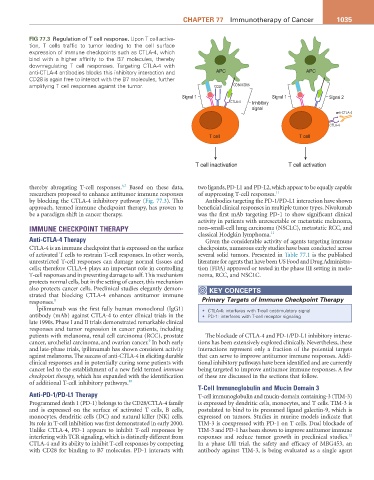
           Fig 77.3  Regulation of T cell response. Upon T cell activa-
           tion, T cells traffic to tumor leading to the cell surface
           expression of immune checkpoints such as CTLA-4, which
           bind with a higher affinity to the B7 molecules, thereby
           downregulating  T  cell  responses.  Targeting  CTLA-4 with
           anti-CTLA-4 antibodies blocks this inhibitory interaction and   APC                       APC
           CD28 is again free to interact with the B7 molecules, further
           amplifying T cell responses against the tumor.              CD28  CD80/CD86
                                                             Signal 1                     Signal 1           Signal 2
                                                                            CTLA-4  Inhibitory
                                                                                    signal
                                                                                                               anti-CTLA-4
                                                                                                             CTLA-4
                                                                     T cell                        T cell


                                                                 T cell inactivation           T cell activation


                                         6,7
           thereby  abrogating  T-cell  responses.   Based  on  these  data,   two ligands, PD-L1 and PD-L2, which appear to be equally capable
           researchers proposed to enhance antitumor immune responses   of suppressing T-cell responses. 11
           by blocking the CTLA-4 inhibitory pathway (Fig. 77.3). This   Antibodies targeting the PD-1/PD-L1 interaction have shown
           approach, termed immune checkpoint therapy, has proven to   beneficial clinical responses in multiple tumor types. Nivolumab
           be a paradigm shift in cancer therapy.                 was the first mAb targeting PD-1 to show significant clinical
                                                                  activity in patients with unresectable or metastatic melanoma,
           IMMUNE CHECKPOINT THERAPY                              non–small-cell lung carcinoma (NSCLC), metastatic RCC, and
                                                                  classical Hodgkin lymphoma. 11
           Anti-CTLA-4 Therapy                                      Given the considerable activity of agents targeting immune
           CTLA-4 is an immune checkpoint that is expressed on the surface   checkpoints, numerous early studies have been conducted across
           of activated T cells to restrain T-cell responses. In other words,   several solid tumors. Presented in Table 77.1 is the published
           unrestricted T-cell responses can damage normal tissues and   literature for agents that have been US Food and Drug Administra-
           cells; therefore CTLA-4 plays an important role in controlling   tion (FDA) approved or tested in the phase III setting in mela-
           T-cell responses and in preventing damage to self. This mechanism   noma, RCC, and NSCLC.
           protects normal cells, but in the setting of cancer, this mechanism
           also protects cancer cells. Preclinical studies elegantly demon-   KEY CONCEPTS
           strated that blocking CTLA-4 enhances antitumor immune
           responses. 8                                            Primary Targets of Immune Checkpoint Therapy
             Ipilimumab was the first fully human  monoclonal (IgG1)   •  CTLA-4: interferes with T-cell costimulatory signal
           antibody (mAb) against CTLA-4 to enter clinical trials in the   •  PD-1: interferes with T-cell receptor signaling
           late 1990s. Phase I and II trials demonstrated remarkable clinical
           responses and tumor regression in cancer patients, including
           patients with melanoma, renal cell carcinoma (RCC), prostate   The blockade of CTLA-4 and PD-1/PD-L1 inhibitory interac-
                                                  9
           cancer, urothelial carcinoma, and ovarian cancer.  In both early   tions has been extensively explored clinically. Nevertheless, these
           and late-phase trials, ipilimumab has shown consistent activity   interactions represent only a fraction of the potential targets
           against melanoma. The success of anti-CTLA-4 in eliciting durable   that can serve to improve antitumor immune responses. Addi-
           clinical responses and in potentially curing some patients with   tional inhibitory pathways have been identified and are currently
           cancer led to the establishment of a new field termed immune   being targeted to improve antitumor immune responses. A few
           checkpoint therapy, which has expanded with the identification   of these are discussed in the sections that follow.
           of additional T-cell inhibitory pathways. 10
                                                                  T-Cell Immunoglobulin and Mucin Domain 3
           Anti-PD-1/PD-L1 Therapy                                T-cell immunoglobulin and mucin-domain containing-3 (TIM-3)
           Programmed death 1 (PD-1) belongs to the CD28/CTLA-4 family   is expressed by dendritic cells, monocytes, and T cells. TIM-3 is
           and is expressed on the surface of activated T cells, B cells,   postulated to bind to its presumed ligand galectin-9, which is
           monocytes, dendritic cells (DC) and natural killer (NK) cells.   expressed on tumors. Studies in murine models indicate that
           Its role in T-cell inhibition was first demonstrated in early 2000.   TIM-3 is coexpressed with PD-1 on T cells. Dual blockade of
           Unlike CTLA-4, PD-1 appears to inhibit T-cell responses by   TIM-3 and PD-1 has been shown to improve antitumor immune
                                                                                                                   12
           interfering with TCR signaling, which is distinctly different from   responses and reduce tumor growth in preclinical studies.
           CTLA-4 and its ability to inhibit T-cell responses by competing   In a phase I/II trial, the safety and efficacy of MBG453, an
           with CD28 for binding to B7 molecules. PD-1 interacts with   antibody against TIM-3, is being evaluated as a single agent

