


Page 1069 - Clinical Immunology_ Principles and Practice ( PDFDrive )
P. 1069
1034         ParT EighT  Immunology of Neoplasia


                                                Immune            Other inhibitory
                                             checkpoint therapy  immune checkpoints
                                                Anti-CTLA-4          TIM-3
                                               Anti-PD-1/PD-L1       LAG-3
                                                                     VISTA

                                                                             Immune
                                      Oncolytic virus                      costimulatory
                                      immunotherapy                         molecules
                                                                              ICOS
                                       IMLYGIC (T-VEC)
                                                                              4-1BB
                                                                              OX40
                                       Cancer                                 Adoptive
                                      vaccines                               cell therapy
                                    Preventative vaccines                    Viral specific T cells
                                    Therapeutic vaccines                      CAR T cells
                                                                               T cells


                                              Cytokine                Monoclonal
                                              therapy                 antibodies
                                               IFN-α2b               Conjugated mAbs
                                                IL-2                  Bispecific mAbs
                                                                      Naked mAbs


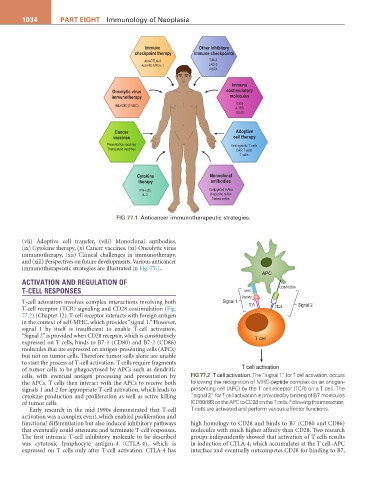
                                       Fig 77.1  Anticancer immunotherapeutic strategies.


        (vii)  Adoptive cell transfer, (viii) Monoclonal antibodies,
        (ix) Cytokine therapy, (x) Cancer vaccines, (xi) Oncolytic virus
        immunotherapy, (xii) Clinical challenges in immunotherapy,
        and (xiii) Perspectives on future developments. Various anticancer
        immunotherapeutic strategies are illustrated in Fig. 77.1.
                                                                                       APC
        ACTIVATION AND REGULATION OF
        T-CELL RESPONSES                                                         MHC        CD80/CD86
                                                                                Peptide
        T-cell activation involves complex interactions involving both    Signal 1  TCR            Signal 2
        T-cell receptor (TCR) signaling and CD28 costimulation (Fig.                       CD28
        77.2) (Chapter 12). T-cell receptor interacts with foreign antigen
        in the context of self-MHC, which provides “signal 1.” However,
        signal 1 by itself is insufficient to enable T-cell activation.
        “Signal 2” is provided when CD28 receptor, which is constitutively          T cell
        expressed on T cells, binds to B7-1 (CD80) and B7-2 (CD86)
        molecules that are expressed on antigen-presenting cells (APCs)
        but not on tumor cells. Therefore tumor cells alone are unable
        to start the process of T-cell activation. T cells require fragments
        of tumor cells to be phagocytosed by APCs such as dendritic             T cell activation
        cells, with eventual antigen processing and presentation by    Fig 77.2  T cell activation. The “signal 1” for T cell activation, occurs
        the APCs. T cells then interact with the APCs to receive both   following the recognition of MHC-peptide complex on an antigen-
        signals 1 and 2 for appropriate T-cell activation, which leads to   presenting cell (APC) by the T cell receptor (TCR) on a T cell. The
        cytokine production and proliferation as well as active killing   “signal 2” for T cell activation is provided by binding of B7 molecules
        of tumor cells.                                        (CD80/ 86) on the APC to CD28 on the T cells. Following this interaction,
           Early research in the mid-1990s demonstrated that T-cell   T cells are activated and perform various effector functions.
        activation was a complex event, which enabled proliferation and
        functional differentiation but also induced inhibitory pathways   high homology to CD28 and binds to B7 (CD80 and CD86)
        that eventually could attenuate and terminate T-cell responses.   molecules with much higher affinity than CD28. Two research
        The first intrinsic T-cell inhibitory molecule to be described     groups independently showed that activation of T cells results
        was cytotoxic lymphocyte antigen-4 (CTLA-4), which is    in induction of CTLA-4, which accumulates at the T cell–APC
        expressed on T cells only after T-cell activation. CTLA-4 has   interface and eventually outcompetes CD28 for binding to B7,

