


Page 1159 - Clinical Immunology_ Principles and Practice ( PDFDrive )
P. 1159
1124         Part NINE  Transplantation


                                                                  More limited data are available about reconstitution of NK
                                                                                          −
              3000                                             cell function. In patients with NK  SCID, NK cells are often the
                                                               first cells to appear after haploidentical HSCT. Lower NK-cell
                                                               counts are observed at long-term follow-up after HSCT in patients
            CD3 +  lymphocytes/µl  2000                        with γc or JAK3 defects.
              2500
                                                               HSCT for Combined Immunodeficiencies Other Than SCID
              1500
                                                               The Primary Immune Deficiency Treatment Consortium (PIDTC)
                                        related HLA-identical
              1000
                                        MUD
                                                               forms of combined immunodeficiency characterized by residual
                                        Related HLA-mismatched  has established criteria to distinguish typical SCID from other
               500                                             (although lower than normal) T cell–mediated immunity.
                                                                                                                 23
                                                               Omenn syndrome is a fatal disorder, unless treated with HSCT.
                0
                  0 1  3  6    12       15   24                Satisfactory results have been obtained with transplantation from
                                                               related HLA-identical donors, but less so from haploidentical
                               Months since HSCT               donors. However, an improved outcome has been observed in
                             +
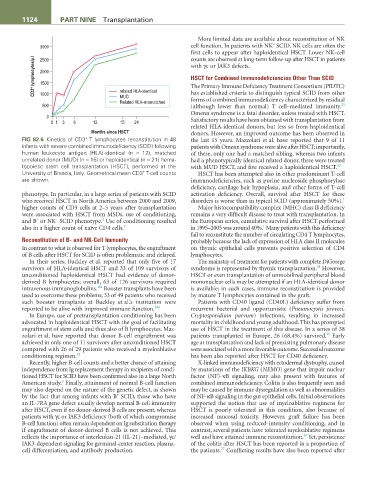
        FIG 82.6  Kinetics of CD3  T lymphocytes reconstitution in 48   the last 15 years. Mazzolari et al. have reported that 9 of 11
        infants with severe combined immunodeficiency (SCID) following   patients with Omenn syndrome were alive after HSCT; importantly,
        human leukocyte antigen (HLA)-identical (n  = 12), matched   of these, only one had a matched sibling, whereas two infants
        unrelated donor (MUD) (n = 15) or haploidentical (n = 21) hema-  had a phenotypically identical related donor, three were treated
        topoietic  stem  cell  transplantation  (HSCT),  performed  at  the   with MUD HSCT, and five received a haploidentical HSCT. 22
                                                +
        University of Brescia, Italy. Geometrical mean CD3  T-cell counts   HSCT has been attempted also in other predominant T-cell
        are shown.                                             immunodeficiencies, such as purine nucleoside phosphorylase
                                                               deficiency, cartilage hair hypoplasia, and other forms of T-cell
        phenotype. In particular, in a large series of patients with SCID   activation  deficiency.  Overall,  survival  after  HSCT  for  these
        who received HSCT in North America between 2000 and 2009,   disorders is worse than in typical SCID (approximately 50%). 1
        higher counts of CD3 cells at 2–5 years after transplantation   Major histocompatibility complex (MHC) class II deficiency
        were associated with HSCT from MSDs, use of conditioning,   remains a very difficult disease to treat with transplantation. In
             +
                   −
                                   2
        and B  or NK  SCID phenotype.  Use of conditioning resulted   the European series, cumulative survival after HSCT performed
                                                                                       1
        also in a higher count of naïve CD4 cells. 2           in 1995–2005 was around 40%.  Many patients with this deficiency
                                                               fail to reconstitute the number of circulating CD4 T lymphocytes,
        Reconstitution of B- and NK-Cell Immunity              probably because the lack of expression of HLA class II molecules
        In contrast to what is observed for T lymphocytes, the engraftment   on thymic epithelial cells prevents positive selection of CD4
        of B cells after HSCT for SCID is often problematic and delayed.  lymphocytes.
           In their series, Buckley et al. reported that only five of 17   The mainstay of treatment for patients with complete DiGeorge
                                                                                                         24
        survivors of HLA-identical HSCT and 33 of 109 survivors of   syndrome is represented by thymic transplantation.  However,
        unconditioned haploidentical HSCT had evidence of donor-  HSCT or even transplantation of unmobilized peripheral blood
        derived B lymphocytes; overall, 63 of 126 survivors required   mononuclear cells may be attempted if an HLA-identical donor
                                 18a
        intravenous immunoglobulins.  Booster transplants have been   is available; in such cases, immune reconstitution is provided
        used to overcome these problems; 33 of 49 patients who received   by mature T lymphocytes contained in the graft.
        such booster transplants at Buckley et al.’s institution were   Patients with CD40 ligand (CD40L) deficiency suffer from
        reported to be alive with improved immune function. 18a  recurrent bacterial and opportunistic (Pneumocystis jiroveci,
           In Europe, use of pretransplantation conditioning has been   Cryptosporidium parvum) infections, resulting in increased
        advocated in haploidentical HSCT with the goal of facilitating   mortality in childhood and young adulthood. This has prompted
        engraftment of stem cells and thus also of B lymphocytes. Maz-  use of HSCT in the treatment of this disease. In a series of 38
                                                                                                            25
        zolari et al. have reported that donor B-cell engraftment was   patients transplanted in Europe, 26 (68.4%) survived.  Early
        achieved in only one of 11 survivors after unconditioned HSCT   age at transplantation and lack of preexisting pulmonary disease
        compared with 26 of 29 patients who received a myeloablative   were associated with a more favorable outcome. Successful outcome
        conditioning regimen. 22                               has been also reported after HSCT for CD40 deficiency.
           Recently, higher B-cell counts and a better chance of attaining   X-linked immunodeficiency with ectodermal dystrophy, caused
        independence from Ig replacement therapy in recipients of condi-  by mutations of the IKBKG (NEMO) gene that impair nuclear
        tioned HSCT for SCID have been confirmed also in a large North   factor (NF)-κB signaling, may also present with features of
                     2
        American study.  Finally, attainment of normal B-cell function   combined immunodeficiency. Colitis is also frequently seen and
        may also depend on the nature of the genetic defect, as shown   may be caused by immune dysregulation as well as abnormalities
                                       +
        by the fact that among infants with B  SCID, those who have   of NF-κB signaling in the gut epithelial cells. Initial observations
        an IL-7RA gene defect usually develop normal B-cell immunity   supported the notion that use of myeloablative regimens for
        after HSCT, even if no donor-derived B cells are present, whereas   HSCT is poorly tolerated in this condition, also because of
        patients with γc or JAK3 deficiency (both of which compromise   increased  mucosal  toxicity.  However,  graft  failure  has  been
        B-cell function) often remain dependent on Ig substitution therapy   observed when using reduced-intensity conditioning, and in
        if engraftment of donor-derived B cells is not achieved. This   contrast, several patients have tolerated myeloablative regimens
                                                                                                    26
        reflects the importance of interleukin-21 (IL-21)–mediated, γc/  well and have attained immune reconstitution.  Yet, persistence
        JAK3-dependent signaling for germinal-center reaction, plasma-  of the colitis after HSCT has been reported in a proportion of
                                                                         27
        cell differentiation, and antibody production.         the patients.  Conflicting results have also been reported after

