


Page 1167 - Clinical Immunology_ Principles and Practice ( PDFDrive )
P. 1167
CHAPTER 83  Hematopoietic Stem Cell Transplantation for Malignant Diseases                1131


                                                                      KEY CONCEPTS
             Irradiation  Chemotherapy  DC         Donor cells
                                                                   Graft-Versus-Host Disease (GvHD)
             DC/Mø
                                                                   •  Caused by donor–recipient differences in:
                                                IL-12                •  Major histocompatibility complex (MHC) molecules
                                                                     •  Minor histocompatibility antigens (miHAs)
                                                                   •  Mediated by mature donor CD4 and/or CD8 T cells
                                                                   •  Requires inflammatory cytokines
                   TNFα, IL-1
                                             CD4     NK            •  Primary target organs include lymphoid system, skin, gastrointestinal
                                                                     tract, and liver
               Upregulates adhesion                                •  Acute and chronic forms
              molecules on endothelium  Activation and  CD8
                 and chemokines     proliferation
                                                   IFNγ, TNFα
                                                     IL-2         may also be additional tumor-specific or hematopoietic tissue
                                                                             5
                           Effector T cells  Mø         LPS       specific T cells.  Thus the overriding goal is to be able to manipu-
                                                                  late the donor HSC inoculum in such a way as to avoid GvHD
                                                                  but to still be able to mediate a GvT effect. 6

               GVHD tissue damage          TNFα                   Clinical Aspects of aGvHD
               lymphoid, skin, gut, liver  Target cell apoptosis induction  Usually developing within the first 3 months after transplantation,
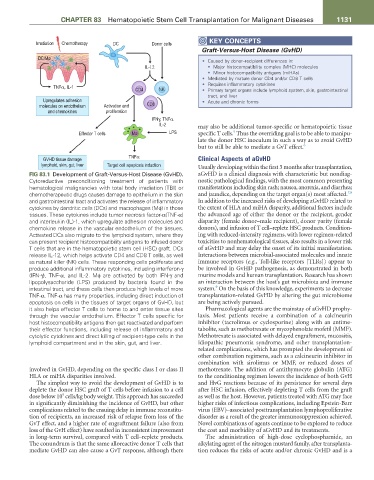
           FIG 83.1  Development of Graft-Versus-Host Disease (GvHD).   aGvHD is a clinical diagnosis with characteristic but nondiag-
           Cytoreductive preconditioning treatment of patients with   nostic pathological findings, with the most common presenting
           hematological malignancies with total body irradiation (TBI) or   manifestations including skin rash; nausea, anorexia, and diarrhea;
                                                                                                                   7,8
           chemotherapeutic drugs causes damage to epithelium in the skin   and jaundice, depending on the target organ(s) most affected.
           and gastrointestinal tract and activates the release of inflammatory   In addition to the increased risks of developing aGvHD related to
           cytokines by dendritic cells (DCs) and macrophages (Mϕ) in those   the extent of HLA and miHA disparity, additional factors include
           tissues. These cytokines include tumor necrosis factor-α(TNF-α)   the advanced age of either the donor or the recipient, gender
           and interleukin (IL)-1, which upregulate adhesion molecules and   disparity (female donor–male recipient), donor parity (female
           chemokine release in the vascular endothelium of the tissues.   donors), and infusion of T cell–replete HSC products. Condition-
           Activated DCs also migrate to the lymphoid system, where they   ing with reduced-intensity regimens, with lower regimen-related
           can present recipient histocompatibility antigens to infused donor   toxicities to nonhematological tissues, also results in a lower risk
           T cells that are in the hematopoietic stem cell (HSC) graft. DCs   of aGvHD and may delay the onset of its initial manifestation.
           release IL-12, which helps activate CD4 and CD8 T cells, as well   Interactions between microbial-associated molecules and innate
           as natural killer (NK) cells. These responding cells proliferate and   immune receptors (e.g., Toll-like receptors [TLRs]) appear to
           produce additional inflammatory cytokines, including interferon-γ   be involved in GvHD pathogenesis, as demonstrated in both
           (IFN-γ), TNF-α, and IL-2. Mϕ are activated by both IFN-γ and   murine models and human transplantation. Research has shown
           lipopolysaccharide (LPS) produced by bacteria found in the   an interaction between the host’s gut microbiota and immune
                                                                        9
           intestinal tract, and these cells then produce high levels of more   system.  On the basis of this knowledge, experiments to decrease
           TNF-α. TNF-α has many properties, including direct induction of   transplantation-related GvHD by altering the gut microbiome
           apoptosis on cells in the tissues of target organs of GvHD, but   are being actively pursued.
           it also helps effector T cells to home to and enter tissue sites   Pharmacological agents are the mainstay of aGvHD prophy-
           through the vascular endothelium. Effector T cells specific for   laxis. Most patients receive a combination of a calcineurin
           host histocompatibility antigens then get reactivated and perform   inhibitor (tacrolimus or cyclosporine) along with an antime-
           their effector functions, including release of inflammatory and   tabolite, such as methotrexate or mycophenolate mofetil (MMF).
           cytolytic cytokines and direct killing of recipient-type cells in the   Methotrexate is associated with delayed engraftment, mucositis,
           lymphoid compartment and in the skin, gut, and liver.   idiopathic pneumonia syndrome, and other transplantation-
                                                                  related complications, which has prompted the development of
                                                                  other combination regimens, such as a calcineurin inhibitor in
                                                                  combination  with  sirolimus  or MMF, or  reduced  doses  of
           involved in GvHD, depending on the specific class I or class II   methotrexate. The addition of antithymocyte globulin (ATG)
           HLA or miHA disparities involved.                      to the conditioning regimen lowers the incidence of both GvH
             The simplest way to avoid the development of GvHD is to   and HvG reactions because of its persistence for several days
           deplete the donor HSC graft of T cells before infusion to a cell   after HSC infusion, effectively depleting T cells from the graft
                     5
           dose below 10  cells/kg body weight. This approach has succeeded   as well as the host. However, patients treated with ATG may face
           in significantly diminishing the incidence of GvHD, but other   higher risks of infectious complications, including Epstein-Barr
           complications related to the ensuing delay in immune reconstitu-  virus (EBV)–associated posttransplantation lymphoproliferative
           tion of recipients, an increased risk of relapse from loss of the   disorder as a result of the greater immunosuppression achieved.
           GvT effect, and a higher rate of engraftment failure (also from   Novel combinations of agents continue to be explored to reduce
           loss of the GvH effect) have resulted in inconsistent improvement   the cost and morbidity of aGvHD and its treatments.
           in long-term survival, compared with T cell–replete products.   The administration of high-dose cyclophosphamide, an
           The conundrum is that the same alloreactive donor T cells that   alkylating agent of the nitrogen mustard family, after transplanta-
           mediate GvHD can also cause a GvT response, although there   tion reduces the risks of acute and/or chronic GvHD and is a

