


Page 1260 - Clinical Immunology_ Principles and Practice ( PDFDrive )
P. 1260
CHaPter 90  Vaccines            1221


                                                       HIV infection
                                                       CD4+ count
                                                           µ
                                                        (cells/  L)                           Asplenia and
                                          Immunocompromised <15% of  ≥15% of  Kidney failure, end-  CSF leaks/ persistent complement  Chronic
                                          status (excluding HIV total CD4 total CD4  stage renal disease, on  Heart disease,  cochlear  component   liver
               VACCINE    INDICATION  Pregnancy  infection)  cell count cell count  hemodialysis  chronic lung disease  implants  deficiencies  disease  Diabetes
               Hepatitis B 1
               Rotavirus 2                    SCID*
               Diphtheria, tetanus, and
                          3
               acellular pertussis (DTaP)
               Haemophilus influenzae
               type b 4
               Pneumococcal conjugate 5
               Inactivated poliovirus 6

               Influenza 7
               Measles,mumps,rubella 8
               Varicella 9

               Hepatitis A 10
               Meningococcal ACWY 11
               Tetanus, diphtheria, and
                          12
               acellular pertussis (Tdap)
               Human papillomavirus 13
               Meningococcal B 11
               Pneumococcal
               polysaccharide 5
                                                         Vaccination is recommended,
                  Vaccination according to the  Recommended for persons with  and additional doses may be  No recommendation  Contraindicated  Precaution for vaccination
                  routine schedule recommended  an additional risk factor for which  necessary based on medical
                                     the vaccine would be indicated
                                                         condition. See footnotes.
             B
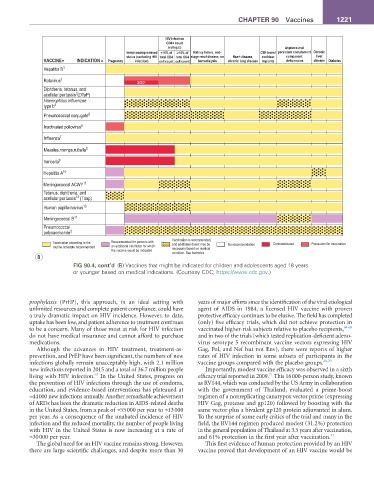
                         FIG 90.4, cont’d (B) Vaccines that might be indicated for children and adolescents aged 18 years
                         or younger based on medical indications. (Courtesy CDC; https://www.cdc.gov.)


           prophylaxis (PrEP), this approach, in an ideal setting with   years of major efforts since the identification of the viral etiological
           unlimited resources and complete patient compliance, could have   agent of  AIDS in 1984, a licensed HIV vaccine with proven
           a truly dramatic impact on HIV incidence. However, to date,   protective efficacy continues to be elusive. The field has completed
           uptake has been low, and patient adherence to treatment continues   (only) five efficacy trials, which did not achieve protection in
           to be a concern. Many of those most at risk for HIV infection   vaccinated higher-risk subjects relative to placebo recipients, 64-68
           do not have medical insurance and cannot afford to purchase   and in two of the trials (which tested replication-deficient adeno-
           medications.                                           virus serotype 5 recombinant vaccine vectors expressing HIV
             Although  the  advances  in HIV  treatment, treatment-as-  Gag, Pol, and Nef but not Env), there were reports of higher
           prevention, and PrEP have been significant, the numbers of new   rates of HIV infection in some subsets of participants in the
           infections globally remain unacceptably high, with 2.1 million   vaccine groups compared with the placebo groups. 69,70
           new infections reported in 2015 and a total of 36.7 million people   Importantly, modest vaccine efficacy was observed in a sixth
                                63
                                                                                         71
           living with HIV infection.  In the United States, progress on   efficacy trial reported in 2009.  This 16 000-person study, known
           the prevention of HIV infections through the use of condoms,   as RV144, which was conducted by the US Army in collaboration
           education, and evidence-based interventions has plateaued at   with the government of Thailand, evaluated a prime-boost
           ≈44 000 new infections annually. Another remarkable achievement   regimen of a nonreplicating canarypox vector prime (expressing
           of ARDs has been the dramatic reduction in AIDS-related deaths   HIV Gag, protease and gp120) followed by boosting with the
           in the United States, from a peak of ≈55 000 per year to ≈13 000   same vector plus a bivalent gp120 protein adjuvanted in alum.
           per year. As a consequence of the unabated incidence of HIV   To the surprise of some early critics of the trial and many in the
           infection and the reduced mortality, the number of people living   field, the RV144 regimen produced modest (31.2%) protection
           with HIV in the United States is now increasing at a rate of   in the general population of Thailand at 3.5 years after vaccination,
           ≈30 000 per year.                                      and 61% protection in the first year after vaccination. 71
             The global need for an HIV vaccine remains strong. However,   This first evidence of human protection provided by an HIV
           there are large scientific challenges, and despite more than 30   vaccine proved that development of an HIV vaccine would be

