


Page 1259 - Clinical Immunology_ Principles and Practice ( PDFDrive )
P. 1259
1220         Part ten  Prevention and Therapy of Immunological Diseases


           Public awareness and education about vaccination must
        be enhanced through professional marketing campaigns. The   A Vaccine Against Human Immunodeficiency Virus
        negative consequences of propaganda by antivaccination groups,   The development of a vaccine against human immunodeficiency
        alternative or delayed schedules of vaccination, and parental   virus/acquired immunodeficiency  syndrome (HIV/AIDS)  has
        hesitancy regarding vaccination can all result in resurgence of   long been recognized as a top HIV research global priority at
        infectious diseases, increased morbidity, and increased vaccine-  the US National Institutes of Health (NIH). Strong and simple
        preventable deaths.                                    treatments for those who are living with HIV infection are now
           With modern air travel, which makes it possible to go from   in existence in the United States and have been made available
        one continent to another in a matter of a few hours, it is no   even in developing countries. It has been shown that the
        stretch to say we dwell in a global village, where maintaining   treatment-as-prevention approach, wherein the viral load is
        good health and avoiding highly contagious infectious diseases   lowered to an undetectable level by antiretroviral treatment of
        depend on the health of communities, whether local or global.   infected persons, results not only in benefit to the infected patient
        Therefore it is in our self-interest to maintain  high levels of   but also in up to 96% reduction in HIV incidence among sexual
        vaccination  in our  home  communities and  to  advocate  and   partners. 60,61
        support vaccination efforts around the globe. Clearly, vaccination   More recently, antiretroviral drugs (ARDs) have been tested
        is both a personal and a social, or community, endeavor.  globally and licensed in the United States as a once-daily pill (a
           A few specific challenges for vaccination are highlighted below   combination of tenofovir and emtricitabine) for HIV/AIDS
                                                                                              62
        to illustrate the general points made above.           prevention in higher-risk individuals.  Known as preexposure


                                                                                                  13-15
                                                                                             11-12
               Vaccine     Birth  1 mo  2 mos  4 mos 6 mos  9 mos 12 mos 15 mos 18 mos  19-23  2-3 yrs 4-6 yrs 7-10 yrs  11-12  13-15   16 yrs  17-18
                                                                                                              yrs
                                                                         mos
                                                                                                   yr
                                                                                                   yrs
                                                                                               s
                                                                                              yrs
                                                                                              yr
                                                                                                    s
                                   nd
                                                          rd
                           st
                  1
             Hepatitis B  (HepB)  1  dose  2  dose       3  dose
                2
            Rotavirus ,(RV) RV1 (2-dose  st  nd  See
            series);RV5 (3-dose series)  1  dose  2  dose  footnote 2
           Diphtheria, tetanus, & acellular  st  nd  rd           th                th
                 3
             pertussis (DTaP: <7 yrs)  1  dose  2  dose  3  dose  4  dose          5  dose
                                                             th
                                                           rd
           +DHPRSKLOXV LQIOXHQ]DH    1  dose  2  dose  See   3 or 4  dose,
                                          nd
                                     st
                  4
               type b (Hib)                    footnote 4  See footnote 4
            Pneumococcal conjugate 5   st  nd  3  dose      4  dose
                                                rd
                                                            th
                (PCV13)              1  dose  2  dose
             Inactivated poliovirus 6  1  dose  2  dose  3  dose                   4  dose
                                                                                    th
                                                          rd
                                          nd
                                     st
               (IPV: < 18 yrs)
                   7                                                                            Annual vaccination (IIV)
               Influenza (IIV)                               Annual vaccination (IIV) 1 or 2 doses
                                                                                                   1 dose only
                                                                                    nd
                     8
                                                            st
           Measles,mumps,rubella (MMR)          See footnote 8  1  dose            2  dose
                  9
                                                            st
                                                                                    nd
               Varicella (VAR)                              1  dose                2  dose
                  10
              HepatitisA (HepA)                              2-dose series, See footnote 10
                  11
            Meningococcal (Hib-MenCY
                                                                                              st
                                                                                                        nd
           ≥6 weeks; MenACWY-D ≥9 mos;              See footnote 11                          1  dose    2  dose
            MenACWY-CRM ≥2 mos)
           Tetanus, diphtheria,& acellular                                                    Tdap
                12
            pertussis  (Tdap: ≥7 yrs)
                     13
           Human papillomavirus  (HPV)                                                       See footnote
                                                                                               13
                                                                                                    See footnote 11
              Meningococcal B 14
           Pneumococcal polysaccharide 15                                                    See footnote 5
                (PPSV23)
              Range of recommended  Range of recommended ages  Range of recommended ages  Range of recommended ages for non-high-risk  No recommendation
              ages for all children  for catch-up immunization  for certain high-risk groups  groups that may receive vaccine subject to
         A
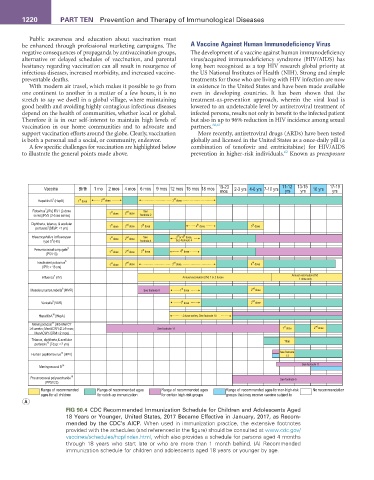
                       FIG 90.4  CDC Recommended Immunization Schedule for Children and Adolescents Aged
                       18 Years or Younger, United States, 2017 Became Effective in January, 2017, as Recom-
                       mended by the CDC’s AICP. When used in immunization practice, the extensive footnotes
                       provided with the schedules (and referenced in the figure) should be consulted at www.cdc.gov/
                       vaccines/schedules/hcp/index.html, which also provides a schedule for persons aged 4 months
                       through  18  years  who  start  late  or  who  are  more  than  1  month  behind.  (A)  Recommended
                       immunization schedule for children and adolescents aged 18 years or younger by age.

