


Page 1308 - Clinical Immunology_ Principles and Practice ( PDFDrive )
P. 1308
1270         Part eleven  Diagnostic Immunology


                                                               In conclusion, lymphocyte responses in humans can be assessed
                                                               using a variety of analytical tools as described in this chapter
                                                               and applied to many clinical contexts, including but not limited
                                                               to primary immunodeficiencies, autoimmunity, transplantation,
                                                               and immune dysregulation disorders. Most of these measurements
                                                               use cells from blood and not from other lymphoid tissues due
                                   3UROLIHUDWLQJ &'    % FHOOV  to accessibility and ease of generating control reference ranges.
                                                               This chapter is not an exhaustive treatise on all aspects of
             &RXQW                                             lymphocyte function and the immune response; nor does it cover
                                                               all areas of normal and abnormal pathology in this context.
                                                               Rather, it is meant to take the reader on a tour of the immune
                                                               landscape and to provide salient highlights of the diversity and
                                                               relevance of lymphocyte function.

                                                               Please check your eBook at https://expertconsult.inkling.com/
                                                               for self-assessment questions. See inside cover for registration
                                                               details.


                                )OXRUHVFHQFH                   REFERENCES
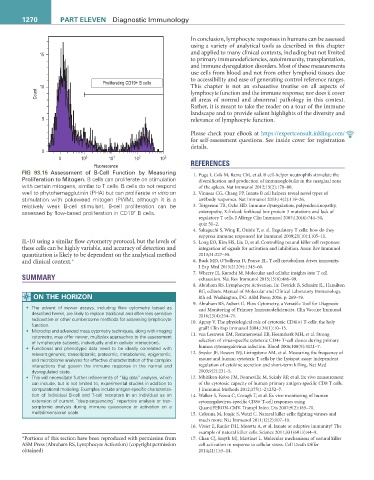
        FIG 93.15  Assessment of B-Cell Function by Measuring   1.  Puga I, Cols M, Barra CM, et al. B cell-helper neutrophils stimulate the
        Proliferation to Mitogen. B cells can proliferate on stimulation   diversification and production of immunoglobulin in the marginal zone
        with certain mitogens, similar to T cells. B cells do not respond   of the spleen. Nat Immunol 2012;13(2):170–80.
        well to phytohemagglutinin (PHA) but can proliferate in vitro on   2.  Vinuesa CG, Chang PP. Innate B cell helpers reveal novel types of
        stimulation with pokeweed mitogen (PWM), although it is a   antibody responses. Nat Immunol 2013;14(2):119–26.
        relatively weak B-cell  stimulant. B-cell proliferation  can be   3.  Torgerson TR, Ochs HD. Immune dysregulation, polyendocrinopathy,
        assessed by flow-based proliferation in CD19  B cells.    enteropathy, X-linked: forkhead box protein 3 mutations and lack of
                                             +
                                                                  regulatory T cells. J Allergy Clin Immunol 2007;120(4):744–50,
                                                                  quiz 51–2.
                                                                4.  Sakaguchi S, Wing K, Onishi Y, et al. Regulatory T cells: how do they
                                                                  suppress immune responses? Int Immunol 2009;21(10):1105–11.
        IL-10 using a similar flow cytometry protocol, but the levels of   5.  Long EO, Kim HS, Liu D, et al. Controlling natural killer cell responses:
        these cells can be highly variable, and accuracy of detection and   integration of signals for activation and inhibition. Annu Rev Immunol
        quantitation is likely to be dependent on the analytical method   2013;31:227–58.
        and clinical context.*                                  6.  Buck MD, O’Sullivan D, Pearce EL. T cell metabolism drives immunity.
                                                                  J Exp Med 2015;212(9):1345–60.
                                                                7.  Wherry EJ, Kurachi M. Molecular and cellular insights into T cell
        SUMMARY                                                   exhaustion. Nat Rev Immunol 2015;15(8):486–99.
                                                                8.  Abraham RS. Lymphocyte Activation. In: Detrick B, Schmitz JL, Hamilton
                                                                  RG, editors. Manual of Molecular and Clinical Laboratory Immunology.
            On tHe HOrIZOn                                        8th ed. Washington, DC: ASM Press; 2016. p. 269–79.
                                                                9.  Abraham RS, Aubert G. Flow Cytometry, a Versatile Tool for Diagnosis
          •  The advent of newer assays, including flow cytometry based as   and Monitoring of Primary Immunodeficiencies. Clin Vaccine Immunol
           described herein, are likely to replace traditional and often less sensitive   2016;23(4):254–71.
           radioactive or other cumbersome methods for assessing lymphocyte   10.  Appay V. The physiological role of cytotoxic CD4(+) T-cells: the holy
           function.
          •  Microchip and advanced mass cytometry techniques, along with imaging   grail? Clin Exp Immunol 2004;138(1):10–13.
           cytometry, may offer newer, multiplex approaches to the assessment   11.  van Leeuwen EM, Remmerswaal EB, Heemskerk MH, et al. Strong
           of lymphocyte subsets, individually and in cellular interactions.  selection of virus-specific cytotoxic CD4+ T-cell clones during primary
          •  Functional and phenotypic data need to be ideally correlated with   human cytomegalovirus infection. Blood 2006;108(9):3121–7.
           relevant genomic, transcriptomic, proteomic, metabolomic, epigenomic,   12.  Snyder JE, Bowers WJ, Livingstone AM, et al. Measuring the frequency of
           and microbiome analyses for effective characterization of the complex   mouse and human cytotoxic T cells by the Lysispot assay: independent
           interactions that govern the immune response in the normal and   regulation of cytokine secretion and short-term killing. Nat Med
           dysregulated state.                                    2003;9(2):231–5.
          •  This will necessitate further refinements of “big data” analysis, which   13.  Mbitikon-Kobo FM, Bonneville M, Sekaly RP, et al. Ex vivo measurement
           can include, but is not limited to, experimental studies in addition to   of the cytotoxic capacity of human primary antigen-specific CD8 T cells.
           computational modeling. Examples include antigen-specific characteriza-  J Immunol Methods 2012;375(1-2):252–7.
           tion of individual B-cell and T-cell receptors in an individual as an   14.  Walker S, Fazou C, Crough T, et al. Ex vivo monitoring of human
           extension of current “deep-sequencing” repertoire analysis or tran-  cytomegalovirus-specific CD8+ T-cell responses using
           scriptomic analysis during immune quiescence or activation on a   QuantiFERON-CMV. Transpl Infect Dis 2007;9(2):165–70.
           multidimensional scale.                             15.  Colonna M, Jonjic S, Watzl C. Natural killer cells: fighting viruses and
                                                                  much more. Nat Immunol 2011;12(2):107–10.
                                                               16.  Vivier E, Raulet DH, Moretta A, et al. Innate or adaptive immunity? The
                                                                  example of natural killer cells. Science 2011;331(6013):44–9.
        *Portions of this section have been reproduced with permission from   17.  Chan CJ, Smyth MJ, Martinet L. Molecular mechanisms of natural killer
        ASM Press (Abraham RS, Lymphocyte Activation) (copyright permission   cell activation in response to cellular stress. Cell Death Differ
        obtained)                                                 2014;21(1):5–14.

