


Page 1313 - Clinical Immunology_ Principles and Practice ( PDFDrive )
P. 1313
CHaPtEr 94  Assessment of Neutrophil Function              1275


                                                                  NEUTROPHIL ADHERENCE

                                                                  Clinical Indications and Implications
                                                                  Adherence of neutrophils to the endothelium is a prerequisite
                                                                  step to the migration of neutrophils into the tissues. Neutrophils
                                                                  isolated from patients with leukocyte adhesion defect-1 (LAD-1)
                                                                  who lack the common β 2  integrin subunit CD18 exhibit abnormal
             A                        B                                                   19
                                                                  adherence to the endothelium  and therefore are not able to
                                                                  migrate efficiently into the surrounding tissues, often resulting
                                                                                      20
                                                                  in marked granulocytosis.  LAD-2 is a milder form of the disease,
                                                                  in which patients exhibit a defect in fucose metabolism and
                                                                                     21
                                                                  glycoprotein biosynthesis.  Neutrophils from patients with LAD-2
                                                                  exhibit abnormal expression of the glycoprotein l-selectin and
                                                                  fail to roll along the endothelium. However, they do exhibit
                                                                  normal β 2  integrin–mediated adherence.
             C                        D
                                                                  Principles and Interpretation of Laboratory Assessment
                                                                  Adherence of neutrophils can be assessed by measuring binding
                                                                  to plastic using a 96-well plate either uncoated or coated with
                                                                  fetal bovine serum or a specific extracellular matrix (ECM)
                                                                  protein, such as fibrinogen or fibronectin. Endothelial cell
                                                                  monolayers harvested from human umbilical veins may serve
                                                                  as a more physiological substrate for the measurement of cell
             E                        F                           adhesion. Isolated neutrophils are preloaded with the cell perme-
                                                                  ant acetoxymethyl ester derivative of the fluorescent dye calcein
                                                                  (calcein-AM). Nonspecific esterases in the cytosol cleave the ester
                                                                  linkage, trapping the fluorescent probe in the cytosol. The labeled
                                                                  neutrophils are added to each well and incubated in the absence
                                                                  or presence of phorbol myristate acetate (PMA) to promote
                                                                  adherence through activation of the integrins. At the end of the
                                                                  incubation, the wells are washed three times to remove nonadher-
                         G                                        ent cells. The fluorescence of each well is determined with a
                                                                  fluorescent microplate reader and compared with the fluorescence
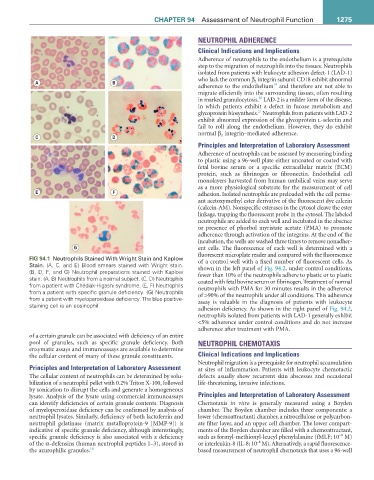
           FIG 94.1  Neutrophils Stained With Wright Stain and Kaplow
           Stain. (A, C, and E) Blood smears stained with Wright stain.     of a control well with a fixed number of fluorescent cells. As
           (B, D, F, and G) Neutrophil preparations stained with Kaplow   shown in the left panel of Fig. 94.2, under control conditions,
           stain. (A, B) Neutrophils from a normal subject. (C, D) Neutrophils   fewer than 10% of the neutrophils adhere to plastic or to plastic
           from a patient with Chédiak-Higashi syndrome. (E, F) Neutrophils   coated with fetal bovine serum or fibrinogen. Treatment of normal
           from a patient with specific granule deficiency. (G) Neutrophils   neutrophils with PMA for 30 minutes results in the adherence
           from a patient with myeloperoxidase deficiency. The blue positive-  of >90% of the neutrophils under all conditions. This adherence
           staining cell is an eosinophil.                        assay is valuable in the diagnosis of patients with leukocyte
                                                                  adhesion deficiency. As shown in the right panel of Fig. 94.2,
                                                                  neutrophils isolated from patients with LAD-1 generally exhibit
                                                                  <5% adherence under control conditions and do not increase
                                                                  adherence after treatment with PMA.
           of a certain granule can be associated with deficiency of an entire
           pool of granules, such as specific granule deficiency. Both   NEUTROPHIL CHEMOTAXIS
           enzymatic assays and immunoassays are available to determine
           the cellular content of many of these granule constituents.  Clinical Indications and Implications
                                                                  Neutrophil migration is a prerequisite for neutrophil accumulation
           Principles and Interpretation of Laboratory Assessment  at sites of inflammation. Patients with leukocyte chemotactic
           The cellular content of neutrophils can be determined by solu-  defects usually show recurrent skin abscesses and occasional
           bilization of a neutrophil pellet with 0.2% Triton X-100, followed   life-threatening, invasive infections.
           by sonication to disrupt the cells and generate a homogeneous
           lysate. Analysis of the lysate using commercial immunoassays   Principles and Interpretation of Laboratory Assessment
           can identify deficiencies of certain granule contents. Diagnosis   Chemotaxis  in vitro is generally measured using a Boyden
           of myeloperoxidase deficiency can be confirmed by analysis of   chamber. The Boyden chamber includes three components: a
           neutrophil lysates. Similarly, deficiency of both lactoferrin and   lower (chemoattractant) chamber, a nitrocellulose or polycarbon-
           neutrophil gelatinase (matrix metalloprotein-9 [MMP-9]) is   ate filter layer, and an upper cell chamber. The lower compart-
           indicative of specific granule deficiency, although interestingly,   ments of the Boyden chamber are filled with a chemoattractant,
                                                                                                                −8
           specific granule deficiency is also associated with a deficiency   such as formyl-methionyl-leucyl phenylalanine (fMLF; 10  M)
                                                                                     −8
           of the α-defensins (human neutrophil peptides 1–3), stored in   or interleukin-8 (IL-8; 10  M). Alternatively, a rapid fluorescence-
           the azurophilic granules. 18                           based measurement of neutrophil chemotaxis that uses a 96-well

