


Page 1303 - Clinical Immunology_ Principles and Practice ( PDFDrive )
P. 1303
CHaPter 93  Assessment of Functional Immune Responses in Lymphocytes                    1265


                                                                  major subpopulations of Treg cells include natural Treg (nTreg)
                                                                  cells that are produced in the thymus and induced Treg (iTreg)
                                                                  cells  that  are  generated  in the  periphery  from  conventional
                                                                            +
                                                                                   30
                                                                        -
                                                                  FOXP3 CD4  T cells.  The dysfunction of Treg cells results in
                                                                  severe autoimmunity, with IPEX serving as the classic prototype
                                                                                                                  3,31
                                                                  (Chapter 35). Besides their role in controlling development of

                                                                  autoimmunity, lack of Treg cells or abnormal Treg function has
                                                                  been implicated in the etiopathogenesis of graft-versus-host
                                                                  disease (GVHD)  and allograft rejection, while its presence and
                                                                               32
                                                                  normal function have been shown to promote allograft tolerance
                                                                       in solid-organ transplantation. 33,34
                  &'   7 FHOO &'   D         1. FHOO &'   D
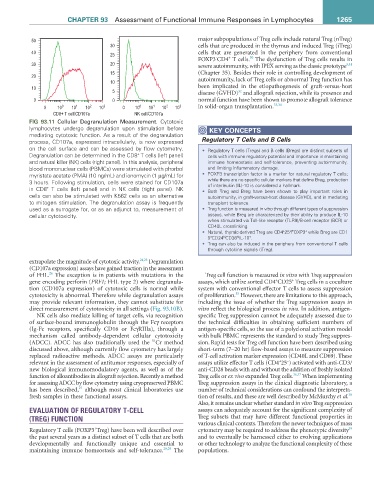
           FIG 93.11  Cellular Degranulation Measurement. Cytotoxic
           lymphocytes undergo degranulation upon stimulation  before    KeY COnCePtS
           mediating cytotoxic function. As a result of the degranulation
           process, CD107a, expressed intracellularly, is now expressed   Regulatory T Cells and B Cells
           on the cell surface and can be assessed by flow cytometry.   •  Regulatory T cells (Tregs) and B cells (Bregs) are distinct subsets of
                                              +
           Degranulation can be determined in the CD8  T cells (left panel)   cells with immune regulatory potential and importance in maintaining
           and natural killer (NK) cells (right panel). In this analysis, peripheral   immune  homeostasis  and  self-tolerance,  preventing  autoimmunity,
           blood mononuclear cells (PBMCs) were stimulated with phorbol   and limiting inflammatory damage.
           myristate acetate (PMA) (10 ng/mL) and ionomycin (1 µg/mL) for   •  FOXP3 transcription factor is a marker for natural regulatory T cells;
           3 hours. Following stimulation, cells were stained for CD107a   while there are no specific cellular markers that define Breg, production
                                                                     of interleukin (IL)-10 is considered a hallmark.
                +
           in CD8  T cells (left panel) and in NK cells (right panel). NK   •  Both Treg and Breg have been shown to play important roles in
           cells can also be stimulated with K562 cells as an alternative   autoimmunity, in graft-versus-host disease (GVHD), and in mediating
           to mitogen stimulation. The degranulation assay is frequently   transplant tolerance.
           used as a surrogate for, or as an adjunct to, measurement of   •  Treg function is measured in vitro through different types of suppression
           cellular cytotoxicity.                                    assays, while Breg are characterized by their ability to produce IL-10
                                                                     when stimulated via Toll-like receptor (TLR9)/B-cell receptor (BCR) or
                                                                     CD40L crosslinking.
                                                                                                +
                                                                                              +
                                                                                                     +
                                                                   •  Natural, thymic-derived Treg are CD4 25 FOXP3  while Breg are CD1
                                                                               hi
                                                                          hi
                                                                      +
                                                                     9 CD24 CD38 IL-10 . +
                                                                   •  Treg can also be induced in the periphery from conventional T cells
                                                                     through cytokine signals (iTreg).
           extrapolate the magnitude of cytotoxic activity. 24,25  Degranulation
           (CD107a expression) assays have gained traction in the assessment
                 26
           of FHL.  The exception is in patients with mutations in the   Treg cell function is measured in vitro with Treg suppression
                                                                                                +
                                                                                           +
           gene encoding perforin (PRF1; FHL type 2) where degranula-  assays, which utilize sorted CD4 CD25  Treg cells in a coculture
           tion (CD107a expression) of cytotoxic cells is normal while   system with conventional effector T cells to assess suppression
                                                                              35
           cytotoxicity is abnormal. Therefore while degranulation assays   of proliferation.  However, there are limitations to this approach,
           may provide relevant information, they cannot substitute for   including the issue of whether the Treg suppression assays in
           direct measurement of cytotoxicity in all settings (Fig. 93.10B).  vitro reflect the biological process in vivo. In addition, antigen-
             NK cells also mediate killing of target cells, via recognition   specific Treg suppression cannot be adequately assessed due to
           of surface-bound immunoglobulin through the Fcγ receptors   the technical difficulties in obtaining sufficient numbers of
           (Ig-Fc receptors, specifically CD16 or FcγRIIIa), through a   antigen-specific cells, so the use of a polyclonal activation model
           mechanism  called antibody-dependent  cellular cytotoxicity   with bulk PBMC represents the standard to study Treg suppres-
                                                   51
           (ADCC).  ADCC has also traditionally used the  Cr method   sion. Rapid tests for Treg cell function have been described using
           discussed above, although currently flow cytometry has largely   short-term (7–20 hr) flow-based assays to measure suppression
           replaced radioactive methods.  ADCC assays are particularly   of T-cell activation marker expression (CD40L and CD69). These
                                                                                            +
                                                                                               −
           relevant in the assessment of antitumor responses, especially of   assays utilize effector T cells (CD4 25 ) activated with anti-CD3/
           new biological immunomodulatory agents, as well as of the   anti-CD28 beads with and without the addition of freshly isolated
           function of alloantibodies in allograft rejection. Recently a method   Treg cells or ex vivo expanded Treg cells. 36,37  When implementing
           for assessing ADCC by flow cytometry using cryopreserved PBMC   Treg suppression assays in the clinical diagnostic laboratory, a
                           27
           has  been  described,   although  most  clinical  laboratories  use   number of technical considerations can confound the interpreta-
                                                                                                                   38
           fresh samples in these functional assays.              tion of results, and these are well described by McMurchy et al.
                                                                  Also, it remains unclear whether standard in vitro Treg suppression
           EVALUATION OF REGULATORY T-CELL                        assays can adequately account for the significant complexity of
           (TREG) FUNCTION                                        Treg subsets that may have different functional properties in
                                                                  various clinical contexts. Therefore the newer techniques of mass
                                +
                                                                                                                   39
           Regulatory T cells (FOXP3 Treg) have been well described over   cytometry may be required to address the phenotypic diversity
           the past several years as a distinct subset of T cells that are both   and to eventually be harnessed either to evolving applications
           developmentally and functionally unique and essential to   or other technology to analyze the functional complexity of these
           maintaining immune homeostasis and self-tolerance. 28,29  The   populations.

