


Page 1316 - Clinical Immunology_ Principles and Practice ( PDFDrive )
P. 1316
1278         Part ElEvEn  Diagnostic Immunology


                                               LPS                           fMLF
                                        NL             PT             NL              PT
                                  C10


                                  CD18


                                  CD11b

                             Number of cells  CD66b


                                  CD45


                                  L-selectin


                                                         Relative fluorescence
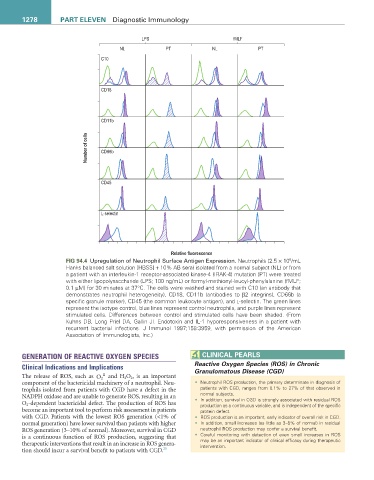
                       FIG 94.4  Upregulation of Neutrophil Surface Antigen Expression. Neutrophils (2.5 × 10 /mL
                                                                                                6
                       Hanks balanced salt solution [HBSS] + 10% AB sera) isolated from a normal subject (NL) or from
                       a patient with an interleukin-1 receptor-associated kinase-4 (IRAK-4) mutation (PT) were treated
                       with either lipopolysaccharide (LPS; 100 ng/mL) or formyl-methionyl-leucyl-phenylalanine (fMLF;
                       0.1 µM) for 30 minutes at 37°C. The cells were washed and stained with C10 (an antibody that
                       demonstrates neutrophil heterogeneity), CD18, CD11b (antibodies to  β2 integrins), CD66b (a
                       specific granule marker), CD45 (the common leukocyte antigen), and L-selectin. The green lines
                       represent the isotype control, blue lines represent control neutrophils, and purple lines represent
                       stimulated  cells.  Differences  between  control  and stimulated  cells  have  been shaded.  (From
                       Kuhns DB, Long Priel DA, Gallin JI. Endotoxin and IL-1 hyporesponsiveness in a patient with
                       recurrent bacterial infections. J Immunol 1997;158:3959, with permission of the American
                       Association of Immunologists, Inc.)


        GENERATION OF REACTIVE OXYGEN SPECIES                      ClInICal PEarlS
        Clinical Indications and Implications                    Reactive Oxygen Species (ROS) in Chronic
                                                                 Granulomatous Disease (CGD)
                                   •  and H 2 O 2 , is an important
        The release of ROS, such as  O 2
        component of the bactericidal machinery of a neutrophil. Neu-  •  Neutrophil ROS production, the primary determinate in diagnosis of
        trophils isolated from patients with CGD have a defect in the   patients with CGD, ranges from 0.1% to 27% of that observed in
                                                                   normal subjects.
        NADPH oxidase and are unable to generate ROS, resulting in an   •  In addition, survival in CGD is strongly associated with residual ROS
        O 2 -dependent bactericidal defect. The production of ROS has   production as a continuous variable, and is independent of the specific
        become an important tool to perform risk assessment in patients   protein defect.
        with CGD. Patients with the lowest ROS generation (<1% of   •  ROS production is an important, early indicator of overall risk in CGD.
        normal generation) have lower survival than patients with higher   •  In addition, small increases (as little as 3–5% of normal) in residual
        ROS generation (3–10% of normal). Moreover, survival in CGD   neutrophil ROS production may confer a survival benefit.
        is a continuous function of ROS production, suggesting that   •  Careful monitoring with detection of even small increases in ROS
        therapeutic interventions that result in an increase in ROS genera-  may be an important indicator of clinical efficacy during therapeutic
                                                                   intervention.
        tion should incur a survival benefit to patients with CGD. 25

