


Page 1318 - Clinical Immunology_ Principles and Practice ( PDFDrive )
P. 1318
1280         Part ElEvEn  Diagnostic Immunology


                                                             Control             PMA-treated
                                                 500


                          Normal                 250


                          A
                                                  0


                          CGD carrier X-linked   250


                                               Number of cells  0
                          B


                          CGD gp91 phox          250


                          C
                                                  0


                          CGD p47 phox           250


                          D                       0
                                                   0.1   1    10   100   0.1   1   10   100  1000
                                                                     Fluorescence
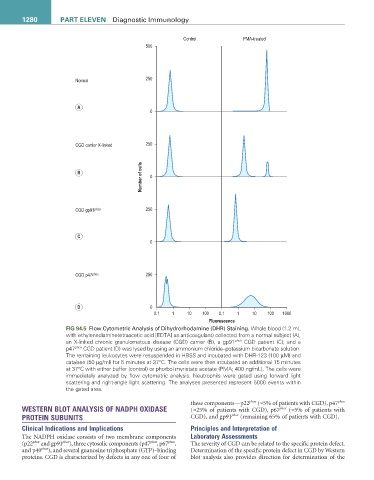
                       FIG 94.5  Flow Cytometric Analysis of Dihydrorhodamine (DHR) Staining. Whole blood (1.2 mL
                       with ethylenediaminetetraacetic acid [EDTA] as anticoagulant) collected from a normal subject (A),
                       an X-linked chronic granulomatous disease (CGD) carrier (B), a gp91 phox  CGD patient (C), and a
                       p47 phox  CGD patient (D) was lysed by using an ammonium chloride–potassium bicarbonate solution.
                       The remaining leukocytes were resuspended in HBSS and incubated with DHR-123 (100 µM) and
                       catalase (50 µg/ml) for 5 minutes at 37°C. The cells were then incubated an additional 15 minutes
                       at 37°C with either buffer (control) or phorbol myristate acetate (PMA; 400 ng/mL). The cells were
                       immediately analyzed by flow cytometric analysis. Neutrophils were gated using forward light
                       scattering and right-angle light scattering. The analyses presented represent 5000 events within
                       the gated area.

                                                               these components—p22 phox  (≈5% of patients with CGD), p47 phox
        WESTERN BLOT ANALYSIS OF NADPH OXIDASE                 (≈25% of patients with CGD), p67 phox  (≈5% of patients with
        PROTEIN SUBUNITS                                       CGD), and gp91 phox  (remaining 65% of patients with CGD).
        Clinical Indications and Implications                  Principles and Interpretation of
        The NADPH oxidase consists of two membrane components   Laboratory Assessments
        (p22 phox  and gp91 phox ), three cytosolic components (p47 phox , p67 phox ,   The severity of CGD can be related to the specific protein defect.
        and p40 phox ), and several guanosine triphosphate (GTP)–binding   Determination of the specific protein defect in CGD by Western
        proteins. CGD is characterized by defects in any one of four of   blot analysis also provides direction for determination of the

