


Page 1314 - Clinical Immunology_ Principles and Practice ( PDFDrive )
P. 1314
1276         Part ElEvEn  Diagnostic Immunology


                              150
                                  NL                             LAD                  Control
                                                                                      PMA-treated


                              100
                            % Adherent cells  50


                               0
                                     Plastic  Serum-   Fibrinogen-  Plastic   Serum-  Fibrinogen-
                                            coated plastic coated plastic   coated plastic coated plastic
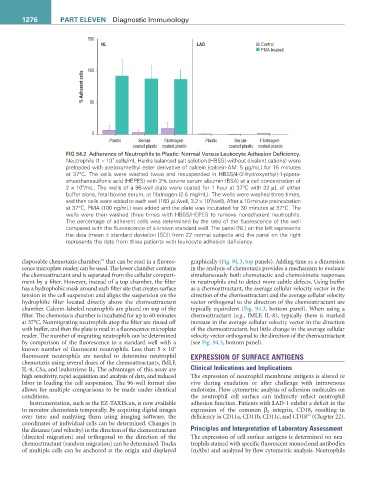
                       FIG 94.2  Adherence of Neutrophils to Plastic: Normal Versus Leukocyte Adhesion Deficiency.
                                      7
                       Neutrophils (1 × 10  cells/mL Hanks balanced salt solution [HBSS] without divalent cations) were
                       preloaded with acetoxymethyl ester derivative of calcein (calcein-AM: 5 µg/mL) for 15 minutes
                       at 37°C. The cells were washed twice and resuspended in HBSS/4-(2-hydroxyethyl)-1-pipera-
                       zineethanesulfonic acid (HEPES) with 2% bovine serum albumin (BSA) at a cell concentration of
                            6
                       2 × 10 /mL. The wells of a 96-well plate were coated for 1 hour at 37°C with 32 µL of either
                       buffer alone, fetal bovine serum, or fibrinogen (2.5 mg/mL). The wells were washed three times,
                                                                      5
                       and then cells were added to each well (160 µL/well, 3.2 × 10 /well). After a 10-minute preincubation
                       at 37°C, PMA (100 ng/mL) was added and the plate was incubated for 30 minutes at 37°C. The
                       wells were then washed three times with HBSS/HEPES to remove nonadherent neutrophils.
                       The percentage of adherent cells was determined by the ratio of the fluorescence of the well
                       compared with the fluorescence of a known standard well. The panel (NL) on the left represents
                       the data (mean ± standard deviation [SD]) from 22 normal subjects and the panel on the right
                       represents the data from three patients with leukocyte adhesion deficiency.


                                  22
        disposable chemotaxis chamber,  that can be read in a fluores-  graphically (Fig. 94.3, top panels). Adding time as a dimension
        cence microplate reader, can be used. The lower chamber contains   in the analysis of chemotaxis provides a mechanism to evaluate
        the chemoattractant and is separated from the cellular compart-  simultaneously both chemotactic and chemokinetic responses
        ment by a filter. However, instead of a top chamber, the filter   in neutrophils and to detect more subtle defects. Using buffer
        has a hydrophobic mask around each filter site that creates surface   as a chemoattractant, the average cellular velocity vector in the
        tension in the cell suspension and aligns the suspension on the   direction of the chemoattractant and the average cellular velocity
        hydrophilic filter located directly above the chemoattractant   vector orthogonal to the direction of the chemoattractant are
        chamber. Calcein-labeled neutrophils are placed on top of the   typically equivalent (Fig. 94.3, bottom panel).  When using a
        filter. The chemotaxis chamber is incubated for up to 60 minutes   chemoattractant (e.g., fMLF, IL-8), typically there is marked
        at 37°C. Nonmigrating neutrophils atop the filter are rinsed off   increase in the average cellular velocity vector in the direction
        with buffer, and then the plate is read in a fluorescence microplate   of the chemoattractant, but little change in the average cellular
        reader. The number of migrating neutrophils can be determined   velocity vector orthogonal to the direction of the chemoattractant
        by comparison of the fluorescence to a standard well with a   (see Fig. 94.3, bottom panel).
                                                          6
        known number of fluorescent neutrophils. Less than 5 × 10
        fluorescent neutrophils are needed to determine neutrophil   EXPRESSION OF SURFACE ANTIGENS
        chemotaxis using several doses of the chemoattractants, fMLF,
        IL-8, C5a, and leukotriene B 4 . The advantages of this assay are   Clinical Indications and Implications
        high sensitivity, rapid acquisition and analysis of data, and reduced   The expression of neutrophil membrane antigens is altered in
        labor in loading the cell suspension. The 96-well format also   vivo during exudation or after challenge with intravenous
        allows for multiple comparisons to be made under identical   endotoxin. Flow cytometric analysis of adhesion molecules on
        conditions.                                            the neutrophil cell surface can indirectly reflect neutrophil
           Instrumentation, such as the EZ-TAXIScan, is now available   adhesion function. Patients with LAD-1 exhibit a deficit in the
        to monitor chemotaxis temporally. By acquiring digital images   expression of the common  β 2  integrin, CD18, resulting in
                                                                                                     23
        over time and analyzing them using imaging software, the   deficiency in CD11a, CD11b, CD11c, and CD18  (Chapter 22).
        coordinates of individual cells can be determined. Changes in
        the distance (and velocity) in the direction of the chemoattractant   Principles and Interpretation of Laboratory Assessment
        (directed migration) and orthogonal to the direction of the   The expression of cell surface antigens is determined on neu-
        chemoattractant (random migration) can be determined. Tracks   trophils stained with specific fluorescent monoclonal antibodies
        of multiple cells can be anchored at the origin and displayed   (mAbs) and analyzed by flow cytometric analysis. Neutrophils

