


Page 1315 - Clinical Immunology_ Principles and Practice ( PDFDrive )
P. 1315
CHaPtEr 94  Assessment of Neutrophil Function              1277


                                                 –8
                         Buffer             fMLF (10  M)          granules, and lysosomal-associated membrane protein 3 (LAMP-3,
                       Distance (AU)        Distance (AU)         or CD63), stored in the azurophilic granules. During exudation,
                                                                  the expression of CD11b and CD18 is increased over that observed
                  –300  –200  –100  0  100  200  300  –300  –200  –100  0  100  200  300  in peripheral neutrophils, whereas the expression of CD43
              –100                                                (leukosialin) and CD62L is markedly reduced.
                                                                    The antibody 7D5 recognizes an extracellular epitope of gp91 phox
                0                                                                                           phox
                                                                  and can be used to identify surface expression of gp91   as well
              100
             Distance (AU)  200                                   granules. Flow cytometric analysis of neutrophils stained with
                                                                                                 phox
                                                                  as mobilization of latent pools of gp91
                                                                                                    stored in the specific
                                                                  7D5 can often be used to identify patients with X-linked chronic
              300
              400                                                 granulomatous disease (CGD) (no 7D5 staining) and X-linked
                                                                  chronic carriers of CGD (mosaic pattern of staining), particularly
              500                                                 in patients where the number of cells available for testing is limited.
                                                                    The expression of surface antigens can also be used to assess
                                                                  the responsiveness of neutrophils to particular ligands, such as
               20
                                                                  fMLF and LPS. As shown in Fig. 94.4, neutrophils isolated from
                                                                  a patient who has a genetic defect in IL-1 receptor–associated
                                                                                24
               15                                                 kinase-4 (IRAK-4)  exhibit abnormal regulation of surface antigen
                                                                  expression to LPS but exhibit normal regulation of surface antigen
                                                                  expression to fMLF.  Antigen expression can be upregulated
              Velocity  10                                        because of translocation of latent antigen to the plasma membrane
                                                                  or downregulated because of either internalization or shedding
                                                                  of the antigen.
                5
                                                                  NEUTROPHIL DEGRANULATION
                0                                                 Clinical Indications and Implications
                   Random ν  Directed ν  Total ν  Random ν  Directed ν  Total ν  The proteases, acid hydrolases, and inflammatory mediators
                                                                  released from storage granules in the neutrophils can mediate
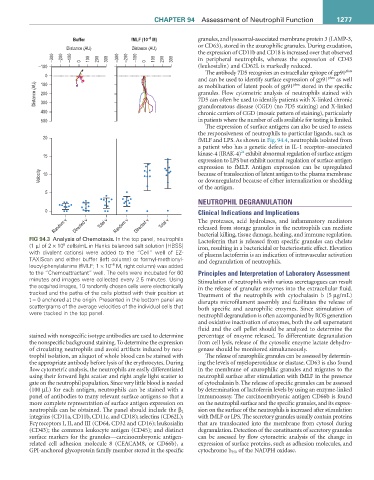
           FIG 94.3  Analysis of Chemotaxis. In the top panel, neutrophils   bacterial killing, tissue damage, healing, and immune regulation.
                                                                  Lactoferrin that is released from specific granules can chelate
           (1 µl of 2 × 10  cells/mL in Hanks balanced salt solution [HBSS]   iron, resulting in a bactericidal or bacteriostatic effect. Elevation
                      6
           with divalent cations) were added to the “Cell” well of EZ-  of plasma lactoferrin is an indication of intravascular activation
           TAXIScan and either buffer (left column) or formyl-methionyl-  and degranulation of neutrophils.
                                     –8
           leucyl-phenylalanine (fMLF; 1 × 10  M, right column) was added
           to the “Chemoattractant” well. The cells were incubated for 60   Principles and Interpretation of Laboratory Assessment
           minutes and images were collected every 2.5 minutes. Using   Stimulation of neutrophils with various secretagogues can result
           the acquired images, 10 randomly chosen cells were electronically   in the release of granular enzymes into the extracellular fluid.
           tracked and the paths of the cells plotted with their position at   Treatment  of  the  neutrophils  with  cytochalasin  b  (5 µg/mL)
           t = 0 anchored at the origin. Presented in the bottom panel are   disrupts microfilament assembly and facilitates the release of
           scattergrams of the average velocities of the individual cells that   both specific and azurophilic enzymes. Since stimulation of
           were tracked in the top panel.                         neutrophil degranulation is often accompanied by ROS generation
                                                                  and oxidative inactivation of enzymes, both the cell supernatant
                                                                  fluid and the cell pellet should be analyzed to determine the
           stained with nonspecific isotype antibodies are used to determine   percentage of enzyme released. To differentiate degranulation
           the nonspecific background staining. To determine the expression   from cell lysis, release of the cytosolic enzyme lactate dehydro-
           of circulating neutrophils and avoid artifacts induced by neu-  genase should be monitored simultaneously.
           trophil isolation, an aliquot of whole blood can be stained with   The release of azurophilic granules can be assessed by determin-
           the appropriate antibody before lysis of the erythrocytes. During   ing the levels of myeloperoxidase or elastase. CD63 is also found
           flow cytometric analysis, the neutrophils are easily differentiated   in the membrane of azurophilic granules and migrates to the
           using their forward light scatter and right angle light scatter to   neutrophil surface after stimulation with fMLF in the presence
           gate on the neutrophil population. Since very little blood is needed   of cytochalasin b. The release of specific granules can be assessed
           (100 µL) for each antigen, neutrophils can be stained with a   by determination of lactoferrin levels by using an enzyme-linked
           panel of antibodies to many relevant surface antigens so that a   immunoassay. The carcinoembryonic antigen CD66b is found
           more complete representation of surface antigen expression on   on the neutrophil surface and the specific granules, and its expres-
           neutrophils can be obtained. The panel should include the β 2    sion on the surface of the neutrophils is increased after stimulation
           integrins (CD11a, CD11b, CD11c, and CD18); selectins (CD62L);   with fMLF or LPS. The secretory granules usually contain proteins
           Fcγ receptors I, II, and III (CD64, CD32 and CD16); leukosialin   that are translocated into the membrane from cytosol during
           (CD43); the common leukocyte antigen (CD45); and distinct   degranulation. Detection of the constituents of secretory granules
           surface markers for the granules—carcinoembryonic antigen-  can be assessed by flow cytometric analysis of the change in
           related cell adhesion molecule 8 (CEACAM8, or CD66b), a   expression of surface proteins, such as adhesion molecules, and
           GPI-anchored glycoprotein family member stored in the specific   cytochrome b 558  of the NADPH oxidase.

