


Page 1348 - Clinical Immunology_ Principles and Practice ( PDFDrive )
P. 1348
CHaPTEr 96  Molecular Methods              1309


                                                                     Phenotype
                                    Aggregation   Annotation


                                                                       Variant
                                                                     interpretation    Reporting
                                                 Variant calling
                                     Secondary


                                                  Alignment        Variant filtering  Data sharing
                                                                   •  Gene curation
                                                                   •  Variant type
                                                                   •  Allele freq
                                                                   •  Inheritance
                                      Primary     Sequencing       •  Family based filters

                                   Patient,        Sample
                                   family and       and
                                   provider        library
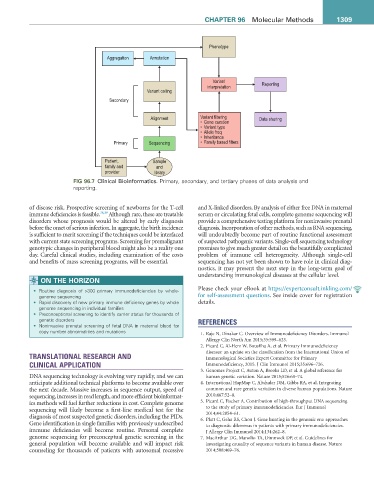
                         FIG 96.7  Clinical Bioinformatics. Primary, secondary, and tertiary phases of data analysis and
                         reporting.


           of disease risk. Prospective screening of newborns for the T-cell   and X-linked disorders. By analysis of either free DNA in maternal
           immune deficiencies is feasible. 38,39  Although rare, these are treatable   serum or circulating fetal cells, complete genome sequencing will
           disorders whose prognosis would be altered by early diagnosis   provide a comprehensive testing platform for noninvasive prenatal
           before the onset of serious infection. In aggregate, the birth incidence   diagnosis. Incorporation of other methods, such as RNA sequencing,
           is sufficient to merit screening if the techniques could be interfaced   will undoubtedly become part of routine functional assessment
           with current state screening programs. Screening for premalignant   of suspected pathogenic variants. Single-cell sequencing technology
           genotypic changes in peripheral blood might also be a reality one   promises to give much greater detail on the beautifully complicated
           day. Careful clinical studies, including examination of the costs   problem of immune cell heterogeneity.  Although single-cell
           and benefits of mass screening programs, will be essential.  sequencing has not yet been shown to have role in clinical diag-
                                                                  nostics,  it  may  present  the  next  step  in  the  long-term  goal  of
                                                                  understanding immunological diseases at the cellular level.
               ON THE HOrIZON
            •  Routine  diagnosis  of  >300  primary  immunodeficiencies  by  whole-  Please check your eBook at https://expertconsult.inkling.com/
              genome sequencing                                   for self-assessment questions. See inside cover for registration
            •  Rapid discovery of new primary immune deficiency genes by whole   details.
              genome sequencing in individual families
            •  Preconceptional screening to identify carrier status for thousands of
              genetic disorders                                   REFERENCES
            •  Noninvasive  prenatal  screening  of  fetal  DNA  in  maternal  blood  for
              copy number abnormalities and mutations              1.  Raje N, Dinakar C. Overview of Immunodeficiency Disorders. Immunol
                                                                    Allergy Clin North Am 2015;35:599–623.
                                                                   2.  Picard C, Al-Herz W, Bousfiha A, et al. Primary Immunodeficiency
                                                                    diseases: an update on the classification from the International Union of
           TRANSLATIONAL RESEARCH AND                               Immunological Societies Expert Committee for Primary
           CLINICAL APPLICATION                                     Immunodeficiency, 2015. J Clin Immunol 2015;35:696–726.
                                                                   3.  Genomes Project C, Auton A, Brooks LD, et al. A global reference for
           DNA sequencing technology is evolving very rapidly, and we can   human genetic variation. Nature 2015;526:68–74.
           anticipate additional technical platforms to become available over   4.  International HapMap C, Altshuler DM, Gibbs RA, et al. Integrating
           the next decade. Massive increases in sequence output, speed of   common and rare genetic variation in diverse human populations. Nature
           sequencing, increases in read length, and more efficient bioinformat-  2010;467:52–8.
           ics methods will fuel further reductions in cost. Complete genome   5.  Picard C, Fischer A. Contribution of high-throughput DNA sequencing
           sequencing will likely become a first-line medical test for the   to the study of primary immunodeficiencies. Eur J Immunol
                                                                    2014;44:2854–61.
           diagnosis of most suspected genetic disorders, including the PIDs.   6.  Platt C, Geha RS, Chou J. Gene hunting in the genomic era: approaches
           Gene identification in single families with previously undescribed   to diagnostic dilemmas in patients with primary immunodeficiencies.
           immune deficiencies will become routine. Personal complete   J Allergy Clin Immunol 2014;134:262–8.
           genome sequencing for preconceptual genetic screening in the   7.  MacArthur DG, Manolio TA, Dimmock DP, et al. Guidelines for
           general population  will become  available and will  impact risk   investigating causality of sequence variants in human disease. Nature
           counseling for thousands of patients with autosomal recessive   2014;508:469–76.

