


Page 206 - Clinical Immunology_ Principles and Practice ( PDFDrive )
P. 206
186          PART ONE  Principles of Immune Response


                                     P                         propagating activation signals. The importance of normal ITK
                           CD45
                   SH3   (Phosphatase)                         signaling was recently shown in humans, where homozygous
                                                               mutation led to immunodeficiency resulting in death from
           P   SH2 domain                                      EBV-associated lymphoproliferation.
                           CSK           Kinase    SH2 domain
                          (Kinase)                     SH3
              Kinase                 P                             KEY CONCEPTS
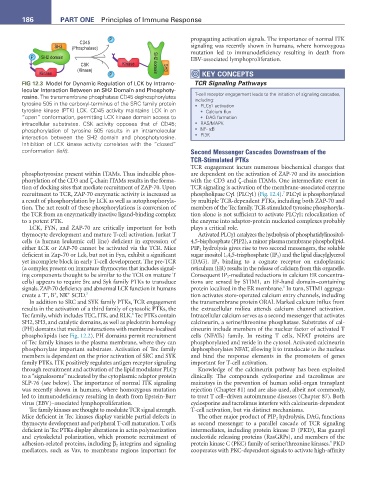
        FIG 12.3  Model for Dynamic Regulation of LCK by Intramo-  TCR Signaling Pathways
        lecular Interaction Between an SH2 Domain and Phosphoty-
        rosine. The transmembrane phosphatase CD45 dephosphorylates   T-cell receptor engagement leads to the initiation of signaling cascades,
                                                                 including:
        tyrosine 505 in the carboxyl-terminus of the SRC family protein   •  PLCγ1 activation
        tyrosine kinase (PTK) LCK. CD45 activity maintains LCK in an   •  Calcium flux
        “open” conformation, permitting LCK kinase domain access to   •  DAG formation
        intracellular substrates. CSK activity opposes that of CD45;   •  RAS/MAPK
        phosphorylation of tyrosine 505 results in an intramolecular   •  NF- κB
        interaction between the SH2 domain and phosphotyrosine.   •  PI3K
        Inhibition of LCK kinase activity correlates with the “closed”
        conformation (left).                                   Second Messenger Cascades Downstream of the
                                                               TCR-Stimulated PTKs
                                                               TCR engagement incurs numerous biochemical changes that
        phosphotyrosine present within ITAMs. Thus inducible phos-  are dependent on the activation of ZAP-70 and its association
        phorylation of the CD3 and ζ-chain ITAMs results in the forma-  with the CD3 and ζ-chain ITAMs. One intermediate event in
        tion of docking sites that mediate recruitment of ZAP-70. Upon   TCR signaling is activation of the membrane-associated enzyme
                                                                                              7
        recruitment to TCR, ZAP-70 enzymatic activity is increased as   phospholipase Cγ1 (PLCγ1) (Fig. 12.4).  PLCγ1 is phosphorylated
        a result of phosphorylation by LCK as well as autophosphoryla-  by multiple TCR-dependent PTKs, including both ZAP-70 and
        tion. The net result of these phosphorylations is conversion of   members of the Tec family. TCR-stimulated tyrosine phosphoryla-
        the TCR from an enzymatically inactive ligand-binding complex   tion alone is not sufficient to activate PLCγ1; relocalization of
        to a potent PTK.                                       the enzyme into adaptor-protein nucleated complexes probably
           LCK, FYN, and ZAP-70 are critically important for both   plays a critical role.
        thymocyte development and mature T-cell activation. Jurkat T   Activated PLCγ1 catalyzes the hydrolysis of phosphatidylinositol-
        cells (a human leukemic cell line) deficient in expression of   4,5-bisphosphate (PIP2), a minor plasma membrane phospholipid.
        either LCK or ZAP-70 cannot be activated via the TCR. Mice   PIP 2  hydrolysis gives rise to two second messengers, the soluble
        deficient in Zap-70 or Lck, but not in Fyn, exhibit a significant   sugar inositol 1,4,5-trisphosphate (IP 3 ) and the lipid diacylglycerol
        yet incomplete block in early T-cell development. The pre-TCR   (DAG).  IP 3   binding  to  a cognate  receptor on  endoplasmic
        (a complex present on immature thymocytes that includes signal-  reticulum (ER) results in the release of calcium from this organelle.
        ing components thought to be similar to the TCR on mature T   Consequent IP 3 -mediated reductions in calcium ER concentra-
        cells) appears to require Src and Syk family PTKs to transduce   tions are sensed by STIM1, an EF-hand domain–containing
                                                                                              8
        signals. ZAP-70 deficiency and abnormal LCK function in humans   protein localized in the ER membrane.  In turn, STIM1 aggrega-
                       +
                   +
                −
        create a T , B , NK  SCID. 5                           tion activates store-operated calcium entry channels, including
           In addition to SRC and SYK family PTKs, TCR engagement   the transmembrane protein ORAI. Marked calcium influx from
        results in the activation of a third family of cytosolic PTKs, the   the extracellular milieu attends calcium channel activation.
                                            6
        Tec family, which includes TEC, ITK, and RLK.  Tec PTKs contain   Intracellular calcium serves as a second messenger that activates
        SH2, SH3, and catalytic domains, as well as pleckstrin homology   calcineurin, a serine/threonine phosphatase. Substrates of cal-
        (PH) domains that mediate interactions with membrane-localized   cineurin include members of the nuclear factor of activated T
        phospholipids (see Fig. 12.2). PH domains permit recruitment   cells (NFATs)  family. In  resting  T cells, NFAT  proteins are
        of Tec family kinases to the plasma membrane, where they can   phosphorylated and reside in the cytosol. Activated calcineurin
        phosphorylate important substrates. Activation of Tec family   dephosphorylates NFAT, allowing it to translocate to the nucleus
        members is dependent on the prior activation of SRC and SYK   and bind the response elements in the promoters of genes
        family PTKs. ITK positively regulates antigen receptor signaling   important for T-cell activation.
        through recruitment and activation of the lipid modulator PLCγ   Knowledge of the calcineurin pathway has been exploited
        to a “signalosome” nucleated by the cytoplasmic adaptor protein   clinically. The compounds cyclosporine and tacrolimus are
        SLP-76 (see below). The importance of normal ITK signaling   mainstays in the prevention of human solid-organ transplant
        was recently shown in humans, where homozygous mutation   rejection (Chapter 81) and are also used, albeit not commonly,
        led to immunodeficiency resulting in death from Epstein-Barr   to treat T cell–driven autoimmune diseases (Chapter 87). Both
        virus (EBV)–associated lymphoproliferation.            cyclosporine and tacrolimus interfere with calcineurin-dependent
           Tec family kinases are thought to modulate TCR signal strength.   T-cell activation, but via distinct mechanisms.
        Mice deficient in Tec kinases display variable partial defects in   The other major product of PIP 2  hydrolysis, DAG, functions
        thymocyte development and peripheral T-cell maturation. T cells   as second messenger to a parallel cascade of TCR signaling
        deficient in Tec PTKs display alterations in actin polymerization   intermediates, including protein kinase D (PKD), Ras guanyl
        and  cytoskeletal  polarization, which  promote  recruitment of   nucleotide releasing proteins (RasGRPs), and members of the
                                                                                                             9
        adhesion-related proteins, including β 2 integrins and signaling   protein kinase C (PKC) family of serine/threonine kinases.  PKD
        mediators, such as  Vav, to membrane regions important for   cooperates with PKC-dependent signals to activate high-affinity

