


Page 207 - Clinical Immunology_ Principles and Practice ( PDFDrive )
P. 207
CHAPTER 12  T-Cell Activation and Tolerance             187


                                    TCR/CD3


                                                                   PIP2
                                             P13K    PLCγ1
                                                         IP3       DAG     RASGRP   RAS
                                      PTKs
                                                        Ca ++      PKC               RAF


                                                      Calcineurin  CARMA          MAPKK (MEK)
                                               NFAT~P              MALT1
                                                                  BCL-10
                                                             ~P
                                                                    IKK           MAPK (ERK)
                                                                 IκBα/NFκB


                                    Nucleus             NFAT       NFκB             AP-1

                                                              Transcriptional activation

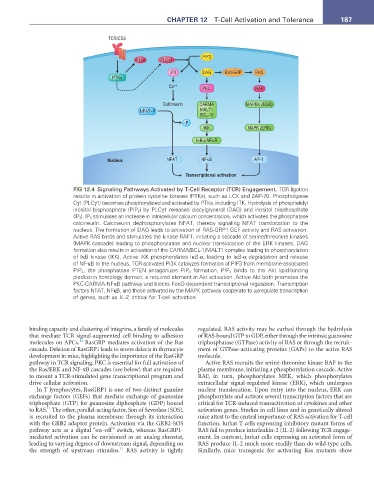
                         FIG 12.4  Signaling Pathways Activated by T-Cell Receptor (TCR) Engagement. TCR ligation
                         results in activation of protein tyrosine kinases (PTKs), such as LCK and ZAP-70. Phospholipase
                         Cγ1 (PLCγ1) becomes phosphorylated and activated by PTKs, including ITK. Hydrolysis of phosphatidyl
                         inositol bisphosphate (PIP 2 ) by PLCγ1 releases diacylglycerol (DAG) and inositol trisphosphate
                         (IP 3 ). IP 3  stimulates an increase in intracellular calcium concentration, which activates the phosphatase
                         calcineurin. Calcineurin dephosphorylates NFAT, thereby signaling NFAT translocation to the
                         nucleus. The formation of DAG leads to activation of RAS-GRP1 GEF activity and RAS activation.
                         Active RAS binds and stimulates the kinase RAF1, initiating a cascade of serine/threonine kinases
                         (MAPK cascade) leading to phosphorylation and nuclear translocation of the ERK kinases. DAG
                         formation also results in activation of the CARMA/BCL-1/MALT1 complex leading to phosphorylation
                         of IκB kinase (IKK). Active IKK phosphorylates IκB-α, leading to IκB-α degradation and release
                         of NF-κB to the nucleus. TCR-activated PI3K catalyzes formation of PIP3 from membrane-associated
                         PIP 2; the phosphatase PTEN antagonizes  PIP 3 formation. PIP 3 binds to the Akt lipid-binding
                         pleckstrin homology domain, a required element in Akt activation. Active Akt both promotes the
                         PKC-CARMA-NFκB pathway and blocks FoxO-dependent transcriptional regulation. Transcription
                         factors NFAT, NFκB, and those activated by the MAPK pathway cooperate to upregulate transcription
                         of genes, such as IL-2, critical for T-cell activation.


           binding capacity and clustering of integrins, a family of molecules   regulated. RAS activity may be curbed through the hydrolysis
           that mediate TCR signal-augmented cell binding to adhesion   of RAS-bound GTP to GDP, either through the intrinsic guanosine
                           10
           molecules on APCs.  RasGRP mediates activation of the Ras   triphosphatase (GTPase) activity of RAS or through the recruit-
           cascade. Deletion of RasGRP1 leads to severe defects in thymocyte   ment of GTPase-activating proteins (GAPs) to the active RAS
           development in mice, highlighting the importance of the RasGRP   molecule.
           pathway in TCR signaling. PKC is essential for full activation of   Active RAS recruits the serine-threonine kinase RAF to the
           the Ras/ERK and NF-κB cascades (see below) that are required   plasma membrane, initiating a phosphorylation cascade. Active
           to mount a TCR-stimulated gene transcriptional program and   RAF, in turn, phosphorylates MEK, which phosphorylates
           drive cellular activation.                             extracellular signal-regulated kinase (ERK), which undergoes
             In T lymphocytes, RasGRP1 is one of two distinct guanine   nuclear translocation. Upon entry into the nucleus, ERK can
           exchange factors (GEFs) that mediate exchange of guanosine   phosphorylate and activate several transcription factors that are
           triphosphate (GTP) for guanosine diphosphate (GDP) bound   critical for TCR-induced transactivation of cytokines and other
                11
           to RAS.  The other, parallel-acting factor, Son of Sevenless (SOS),   activation genes. Studies in cell lines and in genetically altered
           is recruited to the plasma membrane through its interaction   mice attest to the central importance of RAS activation for T-cell
           with the GRB2 adaptor protein. Activation via the GRB2-SOS   function. Jurkat T cells expressing inhibitory mutant forms of
           pathway acts as a digital “on–off” switch, whereas RasGRP1-  RAS fail to produce interleukin-2 (IL-2) following TCR engage-
           mediated activation can be envisioned as an analog rheostat,   ment. In contrast, Jurkat cells expressing an activated form of
           leading to varying degrees of downstream signal, depending on   RAS produce IL-2 much more readily than do wild-type cells.
                                        11
           the strength of upstream stimulus.  RAS activity is tightly   Similarly, mice transgenic for activating Ras mutants show

