


Page 273 - Clinical Immunology_ Principles and Practice ( PDFDrive )
P. 273
254          PART TwO  Host Defense Mechanisms and Inflammation


                                                                             Altered self
                                                           Missing self
                          NK cell

                                     - -                                                   - -

                          Activating  Inhibitory                   +++              +++
                          receptor    receptor
                                                               Activating
                                    MHC-I
                          Target                               ligand
                          cell

                                Inhibition        Poor killing        Killing     Response determined
                                no killing                                         by balance of signals
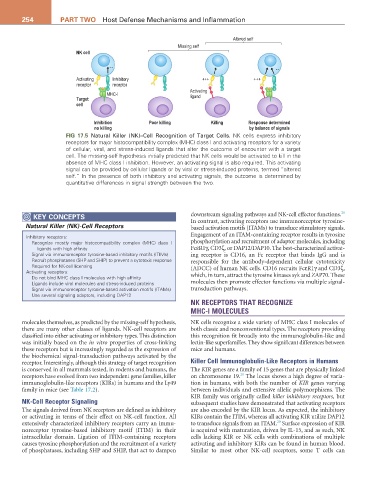
                       FIG 17.5  Natural Killer (NK)–Cell Recognition of Target Cells. NK cells express inhibitory
                       receptors for major histocompatibility complex (MHC) class I and activating receptors for a variety
                       of cellular, viral, and stress-induced ligands that alter the outcome of encounter with a target
                       cell. The missing-self hypothesis initially predicted that NK cells would be activated to kill in the
                       absence of MHC class I inhibition. However, an activating signal is also required. This activating
                       signal can be provided by cellular ligands or by viral or stress-induced proteins, termed “altered
                       self.” In the presence of both inhibitory and activating signals, the outcome is determined by
                       quantitative differences in signal strength between the two.


                                                                                                                 20
            KEY CONCEPTS                                       downstream signaling pathways and NK-cell effector functions.
         Natural Killer (NK)-Cell Receptors                    In contrast, activating receptors use immunoreceptor tyrosine-
                                                               based activation motifs (ITAMs) to transduce stimulatory signals.
          Inhibitory receptors:                                Engagement of an ITAM-containing receptor results in tyrosine
           Recognize mostly major histocompatibility complex (MHC) class I   phosphorylation and recruitment of adaptor molecules, including
             ligands with high affinity                        FcεR1γ, CD3ζ, or DAP12/DAP10. The best-characterized activat-
           Signal via immunoreceptor tyrosine-based inhibitory motifs (ITIMs)  ing receptor is CD16, an Fc receptor that binds IgG and is
           Recruit phosphatases (SHP and SHIP) to prevent a cytotoxic response  responsible for the antibody-dependent cellular cytotoxicity
           Required for NK-cell licensing                      (ADCC) of human NK cells. CD16 recruits FcεR1γ and CD3ζ,
          Activating receptors:                                which, in turn, attract the tyrosine kinases syk and ZAP70. These
           Do not bind MHC class I molecules with high affinity
           Ligands include viral molecules and stress-induced proteins  molecules then promote effector functions via multiple signal-
           Signal via immunoreceptor tyrosine-based activation motifs (ITAMs)  transduction pathways.
           Use several signaling adaptors, including DAP12
                                                               NK RECEPTORS THAT RECOGNIZE
                                                               MHC-I MOLECULES

        molecules themselves, as predicted by the missing-self hypothesis,   NK cells recognize a wide variety of MHC class I molecules of
        there are many other classes of ligands. NK-cell receptors are   both classic and nonconventional types. The receptors providing
        classified into either activating or inhibitory types. This distinction   this recognition fit broadly into the immunoglobulin-like and
        was initially based on the in vitro properties of cross-linking   lectin-like superfamilies. They show significant differences between
        these receptors but is increasingly regarded as the expression of   mice and humans.
        the biochemical signal-transduction pathways activated by the
        receptor. Interestingly, although this strategy of target recognition   Killer Cell Immunoglobulin-Like Receptors in Humans
        is conserved in all mammals tested, in rodents and humans, the   The KIR genes are a family of 15 genes that are physically linked
                                                                                21
        receptors have evolved from two independent gene families, killer   on chromosome 19.  The locus shows a high degree of varia-
        immunoglobulin-like receptors (KIRs) in humans and the Ly49   tion in humans, with both the number of KIR genes varying
        family in mice (see Table 17.2).                       between individuals and extensive allelic polymorphisms. The
                                                               KIR family was originally called killer inhibitory receptors, but
        NK-Cell Receptor Signaling                             subsequent studies have demonstrated that activating receptors
        The signals derived from NK receptors are defined as inhibitory   are also encoded by the KIR locus. As expected, the inhibitory
        or activating in terms of their effect on NK-cell function. All   KIRs contain the ITIM, whereas all activating KIR utilize DAP12
                                                                                            20
        extensively characterized inhibitory receptors carry an immu-  to transduce signals from an ITAM.  Surface expression of KIR
        noreceptor tyrosine-based inhibitory motif (ITIM) in their   is acquired with maturation, driven by IL-15, and as such, NK
        intracellular domain. Ligation of ITIM-containing receptors   cells lacking KIR or NK cells with combinations of multiple
        causes tyrosine phosphorylation and the recruitment of a variety   activating and inhibitory KIRs can be found in human blood.
        of phosphatases, including SHP and SHIP, that act to dampen   Similar to most other NK-cell receptors, some T cells can

