


Page 269 - Clinical Immunology_ Principles and Practice ( PDFDrive )
P. 269
250          PART TwO  Host Defense Mechanisms and Inflammation


                                                      CD8 T cell
                               B cell                   CTL


                                              “help”   IFN-γ,       Antigen presentation,
                                               IL-2  CCL3/CCL4       IL-12 CCL3/CCL4


                               “help”                           IL-12, IL-18, IL-15, IFN-αβ
                               CD40L                              expansion/cytotoxicity
                                                        NK                               DC
                                                                   Lysis/maturation
                                                                     IFN-γ,TNF
                                                        IFN-γ

                             T helper cell                            IL-12
                                                      CD4 T cell


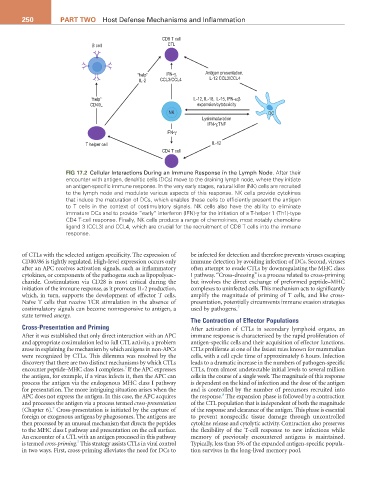
                       FIG 17.2  Cellular Interactions During an Immune Response in the Lymph Node. After their
                       encounter with antigen, dendritic cells (DCs) move to the draining lymph node, where they initiate
                       an antigen-specific immune response. In the very early stages, natural killer (NK) cells are recruited
                       to the lymph node and modulate various aspects of this response. NK cells provide cytokines
                       that induce the maturation of DCs, which enables these cells to efficiently present the antigen
                       to T cells in the context of costimulatory  signals. NK cells  also have the ability to eliminate
                       immature DCs and to provide “early” interferon (IFN)-γ for the initiation of a T-helper 1 (Th1)-type
                       CD4 T-cell response. Finally, NK cells produce a range of chemokines, most notably chemokine
                       ligand 3 (CCL3) and CCL4, which are crucial for the recruitment of CD8 T cells into the immune
                       response.


        of CTLs with the selected antigen specificity. The expression of   be infected for detection and therefore prevents viruses escaping
        CD80/86 is tightly regulated. High-level expression occurs only   immune detection by avoiding infection of DCs. Second, viruses
        after an APC receives activation signals, such as inflammatory   often attempt to evade CTLs by downregulating the MHC class
        cytokines, or components of the pathogens such as lipopolysac-  I pathway. “Cross-dressing” is a process related to cross-priming
        charide. Costimulation via CD28  is  most  critical  during  the   but involves the direct exchange of preformed peptide–MHC
        initiation of the immune response, as it promotes IL-2 production,   complexes to uninfected cells. This mechanism acts to significantly
        which, in turn, supports the development of effector T cells.   amplify the magnitude of priming of T cells, and like cross-
        Naïve T cells that receive TCR stimulation in the absence of   presentation, potentially circumvents immune evasion strategies
        costimulatory signals can become nonresponsive to antigen, a   used by pathogens. 7
        state termed anergy.
                                                               The Contraction of Effector Populations
        Cross-Presentation and Priming                         After activation of  CTLs  in secondary lymphoid  organs, an
        After it was established that only direct interaction with an APC   immune response is characterized by the rapid proliferation of
        and appropriate costimulation led to full CTL activity, a problem   antigen-specific cells and their acquisition of effector functions.
        arose in explaining the mechanism by which antigens in non-APCs   CTLs proliferate at one of the fastest rates known for mammalian
        were recognized by CTLs. This dilemma was resolved by the   cells, with a cell cycle time of approximately 6 hours. Infection
        discovery that there are two distinct mechanisms by which CTLs   leads to a dramatic increase in the numbers of pathogen-specific
                                          7
        encounter peptide–MHC class I complexes.  If the APC expresses   CTLs, from almost undetectable initial levels to several million
        the antigen, for example, if a virus infects it, then the APC can   cells in the course of a single week. The magnitude of this response
        process the antigen via the endogenous MHC class I pathway   is dependent on the kind of infection and the dose of the antigen
        for presentation. The more intriguing situation arises when the   and is controlled by the number of precursors recruited into
                                                                          8
        APC does not express the antigen. In this case, the APC acquires   the response.  The expansion phase is followed by a contraction
        and processes the antigen via a process termed cross-presentation   of the CTL population that is independent of both the magnitude
                  7
        (Chapter 6).  Cross-presentation is initiated by the capture of   of the response and clearance of the antigen. This phase is essential
        foreign or exogenous antigens by phagosomes. The antigens are   to prevent nonspecific tissue damage through uncontrolled
        then processed by an unusual mechanism that directs the peptides   cytokine release and cytolytic activity. Contraction also preserves
        to the MHC class I pathway and presentation on the cell surface.   the flexibility of the T-cell response to new infections while
        An encounter of a CTL with an antigen processed in this pathway   memory of previously encountered antigens is maintained.
                          7
        is termed cross-priming.  This strategy assists CTLs in viral control   Typically, less than 5% of the expanded antigen-specific popula-
        in two ways. First, cross-priming alleviates the need for DCs to   tion survives in the long-lived memory pool.

