


Page 377 - Clinical Immunology_ Principles and Practice ( PDFDrive )
P. 377
CHaPtEr 24  Eosinophils and Eosinophilia              357


                                                    Hypereosinophilic Syndromes (HESs)


                                                          Eosinophils > 1,500/mm 3
                                                Persistent eosinophilia and/or end-organ damage/dysfunction
                                                    Exclusion of secondary causes of eosinophilia


                                Myeloproliferative variant   Lymphocytic
                                                               variant  Familial  Undefined  Overlap*  Associated**


                 Myeloproliferative  PDGFRA      Chronic   Clonal lymphocyte  Family history of  EGID eosinophilic  CSS Systemic
                  - etiology unknown  -associated HES  eosinophilic  population by   documented  pneumonia,  mastocytosis,
                                                leukemia   flow cytometry  persistent  eosinophilia   inflammatory
                                                           or            eosinophilia of  myalgia syndrome,  bowel disease,
                                                           PCR analysis of  unknown cause  and other organ-  sarcoidosis, HIV,
                                                           T-cell receptor usage       restricted     and other disorders
                                                                                       eosinophilic disorders
                  F/P negative and  F/P positive by  Demonstrable
                 clonal eosinophilia by  RT - PCR  cytogenetic
                   HUMARA***      or FISH      abnormalities
                      or                       and/or blasts
                 ≥4 of the following:          on peripheral         Benign          Complex          Episodic
                                               smear
              Dysplastic eosinophils on
              peripheral smear                                  Asymptomatic     Symptomatic with  Cyclical angioedema
              Serum B12>1000 pg/ml                              with no evidence  organ dysfunction  and eosinophilia
              Anemia and/or                                     of organ involvement  but does not meet
              thrombocytopenia                                                   criteria for
              Hepatosplenomegaly                                                 myeloproliferative or
              Bone marrow cellularity >80%                                       lymphocytic variant
              Spindle-shaped mast cells
              Myelofibrosis
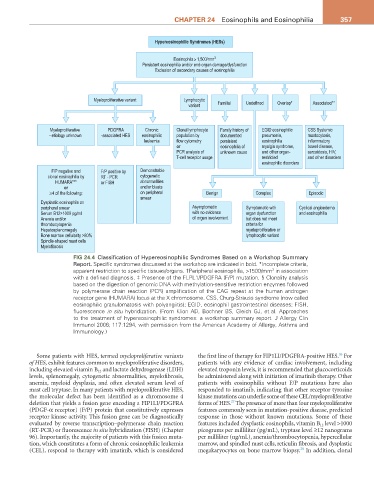
                         FIG 24.4  Classification of Hypereosinophilic Syndromes Based on a Workshop Summary
                         Report. Specific syndromes discussed at the workshop are indicated in bold. *Incomplete criteria,
                         apparent restriction to specific tissues/organs. †Peripheral eosinophilia, >1500/mm  in association
                                                                                          3
                         with a defined diagnosis. ‡ Presence of the FLPL1/PDGFRA (F/P) mutation. § Clonality analysis
                         based on the digestion of genomic DNA with methylation-sensitive restriction enzymes followed
                         by polymerase chain reaction (PCR) amplification of the CAG repeat at the human androgen
                         receptor gene (HUMARA) locus at the X chromosome. CSS, Churg-Strauss syndrome (now called
                         eosinophilic granulomatosis with polyangiitis); EGID, eosinophil gastrointestinal diseases; FISH,
                         fluorescence  in situ hybridization. (From Klion AD, Bochner BS, Gleich GJ, et al. Approaches
                         to the treatment of hypereosinophilic syndromes: a workshop summary report. J Allergy Clin
                         Immunol 2006; 117:1294, with permission from the American Academy of Allergy, Asthma and
                         Immunology.)


                                                                                                                26
             Some patients with HES, termed myeloproliferative variants   the first line of therapy for FIP1LI/PDGFRA-positive HES.  For
           of HES, exhibit features common to myeloproliferative disorders,   patients  with  any  evidence  of  cardiac  involvement,  including
           including elevated vitamin B 12  and lactate dehydrogenase (LDH)   elevated troponin levels, it is recommended that glucocorticoids
           levels, splenomegaly, cytogenetic abnormalities, myelofibrosis,   be administered along with initiation of imatinib therapy. Other
           anemia, myeloid dysplasia, and often elevated serum level of   patients with eosinophilia without F/P mutations have also
           mast cell tryptase. In many patients with myeloproliferative HES,   responded to imatinib, indicating that other receptor tyrosine
           the  molecular  defect  has  been  identified  as  a  chromosome  4   kinase mutations can underlie some of these CEL/myeloproliferative
                                                                             27
           deletion that yields a fusion gene encoding a FIP1LI/PDGFRA   forms of HES.  The presence of more than four myeloproliferative
           (PDGF-α receptor) (F/P) protein that constitutively expresses   features commonly seen in mutation-positive disease, predicted
           receptor kinase activity. This fusion gene can be diagnostically   response in those without known mutations. Some of these
           evaluated by reverse transcription–polymerase chain reaction   features included dysplastic eosinophils, vitamin B 12  level >1000
           (RT-PCR) or fluorescence in situ hybridization (FISH) (Chapter   picograms per milliliter (pg/mL), tryptase level ≥12 nanograms
           96). Importantly, the majority of patients with this fusion muta-  per milliliter (ng/mL), anemia/thrombocytopenia, hypercellular
           tion, which constitutes a form of chronic eosinophilic leukemia   marrow, and spindled mast cells, reticulin fibrosis, and dysplastic
                                                                                                   28
           (CEL), respond to therapy with imatinib, which is considered   megakaryocytes on bone marrow biopsy.  In addition, clonal

