


Page 43 - Clinical Immunology_ Principles and Practice ( PDFDrive )
P. 43
CHaPter 2  Organization of the Immune System                  29


              CD 45  Lymphs   Monos                 Seg neutro            Macrophage                       Cortical
                                                                                                           epithelium
                                                                    Epithelium              Capsule


                   Lymphoblasts                     Imm myel                             (+) selection
                                                                                                           Hassall
                                    Myeloblasts                                                            corpuscle
                                    NRBC
                                                                   Cortex             Nurse cell  (–) selection

                                                    Side scatter   Dendritic cells                    Corticomedullary
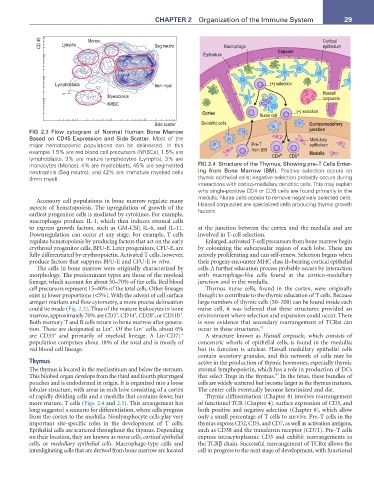
           FIG 2.3  Flow cytogram of Normal Human  Bone Marrow                                        junction
           Based on CD45 Expression and Side Scatter. Most of the                                     Medullary
           major hematopoietic populations can be delineated. In this              Pre-T              epithelium
           example 1.5% are red blood cell precursors (NRBCs), 1.5% are            from BM            Medulla
           lymphoblasts, 3% are mature lymphocytes (Lymphs), 3% are                       CD4 +  CD8 +
           monocytes (Monos), 4% are myeloblasts, 45% are segmented   FIG 2.4  Structure of the Thymus, Showing pre–T Cells Enter-
           neutrophils (Seg neutro), and 42% are immature myeloid cells   ing from Bone Marrow (BM). Positive selection occurs on
           (Imm myel).                                            thymic epithelial cells; negative selection probably occurs during
                                                                  interactions with cortico-medullary dendritic cells. This may explain
                                                                  why single-positive CD4 or CD8 cells are found primarily in the
                                                                  medulla. Nurse cells appear to remove negatively selected cells.
             Accessory cell populations in bone marrow regulate many   Hassall corpuscles are specialized cells producing thymic growth
           aspects of hematopoiesis. The upregulation of growth of the   factors.
           earliest progenitor cells is mediated by cytokines. For example,
           macrophages  produce  IL-1,  which  then  induces  stromal  cells
           to express growth factors, such as GM-CSF, IL-6, and IL-11.   at  the  junction  between  the  cortex  and  the  medulla  and  are
           Downregulation can occur at any stage. For example, T cells   involved in T-cell selection.
           regulate hematopoiesis by producing factors that act on the early   Enlarged, activated T-cell precursors from bone marrow begin
           erythroid progenitor cells, BFU-E. Later progenitors, CFU-E, are   by colonizing the subcapsular region of each lobe. These are
           fully differentiated by erythropoietin. Activated T cells, however,   actively proliferating and can self-renew. Selection begins when
           produce factors that suppress BFU-E and CFU-E in vitro.  their progeny encounter MHC class II–bearing cortical epithelial
             The cells in bone marrow were originally characterized by   cells. A further education process probably occurs by interaction
           morphology. The predominant types are those of the myeloid   with macrophage-like cells found at the cortico-medullary
           lineage, which account for about 50–70% of the cells. Red blood   junction and in the medulla.
           cell precursors represent 15–40% of the total cells. Other lineages   Thymus nurse cells, found in the cortex, were originally
           exist in lower proportions (<5%). With the advent of cell surface   thought to contribute to the thymic education of T cells. Because
           antigen markers and flow cytometry, a more precise delineation   large numbers of thymic cells (50–200) can be found inside each
           could be made (Fig. 2.3). Thus of the mature leukocytes in bone   nurse cell, it was believed that these structures provided an
                                             +
                                                            +
                                                   +
                                       +
           marrow, approximately 70% are CD3 , CD14 , CD20 , or CD11b .   environment where selection and expansion could occur. There
           Both memory T and B cells return to bone marrow after genera-  is now evidence that secondary rearrangement of TCRα can
                                               −
                                     +
           tion. These are designated as Lin . Of the Lin  cells, about 6%   occur in these structures. 42
                                                       −
                                                            +
                   +
           are CD33  and primarily of myeloid lineage.  A Lin CD71    A structure known as  Hassall corpuscle, which consists of
           population comprises about 18% of the total and is mostly of   concentric whorls of epithelial cells, is found in the medulla;
           red blood cell lineage.                                but its function is unclear. Hassall medullary epithelial cells
                                                                  contain  secretory  granules,  and  this  network  of  cells  may  be
           Thymus                                                 active in the production of thymic hormones, especially thymic
           The thymus is located in the mediastinum and below the sternum.   stromal lymphopoietin, which has a role in production of DCs
                                                                                           43
           This bilobed organ develops from the third and fourth pharyngeal   that select Tregs in the thymus.  In the fetus, these bundles of
           pouches and is endodermal in origin. It is organized into a loose   cells are widely scattered but become larger as the thymus matures.
           lobular structure, with areas in each lobe consisting of a cortex   The center cells eventually become keratinized and die.
           of rapidly dividing cells and a medulla that contains fewer, but   Thymic differentiation (Chapter 8) involves rearrangement
           more mature, T cells (Figs. 2.4 and 2.5). This arrangement has   of functional TCR (Chapter 4), surface expression of CD3, and
           long suggested a scenario for differentiation, where cells progress   both positive and negative selection (Chapter 8), which allow
           from the cortex to the medulla. Nonlymphocyte cells play very   only a small percentage of T cells to survive. Pre–T cells in the
           important  site-specific  roles  in the  development  of  T cells.   thymus express CD2, CD5, and CD7, as well as activation antigens,
           Epithelial cells are scattered throughout the thymus. Depending   such as CD38 and the transferrin receptor (CD71). Pre–T cells
           on their location, they are known as nurse cells, cortical epithelial   express intracytoplasmic CD3 and exhibit rearrangements in
           cells,  or  medullary  epithelial  cells.  Macrophage-type  cells  and   the TCRβ chain. Successful rearrangement of TCRα allows the
           interdigitating cells that are derived from bone marrow are located   cell to progress to the next stage of development, with functional

