


Page 44 - Clinical Immunology_ Principles and Practice ( PDFDrive )
P. 44
30           Part one  Principles of Immune Response


                                                               of cortical thymocytes to hormone-induced death probably
                                                               accounts for the involution, although human thymocytes are
               Trabecula                                       less sensitive to glucocorticosteroids compared with murine
                                                               thymocytes. However, an increase in steroids reduces immature
                                                               thymocyte numbers and enhances thymus involution. Recent
                                                               evidence suggests that active TCR rearrangements, and hence
                                                               T-cell development, continue in the adult thymus, albeit at a
                          Hassall corpuscle                    lower level than during childhood. There is an age-associated
                                                               decline in new T-cell production, such that by age 75 years, the
                          Medulla                              ability to make new T cells in humans is severely reduced.
                                                               Development of Hematopoietic and Lymphoid Cells
                                                               Although most of the key steps during the growth and develop-
                                                               ment of hematopoietic and lymphoid cells occur in bone marrow
                                       Cortex                  and the thymus, additional maturation steps occur after the cells
                                                               leave those tissues. For example, monocytes and DC precursors
            A                                                  migrate from blood vessels into tissues, where they mature into
                                                               macrophages and DCs, respectively. There is recent evidence for
                                                               a tissue-associated macrophage that is fetal in origin. Mast cells
                                                               and eosinophils also undergo further differentiation in resident
                                                               tissues. After leaving bone marrow and the thymus, B and T
                                                               cells undergo further maturation and memory cell development
                                                               in secondary lymphoid organs. There is strong evidence that
                                                               some T cells, particularly the  γδ T cells residing in mucosal
                                                               epithelium, do not develop in the thymus.

                                                               SECONDARY LYMPHOID ORGANS

                                                               Secondary lymphoid organs are sites where mature lymphocytes
                                                               reside and where immune responses are generated. Secondary
                                                               lymphoid organs belong to either the systemic immune system
                                                               or the mucosal immune system. The systemic immune system,
                                                               which includes the spleen and lymph nodes, functions to protect
                                                               the body from antigens in the lymphatic drainage and circulating
                                                               in the bloodstream. The mucosal immune system responds to
            B                                                  antigens that enter through mucosal epithelium and plays an
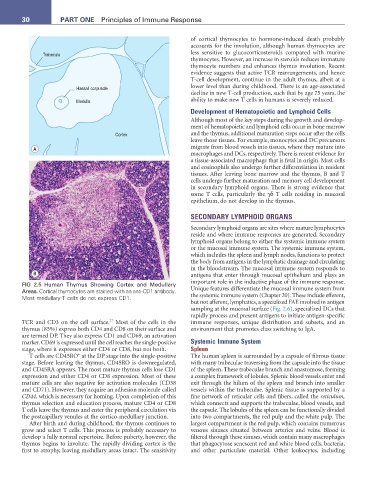
        FIG 2.5  Human Thymus Showing Cortex and Medullary     important role in the inductive phase of the immune response.
        Areas. Cortical thymocytes are stained with an anti-CD1 antibody.   Unique features differentiate the mucosal immune system from
        Most medullary T cells do not express CD1.             the systemic immune system (Chapter 20). These include efferent,
                                                               but not afferent, lymphatics, a specialized FAE involved in antigen
                                                               sampling at the mucosal surface (Fig. 2.6), specialized DCs that
                                                               rapidly process and present antigens to initiate antigen-specific
                                     27
        TCR and CD3 on the cell surface.  Most of the cells in the   immune responses, unique distribution and subsets, and an
        thymus (85%) express both CD4 and CD8 on their surface and   environment that promotes class switching to IgA.
        are termed DP. They also express CD1 and CD69, an activation
        marker. CD69 is expressed until the cell reaches the single-positive   Systemic Immune System
        stage, where it expresses either CD4 or CD8, but not both.  Spleen
                           +
           T cells are CD45RO  at the DP stage into the single-positive   The human spleen is surrounded by a capsule of fibrous tissue
        stage. Before leaving the thymus, CD45RO is downregulated,   with many trabeculae traversing from the capsule into the tissue
        and CD45RA appears. The most mature thymus cells lose CD1   of the spleen. These trabeculae branch and anastomose, forming
        expression and either CD4 or CD8 expression. Most of these   a complex framework of lobules. Splenic blood vessels enter and
        mature cells are also negative for activation molecules (CD38   exit through the hilum of the spleen and branch into smaller
        and CD71). However, they acquire an adhesion molecule called   vessels within the trabeculae. Splenic tissue is supported by a
        CD44, which is necessary for homing. Upon completion of this   fine network of reticular cells and fibers, called the reticulum,
        thymus selection and education process, mature CD4 or CD8   which connects and supports the trabeculae, blood vessels, and
        T cells leave the thymus and enter the peripheral circulation via   the capsule. The lobules of the spleen can be functionally divided
        the postcapillary venules at the cortico-medullary junction.  into two compartments, the red pulp and the white pulp. The
           After birth and during childhood, the thymus continues to   largest compartment is the red pulp, which contains numerous
        grow and select T cells. This process is probably necessary to   venous sinuses situated between arteries and veins. Blood is
        develop a fully normal repertoire. Before puberty, however, the   filtered through these sinuses, which contain many macrophages
        thymus begins to involute. The rapidly dividing cortex is the   that phagocytose senescent red and white blood cells, bacteria,
        first to atrophy, leaving medullary areas intact. The sensitivity   and other particulate material. Other leukocytes, including

