


Page 516 - Clinical Immunology_ Principles and Practice ( PDFDrive )
P. 516
496          ParT fOur  Immunological Deficiencies


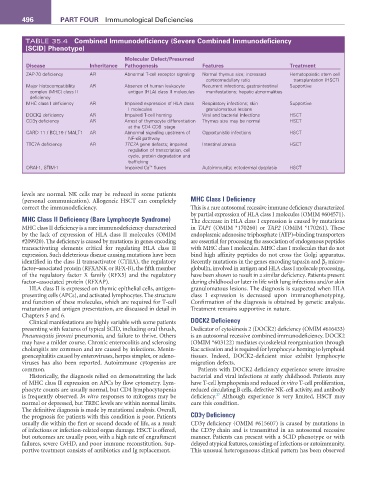
         TABLE 35.4  Combined Immunodeficiency (Severe Combined Immunodeficiency
         [SCID] Phenotype)
                                          Molecular Defect/Presumed
          Disease             Inheritance  Pathogenesis            features                     Treatment
          ZAP-70 deficiency   AR          Abnormal T-cell receptor signaling  Normal thymus size; increased   Hematopoietic stem cell
                                                                    corticomedullary ratio       transplantation (HSCT)
          Major histocompatibility   AR   Absence of human leukocyte   Recurrent infections; gastrointestinal   Supportive
           complex (MHC) class II          antigen (HLA) class II molecules  manifestations; hepatic abnormalities
           deficiency
          MHC class I deficiency  AR      Impaired expression of HLA class   Respiratory infections; skin   Supportive
                                           I molecules              granulomatous lesions
          DOCK2 deficiency    AR          Impaired T-cell homing   Viral and bacterial infections  HSCT
          CD3γ deficiency     AR          Arrest of thymocyte differentiation   Thymus size may be normal  HSCT
                                           at the CD4 CD8  stage
                                                      −
                                                  −
          CARD 11 / BCL10 / MALT1  AR     Abnormal signaling upstream of   Opportunistic infections  HSCT
                                           NF-κB pathway
          TTC7A deficiency    AR          TTC7A gene defects; impaired   Intestinal atresia     HSCT
                                           regulation of transcription, cell
                                           cycle, protein degradation and
                                           trafficking
                                                  2+
          ORAI-1, STIM-1                  Impaired Ca  fluxes      Autoimmunity; ectodermal dysplasia  HSCT


        levels are normal. NK cells may be reduced in some patients
        (personal communication). Allogeneic HSCT can completely   MHC Class I Deficiency
        correct the immunodeficiency.                          This is a rare autosomal recessive immune deficiency characterized
                                                               by partial expression of HLA class I molecules (OMIM #604571).
        MHC Class II Deficiency (Bare Lymphocyte Syndrome)     The decrease in HLA class I expression is caused by mutations
        MHC class II deficiency is a rare immunodeficiency characterized   in TAP1 (OMIM *170260) or TAP2 (OMIM *170261). These
        by the lack of expression of HLA class II molecules (OMIM   endoplasmic adenosine triphosphate (ATP)–binding transporters
        #209920). The deficiency is caused by mutations in genes encoding   are essential for processing the association of endogenous peptides
        transactivating elements critical for regulating HLA class II   with MHC class I molecules. MHC class I molecules that do not
        expression. Such deleterious disease causing mutations have been   bind high affinity peptides do not cross the Golgi apparatus.
        identified in the class II transactivator (CTIIA), the regulatory   Recently mutations in the genes encoding tapasin and β 2  micro-
        factor–associated protein (RFXANK or RFX-B), the fifth member   globulin, involved in antigen and HLA class I molecule processing,
        of the regulatory factor X family (RFX5) and the regulatory   have been shown to result in a similar deficiency. Patients present
        factor–associated protein (RFXAP).                     during childhood or later in life with lung infections and/or skin
           HLA class II is expressed on thymic epithelial cells, antigen-  granulomatous lesions. The diagnosis is suspected when HLA
        presenting cells (APCs), and activated lymphocytes. The structure   class I expression is decreased upon immunophenotyping.
        and function of these molecules, which are required for T-cell   Confirmation of the diagnosis is obtained by genetic analysis.
        maturation and antigen presentation, are discussed in detail in   Treatment remains supportive in nature.
        Chapters 5 and 6.
           Clinical manifestations are highly variable with some patients   DOCK2 Deficiency
        presenting with features of typical SCID, including oral thrush,   Dedicator of cytokinesis 2 (DOCK2) deficiency (OMIM #616433)
        Pneumocystis jiroveci pneumonia, and failure to thrive. Others   is an autosomal recessive combined immunodeficiency. DOCK2
        may have a milder course. Chronic enterocolitis and sclerosing   (OMIM *603122) mediates cytoskeletal reorganization through
        cholangitis are common and are caused by infections. Menin-  Rac activation and is required for lymphocyte homing to lymphoid
        goencephalitis caused by enteroviruses, herpes simplex, or adeno-  tissues. Indeed, DOCK2-deficient mice exhibit lymphocyte
        viruses has also been reported.  Autoimmune cytopenias are   migration defects.
        common.                                                   Patients with DOCK2 deficiency experience severe invasive
           Historically, the diagnosis relied on demonstrating the lack   bacterial and viral infections at early childhood. Patients may
        of MHC class II expression on APCs by flow cytometry. Lym-  have T-cell lymphopenia and reduced in vitro T-cell proliferation,
        phocyte counts are usually normal, but CD4 lymphocytopenia   reduced circulating B cells, defective NK-cell activity, and antibody
                                                                        27
        is frequently observed. In vitro responses to mitogens may be   deficiency.   Although experience is very limited, HSCT may
        normal or depressed, but TREC levels are within normal limits.   cure this condition.
        The definitive diagnosis is made by mutational analysis. Overall,
        the prognosis for patients with this condition is poor. Patients   CD3γ Deficiency
        usually die within the first or second decade of life, as a result   CD3γ deficiency (OMIM #615607) is caused by mutations in
        of infections or infection-related organ damage. HSCT is offered,   the CD3γ chain and is transmitted in an autosomal recessive
        but outcomes are usually poor, with a high rate of engraftment   manner. Patients can present with a SCID phenotype or with
        failures, severe GvHD, and poor immune reconstitution. Sup-  delayed atypical features, consisting of infections or autoimmunity.
        portive treatment consists of antibiotics and Ig replacement.  This unusual heterogeneous clinical pattern has been observed

