


Page 559 - Clinical Immunology_ Principles and Practice ( PDFDrive )
P. 559
536          Part four  Immunological Deficiencies


                                     Development  Homeostasis  Dysfunction
                                     Innate cells
                                   Frequency                         Monocytes
                                                                     Dendritic cells
                                                                     Natural killer (NK) cells

                                     B cells                         Maturnal Ab (lgG)
                                   Frequency                         Class-switched Ab
                                                                     Naive/Transitional
                                                                     Class switched memory


                                     T cells
                                                                     RTE
                                                                     Naïve CD4 T cells
                                   Frequency                         CD4 Tregs
                                                                     Naïve CD8 T cells
                                                                     Memory T cells

                                     Receptor repertoire             NK cells (+/- receptors)
                                                                     Naïve B cells (BCR specificity)
                                   Diversity                         Naïve T cells (TCR specificity)
                                                                     Memory B cells (BCR specificity)
                                                                     Memory T cells (TCR specificity)

                                    Birth 1  5   30      60      80 years
                                                  Age
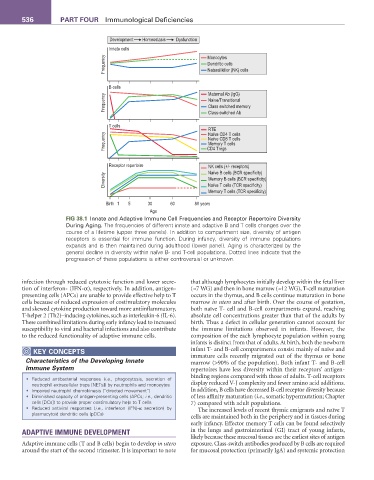
                       fIG 38.1  Innate and Adaptive Immune Cell Frequencies and Receptor Repertoire Diversity
                       During Aging. The frequencies of different innate and adaptive B and T cells changes over the
                       course of a lifetime (upper three panels). In addition to compartment size, diversity of antigen
                       receptors is essential for immune function. During infancy, diversity of immune populations
                       expands and is then maintained during adulthood (lower panel). Aging is characterized by the
                       general decline in diversity within naïve B- and T-cell populations. Dotted lines indicate that the
                       progression of these populations is either controversial or unknown.


        infection through reduced cytotoxic function and lower secre-  that although lymphocytes initially develop within the fetal liver
        tion of interferon- (IFN-α), respectively. In addition, antigen-  (≈7 WG) and then in bone marrow (≈12 WG), T-cell maturation
        presenting cells (APCs) are unable to provide effective help to T   occurs in the thymus, and B cells continue maturation in bone
        cells because of reduced expression of costimulatory molecules   marrow in utero and after birth. Over the course of gestation,
        and skewed cytokine production toward more antiinflammatory,   both naïve T- cell and B-cell compartments expand, reaching
        T-helper 2 (Th2)–inducing cytokines, such as interleukin-6 (IL-6).   absolute cell concentrations greater than that of the adults by
        These combined limitations during early infancy lead to increased   birth. Thus a defect in cellular generation cannot account for
        susceptibility to viral and bacterial infections and also contribute   the immune limitations observed in infants. However, the
        to the reduced functionality of adaptive immune cells.  composition of the each lymphocyte population within young
                                                               infants is distinct from that of adults. At birth, both the newborn
            KEY CoNCEPtS                                       infant T- and B-cell compartments consist mainly of naïve and
         Characteristics of the Developing Innate              immature cells recently migrated out of the thymus or bone
                                                               marrow (>90% of the population). Both infant T- and B-cell
         Immune System                                         repertoires have less diversity within their receptors’ antigen-
                                                               binding regions compared with those of adults. T-cell receptors
          •  Reduced antibacterial responses (i.e., phagocytosis, secretion of
           neutrophil extracellular traps [NETs]) by neutrophils and monocytes  display reduced V-J complexity and fewer amino acid additions.
          •  Impaired neutrophil chemokinesis (“directed movement”)  In addition, B cells have decreased B-cell receptor diversity because
          •  Diminished capacity of antigen-presenting cells (APCs; i.e., dendritic   of less affinity maturation (i.e., somatic hypermutation; Chapter
           cells [DCs]) to provide proper costimulatory help to T cells  7) compared with adult populations.
          •  Reduced antiviral responses (i.e., interferon (IFN)-α secretion) by   The increased levels of recent thymic emigrants and naïve T
           plasmacytoid dendritic cells (pDCs)
                                                               cells are maintained both in the periphery and in tissues during
                                                               early infancy. Effector memory T cells can be found selectively
        ADAPTIVE IMMUNE DEVELOPMENT                            in the lungs and gastrointestinal (GI) tract of young infants,
                                                               likely because these mucosal tissues are the earliest sites of antigen
        Adaptive immune cells (T and B cells) begin to develop in utero   exposure. Class-switch antibodies produced by B cells are required
        around the start of the second trimester. It is important to note   for mucosal protection (primarily IgA) and systemic protection

