


Page 57 - Clinical Immunology_ Principles and Practice ( PDFDrive )
P. 57
42           ParT ONE  Principles of Immune Response


                                Classical pathway     Lectin pathway      Alternative pathway
                                Antigen-antibody    Microbial carbohydrates  Microbial surfaces
                                                      MBL and ficolins
                                                 Mannose
                                                                      Factor B  C3b  C3
                             Antibody
                                                              C4, C2
                                                MASP1, 2, 3
                                     Y                                Factor D
                                   C1q, r, s             C4b2b
                                                       C3 convertase
                                C4, C2  C4a, C2a
                                                                              C3bBb
                                                 CD55  C3 cleavage                      Properdin
                                                                            C3 convertase
                                                   C4b2b3b   C3bBb3b  Factor I, H
                                                       C5 convertase
                                                    C5         C5
                                                          C5b

                                                   CD59  C5b-9
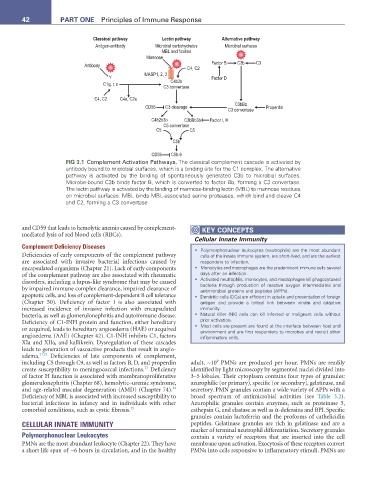
                       FIG 3.1  Complement Activation Pathways. The classical complement cascade is activated by
                       antibody bound to microbial surfaces, which is a binding site for the C1 complex. The alternative
                       pathway is activated by the binding of spontaneously generated C3b to microbial surfaces.
                       Microbe-bound C3b binds factor B, which is converted to factor Bb, forming a C3 convertase.
                       The lectin pathway is activated by the binding of mannose-binding lectin (MBL) to mannose residues
                       on microbial surfaces. MBL binds MBL-associated serine proteases, which bind and cleave C4
                       and C2, forming a C3 convertase.


        and CD59 that leads to hemolytic anemia caused by complement-   KEY CONCEPTS
        mediated lysis of red blood cells (RBCs).
                                                                 Cellular Innate Immunity
        Complement Deficiency Diseases
                                                                 •  Polymorphonuclear leukocytes (neutrophils) are the most abundant
        Deficiencies of early components of the complement pathway   cells of the innate immune system, are short-lived, and are the earliest
        are associated with invasive bacterial infections caused by   responders to infection.
        encapsulated organisms (Chapter 21). Lack of early components   •  Monocytes and macrophages are the predominant immune cells several
        of the complement pathway are also associated with rheumatic   days after an infection.
        disorders, including a lupus-like syndrome that may be caused   •  Activated neutrophils, monocytes, and macrophages kill phagocytosed
        by impaired immune complex clearance, impaired clearance of   bacteria through production of reactive oxygen intermediates and
                                                                   antimicrobial proteins and peptides (APPs).
        apoptotic cells, and loss of complement-dependent B cell tolerance   •  Dendritic cells (DCs) are efficient in uptake and presentation of foreign
        (Chapter 50). Deficiency of factor I is also associated with   antigen and provide a critical link between innate and adaptive
        increased incidence of invasive infection with encapsulated   immunity.
        bacteria, as well as glomerulonephritis and autoimmune disease.   •  Natural killer (NK) cells can kill infected or malignant cells without
        Deficiency of C1-INH protein and function, either hereditary   prior activation.
        or acquired, leads to hereditary angioedema (HAE) or acquired   •  Mast cells are present are found at the interface between host and
                                                                   environment and are first responders to microbes and recruit other
        angioedema (AAE) (Chapter 42). C1-INH inhibits C1, factors   inflammatory cells.
        XIa and XIIa, and kallikrein. Dysregulation of these cascades
        leads to generation of vasoactive products that result in angio-
        edema. 21,22  Deficiencies of late components of complement,
                                                                        9
        including C5 through C9, as well as factors B, D, and properdin   adult,  ~10   PMNs  are  produced  per  hour.  PMNs  are  readily
                                                23
        create susceptibility to meningococcal infections.  Deficiency   identified by light microscopy by segmented nuclei divided into
        of factor H function is associated with membranoproliferative   3–5 lobules. Their cytoplasm contains four types of granules:
        glomerulonephritis (Chapter 68), hemolytic–uremic syndrome,   azurophilic (or primary), specific (or secondary), gelatinase, and
                                                         24
        and age-related macular degeneration (AMD) (Chapter 74).    secretory. PMN granules contain a wide variety of APPs with a
        Deficiency of MBL is associated with increased susceptibility to   broad  spectrum  of  antimicrobial  activities  (see  Table  3.2).
        bacterial infections in infancy and in individuals with other   Azurophilic  granules  contain  enzymes,  such  as  proteinase  3,
        comorbid conditions, such as cystic fibrosis. 25       cathepsin G, and elastase as well as α-defensins and BPI. Specific
                                                               granules contain lactoferrin and the proforms of cathelicidin
        CELLULAR INNATE IMMUNITY                               peptides.  Gelatinase  granules  are  rich  in  gelatinase  and  are  a
                                                               marker of terminal neutrophil differentiation. Secretory granules
        Polymorphonuclear Leukocytes                           contain a variety of receptors that  are inserted into the cell
        PMNs are the most abundant leukocyte (Chapter 22). They have   membrane upon activation. Exocytosis of these receptors convert
        a short life span of ~6 hours in circulation, and in the healthy   PMNs into cells responsive to inflammatory stimuli. PMNs are

