


Page 61 - Clinical Immunology_ Principles and Practice ( PDFDrive )
P. 61
46           ParT ONE  Principles of Immune Response


                                                ILC1            ILC2            ILC3
                                 ILC
                                 Cell type:


                                 Transcriptional  T-bet       GATA-3          RORγt
                                 regulator:

                                 Cytokines    IFNγ            IL-4, 5, 13     IL-2, 17, 22
                                 produced:                                    TNFα, GM-CSF,
                                                                              LIF


                                 Biological   Cancer          Helminth immunity  Mucosal immunity
                                 significance:  immunosurveillance  Immune regulation  psoriasis?
                                                              Wound healing
                                                              Atopic disorders?
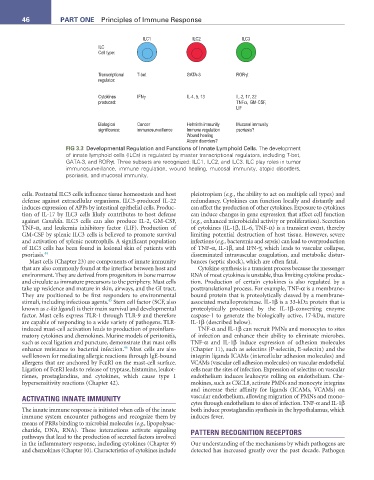
                       FIG 3.3  Developmental Regulation and Functions of Innate Lymphoid Cells. The development
                       of innate lymphoid cells (ILCs) is regulated by master transcriptional regulators, including T-bet,
                       GATA-3, and RORγt. Three subsets are recognized: ILC1, ILC2, and ILC3. ILC play roles in tumor
                       immunosurveillance, immune regulation, wound healing, mucosal immunity, atopic disorders,
                       psoriasis, and mucosal immunity.


        cells. Postnatal ILC3 cells influence tissue homeostasis and host   pleiotropism (e.g., the ability to act on multiple cell types) and
        defense against extracellular organisms. ILC3-produced IL-22   redundancy. Cytokines can function locally and distantly and
        induces expression of APPs by intestinal epithelial cells. Produc-  can affect the production of other cytokines. Exposure to cytokines
        tion of IL-17 by ILC3 cells likely contributes to host defense   can induce changes in gene expression that affect cell function
        against  Candida.  ILC3  cells can  also  produce IL-2,  GM-CSF,   (e.g., enhanced microbicidal activity or proliferation). Secretion
        TNF-α, and leukemia inhibitory factor (LIF). Production of   of cytokines (IL-1β, IL-6, TNF-α) is a transient event, thereby
        GM-CSF by splenic ILC3 cells is believed to promote survival   limiting potential destruction of host tissue. However, severe
        and activation of splenic neutrophils. A significant population   infections (e.g., bacteremia and sepsis) can lead to overproduction
        of ILC3 cells has been found in lesional skin of patients with   of TNF-α, IL-1β, and IFN-γ, which leads to vascular collapse,
        psoriasis. 44                                          disseminated intravascular coagulation, and metabolic distur-
           Mast cells (Chapter 23) are components of innate immunity   bances (septic shock), which are often fatal.
        that are also commonly found at the interface between host and   Cytokine synthesis is a transient process because the messenger
        environment. They are derived from progenitors in bone marrow   RNA of most cytokines is unstable, thus limiting cytokine produc-
        and circulate as immature precursors to the periphery. Mast cells   tion. Production of certain cytokines is also regulated by a
        take up residence and mature in skin, airways, and the GI tract.   posttranslational process. For example, TNF-α is a membrane-
        They are positioned to be first responders to environmental   bound protein that is proteolytically cleaved by a membrane-
                                    45
        stimuli, including infectious agents.  Stem cell factor (SCF, also   associated metalloproteinase. IL-1β is a 33-kDa protein that is
        known as c-kit ligand) is their main survival and developmental   proteolytically processed by the IL-1β-converting enzyme
        factor. Mast cells express TLR-1 through TLR-9 and therefore   caspase-1 to generate the biologically active, 17-kDa, mature
        are capable of responding to a wide variety of pathogens. TLR-  IL-1β (described below).
        induced mast-cell activation leads to production of proinflam-  TNF-α and IL-1β can recruit PMNs and monocytes to sites
        matory cytokines and chemokines. Murine models of peritonitis,   of infection and enhance their ability to eliminate microbes.
        such as cecal ligation and puncture, demonstrate that mast cells   TNF-α and IL-1β induce expression of adhesion molecules
                                          46
        enhance resistance to bacterial infection.  Mast cells are also   (Chapter 11), such as selectins (P-selectin, E-selectin) and the
        well known for mediating allergic reactions through IgE-bound   integrin ligands ICAMs (intercellular adhesion molecules) and
        allergens that are anchored by FcεRI on the mast-cell surface.   VCAMs (vascular cell adhesion molecules) on vascular endothelial
        Ligation of FcεRI leads to release of tryptase, histamine, leukot-  cells near the sites of infection. Expression of selectins on vascular
        rienes, prostaglandins, and cytokines, which cause type 1   endothelium induces leukocyte rolling on endothelium. Che-
        hypersensitivity reactions (Chapter 42).               mokines, such as CXCL8, activate PMNs and monocyte integrins
                                                               and increase their affinity for ligands (ICAMs,  VCAMs) on
        ACTIVATING INNATE IMMUNITY                             vascular endothelium, allowing migration of PMNs and mono-
                                                               cytes through endothelium to sites of infection. TNF-α and IL-1β
        The innate immune response is initiated when cells of the innate   both induce prostaglandin synthesis in the hypothalamus, which
        immune system encounter pathogens and recognize them by   induces fever.
        means of PRRs binding to microbial molecules (e.g., lipopolysac-
        charide, DNA, RNA). These interactions activate signaling   PATTERN RECOGNITION RECEPTORS
        pathways that lead to the production of secreted factors involved
        in the inflammatory response, including cytokines (Chapter 9)   Our understanding of the mechanisms by which pathogens are
        and chemokines (Chapter 10). Characteristics of cytokines include   detected has increased greatly over the past decade. Pathogen

