


Page 610 - Clinical Immunology_ Principles and Practice ( PDFDrive )
P. 610
CHaPTEr 42  Urticaria, Angioedema, and Anaphylaxis                587


                                                    Eosinophil


                                                          C5b-9
                                        ICAM1
                                                                     t-PA

                                                   TNF-α           IL-8
                                                                              Bronchi
                                 E-selectin
                                                    Histamine      C3a
                                                                   C5a


                                                              Mast cell
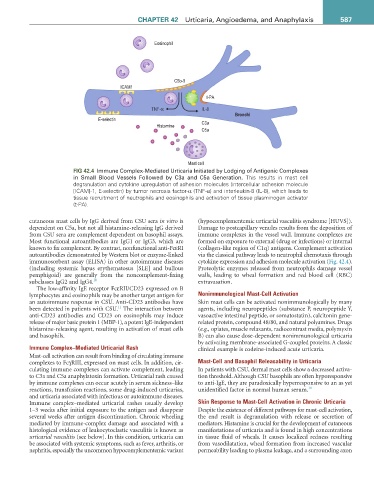
                         fiG 42.4  Immune Complex-Mediated Urticaria Initiated by Lodging of Antigenic Complexes
                         in Small Blood Vessels Followed by C3a and C5a Generation. This results in mast cell
                         degranulation and cytokine upregulation of adhesion molecules (intercellular adhesion molecule
                         [ICAM]-1, E-selectin) by tumor necrosis factor-α (TNF-α) and interleukin-8 (IL-8), which leads to
                         tissue recruitment of neutrophils and eosinophils and activation of tissue plasminogen activator
                         (t-PA).

           cutaneous mast cells by IgG derived from CSU sera in vitro is   (hypocomplementemic urticarial vasculitis syndrome [HUVS]).
           dependent on C5a, but not all histamine-releasing IgG derived   Damage to postcapillary venules results from the deposition of
           from CSU sera are complement dependent on basophil assays.   immune complexes in the vessel wall. Immune complexes are
           Most functional autoantibodies are IgG1 or IgG3, which are   formed on exposure to external (drug or infections) or internal
           known to fix complement. By contrast, nonfunctional anti-FcεRI   (collagen-like region of C1q) antigens. Complement activation
           autoantibodies demonstrated by Western blot or enzyme-linked   via the classical pathway leads to neutrophil chemotaxis through
           immunosorbent assay (ELISA) in other autoimmune diseases   cytokine expression and adhesion molecule activation (Fig. 42.4).
           (including systemic lupus erythematosus [SLE] and bullous   Proteolytic enzymes released from neutrophils damage vessel
           pemphigoid) are generally from the noncomplement-fixing   walls, leading to wheal formation and red blood cell (RBC)
           subclasses IgG2 and IgG4. 10                           extravasation.
             The low-affinity IgE receptor FcεRII/CD23 expressed on B
           lymphocytes and eosinophils may be another target antigen for   Nonimmunological Mast-Cell Activation
           an autoimmune response in CSU. Anti-CD23 antibodies have   Skin mast cells can be activated nonimmunologically by many
                                        11
           been detected in patients with CSU.  The interaction between   agents, including neuropeptides (substance P, neuropeptide Y,
           anti-CD23 antibodies and CD23 on eosinophils may induce   vasoactive intestinal peptide, or somatostatin), calcitonin gene-
           release of major basic protein 1 (MBP-1), a potent IgE-independent   related protein, compound 48/80, and natural polyamines. Drugs
           histamine-releasing agent, resulting in activation of mast cells   (e.g., opiates, muscle relaxants, radiocontrast media, polymyxin
           and basophils.                                         B) can also cause dose-dependent nonimmunological urticaria
                                                                  by activating membrane-associated G-coupled proteins. A classic
           Immune Complex–Mediated Urticarial Rash                clinical example is codeine-induced acute urticaria.
           Mast-cell activation can result from binding of circulating immune
           complexes to FcγRIII, expressed on mast cells. In addition, cir-  Mast-Cell and Basophil Releasability in Urticaria
           culating immune complexes can activate complement, leading   In patients with CSU, dermal mast cells show a decreased activa-
           to C3a and C5a anaphylatoxin formation. Urticarial rash caused   tion threshold. Although CSU basophils are often hyporesponsive
           by immune complexes can occur acutely in serum sickness–like   to anti-IgE, they are paradoxically hyperresponsive to an as yet
           reactions, transfusion reactions, some drug-induced urticarias,   unidentified factor in normal human serum. 10
           and urticaria associated with infectious or autoimmune diseases.
           Immune  complex–mediated  urticarial  rashes  usually  develop   Skin Response to Mast-Cell Activation in Chronic Urticaria
           1–3 weeks after initial exposure to the antigen and disappear   Despite the existence of different pathways for mast-cell activation,
           several weeks after antigen discontinuation. Chronic wheeling   the end result is degranulation with release or secretion of
           mediated by immune-complex damage and associated with a   mediators. Histamine is crucial for the development of cutaneous
           histological evidence of leukocytoclastic vasculitis is known as   manifestations of urticaria and is found in high concentrations
           urticarial vasculitis (see below). In this condition, urticaria can   in tissue fluid of wheals. It causes localized redness resulting
           be associated with systemic symptoms, such as fever, arthritis, or   from vasodilatation, wheal formation from increased vascular
           nephritis, especially the uncommon hypocomplementemic variant   permeability leading to plasma leakage, and a surrounding axon

