


Page 774 - Clinical Immunology_ Principles and Practice ( PDFDrive )
P. 774
CHaPtEr 55  Scleroderma–Systemic Sclerosis                745


                                                      Vascular injury
                                                  • Endothelial dysfunction
                                                  • Endothelial cell activation
                                                  • Platelet activation, coagulation


                                                    Leukocyte recruitment       Endothelin-1
                                                                   +
                                                                +
                                                • Activated Th2 cells (CD4  CD8 )
                                 Autoantibodies  • Dendritic cells, interferon
                                                • Monocytes/macrophages
                                                • Activated B cells


                                                   • TGF-β, CTGF, PDGF
                                                   • Th2 cytokines
                                                   • Lysophosphatidic acid 1
                                                   • Chemokines                Obliterative
                                                                             microangiopathy thy


                                                    Fibroblast activation     ROS, Tissue hypoxia
                                                  • Myofibroblast differentiation
                                                  • Adhesion, contraction, ROS


                                                    Collagen deposition
                                                Matric remodeling, matrix stiffness
                                                  Impaired matrix degradation


                                                        Fibrosis
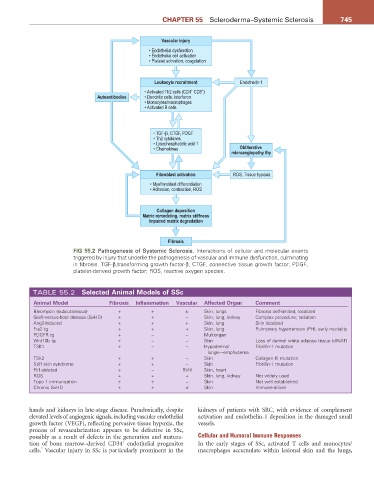
                         FIG 55.2  Pathogenesis of Systemic Sclerosis. Interactions of cellular and molecular events
                         triggered by injury that underlie the pathogenesis of vascular and immune dysfunction, culminating
                         in fibrosis. TGF-β,transforming growth factor-β; CTGF, connective tissue growth factor; PDGF,
                         platelet-derived growth factor; ROS, reactive oxygen species.


            TABLE 55.2  Selected animal Models of SSc
            animal Model             Fibrosis  Inflammation  Vascular  affected Organ  Comment
            Bleomycin (subcutaneous)    +          +          ±     Skin, lungs      Fibrosis self-limited; localized
            Graft-versus-host disease (GvHD)  +    +          −     Skin, lung, kidney  Complex procedure; radiation
            Ang2-induced                +          +          +     Skin, lung       Skin localized
            Fra2 tg                     +          +          +     Skin, lung       Pulmonary hypertension (PH); early mortality
            PDGFR tg                    +          −          −     Multiorgan
            Wnt10b tg                   +          −          −     Skin             Loss of dermal white adipose tissue (dWAT)
            TSK1                        +          −          −     Hypodermal       Fibrillin-1 mutation
                                                                     lungs—emphysema
            TSK2                        +          +          −     Skin             Collagen III mutation
            Stiff skin syndrome         +          +          −     Skin             Fibrillin-1 mutation
            Fli1-deleted                +          −         RVH    Skin, heart
            ROS                         +          +          +     Skin, lung, kidney  Not widely used
            Topo 1 immunization         +          +          −     Skin             Not well established
            Chronic GvHD                +          +          ±     Skin             Immune-driven


           hands and kidneys in late-stage disease. Paradoxically, despite   kidneys of patients with SRC, with evidence of complement
           elevated levels of angiogenic signals, including vascular endothelial   activation and endothelin-1 deposition in the damaged small
           growth factor (VEGF), reflecting pervasive tissue hypoxia, the   vessels.
           process of revascularization appears to be defective in SSc,
           possibly as a result of defects in the generation and matura-  Cellular and Humoral Immune Responses
                                         +
           tion of bone marrow–derived CD34  endothelial progenitor   In the early stages of SSc, activated T cells and monocytes/
              7
           cells.  Vascular injury in SSc is particularly prominent in the   macrophages  accumulate  within  lesional  skin  and  the  lungs,

