


Page 773 - Clinical Immunology_ Principles and Practice ( PDFDrive )
P. 773
744          Part SIX  Systemic Immune Diseases


         TABLE 55.1  Genetic associations With                 adipocytes. Lungs show patchy infiltration of the alveolar walls
         Systemic Sclerosis (SSc)                              with lymphocytes, plasma cells, macrophages, and eosinophils
                                                               in early disease. In later stages, fibrosis and vascular damage
                                        Genetic                predominate in the lungs, often coexisting in the same lesions.
                                        Polymorphisms          However, in patients with limited cutaneous SSc, the vascular
          Gene Locus  Gene Function     associated With SSc    lesions typically predominate. Intimal thickening of the pulmo-
          IRF5       Activation of interferon  rs2004640, others  nary arteries, best seen with elastin stain, is a pathological hallmark
          IRF8       Monocyte differentiation  rs11642837      of PH and at autopsy is often associated with multiple pulmonary
          IRF7       Activation of interferon  rs4963128       emboli. Progressive fibrous thickening of the alveolar septae
          IL12R      Interleukin-12/T-cell   rs3790567         results in  obliteration of the  air spaces with a characteristic
                      signaling                                nonspecific  interstitial pneumonia (NSIP)  pattern  and,  less
          STAT4      T-cell signaling   rs7574865, others      commonly, honeycombing, as well as loss of the pulmonary
          DNASE1L3   DNA clearance      rs35677470
          ATG        Autophagosome      rs9373839              blood vessels. This process impairs gas exchange and contributes
                      biogenesis                               to worsening of PH. In the GI tract, pathological changes can
          PPARG      Adipogenesis       rs310746               occur at any level, from the mouth to the rectum. The esophagus
          CD247      T-cell receptor signaling  rs2056626      shows atrophy of the lamina propria, submucosa, and muscular
          CSK        Src family tyrosine kinase  rs1378942     layers, with variable fibrosis. Replacement of the normal intestinal
          PTPN22     T-cell signaling   rs2476601              architecture leads to disordered peristaltic activity, resulting in
                      phosphatase
          BANK1      B-cell receptor signaling  rs10516487, others  gastroesophageal reflux, small bowel dysmotility, and bacterial
          BLK        B-cell receptor signaling  rs2736340      overgrowth. Chronic gastroesophageal reflux leads to esophageal
          TNFAIP3/A20  Negative regulation of   rs5029939, others  inflammation, ulcerations and stricture formation, and, in some
                      nuclear factor (NF)-κB                   cases, premalignant Barrett metaplasia.
                      inflammation                                The heart is frequently affected, with prominent myocardial
          TNIP1      Negative regulation of   rs2233287, others  contraction band necrosis, which reflects ischemia–reperfusion
                      NF-κB inflammation
          TNFSF4     T cell–antigen-presenting   rs1234314, others  injury, and patchy areas of myocardial fibrosis. In the kidneys,
                      cell interaction                         vascular lesions predominate, and glomerulonephritis is rare.
                                                               Chronic renal ischemia is associated with shrunken glomeruli
                                                               and interstitial fibrosis. Scleroderma renal crisis (SRC) is associated
                                                               with reduplication of elastic lamina, marked intimal proliferation,
                                                               and narrowing of the lumen (onion skinning), often accompanied
                                                               by microangiopathic hemolysis.
                                                               Pathogenesis
                                                               A comprehensive view of SSc pathogenesis must be capable of
                                                               integrating the vasculopathy, immune dysregulation, and fibrosis
                                                               of multiple organs, which are the hallmarks of the disease. As
                                                               illustrated in Fig. 55.2, complex and dynamic interplay among
                                                               these distinct pathomechanistic processes initiates, amplifies, and
                                                                                        6
                                                               sustains tissue damage in SSc.  Animal models of disease (see
                                                               Table 55.2) can be informative for identifying cell types, molecular
                                                               mechanisms, and pathways contributing to SSc pathogenesis.
                                                               Microangiopathy
                                                               Evidence of vascular involvement is an early and widespread
                                                               feature of SSc, and vascular damage has major impact on the
                                                               course of the disease. Vascular endothelial cell injury is initially
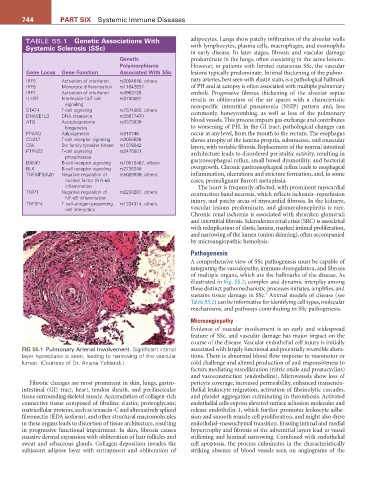
        FIG 55.1  Pulmonary Arterial Involvement. Significant intimal   associated with largely functional and potentially reversible altera-
        layer hyperplasia is seen, leading to narrowing of the vascular   tions. There is abnormal blood flow response to vasomotor or
        lumen. (Courtesy of Dr. Anjana Yeldandi.)              cold challenge and altered production of and responsiveness to
                                                               factors mediating vasodilatation (nitric oxide and prostacyclins)
                                                               and vasoconstriction (endothelins). Microvessels show loss of
           Fibrotic changes are most prominent in skin, lungs, gastro-  pericyte coverage, increased permeability, enhanced transendo-
        intestinal (GI) tract, heart, tendon sheath, and perifascicular   thelial leukocyte migration, activation of fibrinolytic cascades,
        tissue surrounding skeletal muscle. Accumulation of collagen-rich   and platelet aggregation culminating in thrombosis. Activated
        connective tissue composed of fibulins; elastin; proteoglycans;   endothelial cells express elevated surface adhesion molecules and
        matricellular proteins, such as tenascin-C and alternatively spliced   release endothelin-1, which further promotes leukocyte adhe-
        fibronectin (EDA isoform), and other structural macromolecules   sion and smooth muscle cell proliferation, and might also drive
        in these organs leads to distortion of tissue architecture, resulting   endothelial–mesenchymal transition. Ensuing intimal and medial
        in progressive functional impairment. In skin, fibrosis causes   hypertrophy and fibrosis of the adventitial layers lead to vessel
        massive dermal expansion with obliteration of hair follicles and   stiffening and luminal narrowing. Combined with endothelial
        sweat and sebaceous glands. Collagen deposition invades the   cell apoptosis, the process culminates in the characteristically
        subjacent adipose layer with entrapment and obliteration of   striking absence of blood vessels seen on angiograms of the

