


Page 777 - Clinical Immunology_ Principles and Practice ( PDFDrive )
P. 777
748          Part SIX  Systemic Immune Diseases


         TABLE 55.5  Classification of
         Localized Scleroderma
          •  Plaque types of morphea
           •  Circumscribed plaques
           •  Guttate
           •  Keloid/nodular
           •  Bullous
          •  Generalized morphea
           •  Three or more locations
           •  Pansclerotic morphea
          •  Linear scleroderma
           •  Frontoparietal linear morphea (en coup de sabre)
           •  Parry-Romberg syndrome (progressive hemifacial atrophy)
           •  Linear streaks on limbs or trunk
          •  Deep morphea

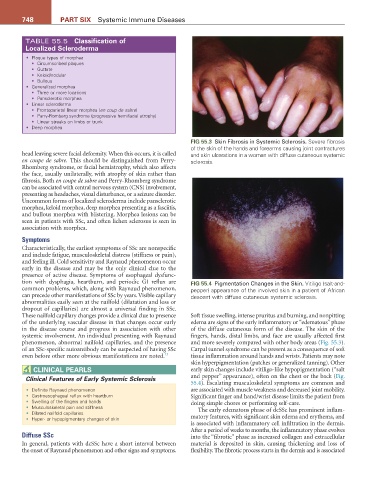
                                                               FIG 55.3  Skin Fibrosis in Systemic Sclerosis. Severe fibrosis
                                                               of the skin of the hands and forearms causing joint contractures
        head leaving severe facial deformity. When this occurs, it is called   and skin ulcerations in a woman with diffuse cutaneous systemic
        en  coupe  de  sabre.  This  should  be  distinguished  from  Perry-  sclerosis.
        Rhomberg syndrome, or facial hemiatrophy, which also affects
        the face, usually unilaterally, with atrophy of skin rather than
        fibrosis. Both en coupe de sabre and Perry-Rhomberg syndrome
        can be associated with central nervous system (CNS) involvement,
        presenting as headaches, visual disturbance, or a seizure disorder.
        Uncommon forms of localized scleroderma include pansclerotic
        morphea, keloid morphea, deep morphea presenting as a fasciitis,
        and bullous morphea with blistering. Morphea lesions can be
        seen in patients with SSc, and often lichen sclerosus is seen in
        association with morphea.
        Symptoms
        Characteristically, the earliest symptoms of SSc are nonspecific
        and include fatigue, musculoskeletal distress (stiffness or pain),
        and feeling ill. Cold sensitivity and Raynaud phenomenon occur
        early in the  disease and may be the  only  clinical  clue to the
        presence of active disease. Symptoms of esophageal dysfunc-
        tion with dysphagia, heartburn, and periodic GI reflux are   FIG 55.4  Pigmentation Changes in the Skin. Vitiligo (salt-and-
        common problems, which, along with Raynaud phenomenon,   pepper) appearance of the involved skin in a patient of African
        can precede other manifestations of SSc by years. Visible capillary   descent with diffuse cutaneous systemic sclerosis.
        abnormalities easily seen at the nailfold (dilatation and loss or
        dropout of capillaries) are almost a universal finding in SSc.
        These nailfold capillary changes provide a clinical clue to presence   Soft tissue swelling, intense pruritus and burning, and nonpitting
        of the underlying vascular disease in that changes occur early   edema are signs of the early inflammatory or “edematous” phase
        in the disease course and progress in association with other   of the diffuse cutaneous form of the disease. The skin of the
        systemic involvement. An individual presenting with Raynaud   fingers, hands, distal limbs, and face are usually affected first
        phenomenon, abnormal nailfold capillaries, and the presence   and more severely compared with other body areas (Fig. 55.3).
        of an SSc-specific autoantibody can be suspected of having SSc   Carpal tunnel syndrome can be present as a consequence of soft
        even before other more obvious manifestations are noted. 13  tissue inflammation around hands and wrists. Patients may note
                                                               skin hyperpigmentation (patches or generalized tanning). Other
            CLINICaL PEarLS                                    early skin changes include vitiligo-like hypopigmentation (“salt
         Clinical Features of Early Systemic Sclerosis         and pepper” appearance), often on the chest or the back (Fig.
                                                               55.4). Escalating musculoskeletal symptoms are common and
          •  Definite Raynaud phenomenon                       are associated with muscle weakness and decreased joint mobility.
          •  Gastroesophageal reflux with heartburn            Significant finger and hand/wrist disease limits the patient from
          •  Swelling of the fingers and hands                 doing simple chores or performing self-care.
          •  Musculoskeletal pain and stiffness                   The early edematous phase of dcSSc has prominent inflam-
          •  Dilated nailfold capillaries
          •  Hyper- or hypopigmentary changes of skin          matory features, with significant skin edema and erythema, and
                                                               is associated with inflammatory cell infiltration in the dermis.
                                                               After a period of weeks to months, the inflammatory phase evolves
        Diffuse SSc                                            into the “fibrotic” phase as increased collagen and extracellular
        In general, patients with dcSSc have a short interval between   material is deposited in skin, causing thickening and loss of
        the onset of Raynaud phenomenon and other signs and symptoms.   flexibility. The fibrotic process starts in the dermis and is associated

