


Page 806 - Clinical Immunology_ Principles and Practice ( PDFDrive )
P. 806
CHaPtEr 57  Spondyloarthritis             777


                              A                      B
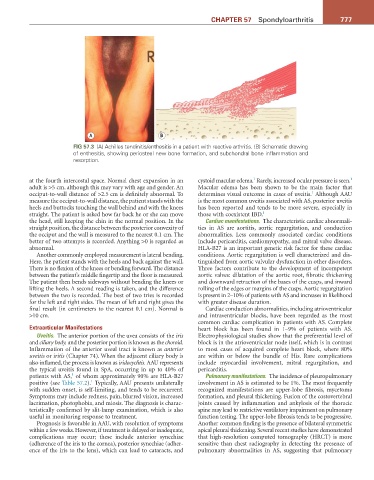
                         FiG 57.3  (A) Achilles tendinitis/enthesitis in a patient with reactive arthritis. (B) Schematic drawing
                         of enthesitis, showing periosteal new bone formation, and subchondral bone inflammation and
                         resorption.


                                                                                    1
                                                                                                                    1
           at the fourth intercostal space. Normal chest expansion in an   cystoid macular edema.  Rarely, increased ocular pressure is seen.
           adult is >5 cm, although this may vary with age and gender. An   Macular edema has been shown to be the main factor that
                                                                                                       1
           occiput-to-wall distance of >2.5 cm is definitely abnormal. To   determines visual outcome in cases of uveitis.  Although AAU
           measure the occiput-to-wall distance, the patient stands with the   is the most common uveitis associated with AS, posterior uveitis
           heels and buttocks touching the wall behind and with the knees   has been reported and tends to be more severe, especially in
           straight. The patient is asked how far back he or she can move   those with coexistent IBD. 1
           the head, still keeping the chin in the normal position. In the   Cardiac manifestations.  The characteristic cardiac abnormali-
           straight position, the distance between the posterior convexity of   ties  in  AS  are  aortitis, aortic  regurgitation, and  conduction
           the occiput and the wall is measured to the nearest 0.1 cm. The   abnormalities. Less commonly associated cardiac conditions
           better of two attempts is recorded. Anything >0 is regarded as    include pericarditis, cardiomyopathy, and mitral valve disease.
           abnormal.                                              HLA-B27 is an important genetic risk factor for these cardiac
             Another commonly employed measurement is lateral bending.   conditions. Aortic regurgitation is well characterized and dis-
           Here, the patient stands with the heels and back against the wall.   tinguished from aortic valvular dysfunction in other disorders.
           There is no flexion of the knees or bending forward. The distance   Three factors contribute to the development  of incompetent
           between the patient’s middle fingertip and the floor is measured.   aortic valves: dilatation of the aortic root, fibrotic thickening
           The patient then bends sideways without bending the knees or   and downward retraction of the bases of the cusps, and inward
           lifting the heels. A second reading is taken, and the difference   rolling of the edges or margins of the cusps. Aortic regurgitation
           between the two is recorded. The best of two tries is recorded   is present in 2–10% of patients with AS and increases in likelihood
           for the left and right sides. The mean of left and right gives the   with greater disease duration.
           final result (in centimeters to the nearest 0.1 cm). Normal is   Cardiac conduction abnormalities, including atrioventricular
           >10 cm.                                                and intraventricular blocks, have been regarded as the most
                                                                  common cardiac complication in patients with AS. Complete
           Extraarticular Manifestations                          heart block has been found in 1–9% of patients with  AS.
             Uveitis.  The anterior portion of the uvea consists of the iris   Electrophysiological studies show that the preferential level of
           and ciliary body, and the posterior portion is known as the choroid.   block is in the atrioventricular node itself, which is in contrast
           Inflammation of the anterior uveal tract is known as anterior   to most cases of acquired complete heart block, where 80%
           uveitis or iritis (Chapter 74). When the adjacent ciliary body is   are within or below the bundle of His. Rare complications
           also inflamed, the process is known as iridocyclitis. AAU represents   include myocardial involvement, mitral regurgitation, and
           the typical uveitis found in SpA, occurring in up to 40% of   pericarditis.
                         1
           patients with AS,  of whom approximately 90% are HLA-B27   Pulmonary manifestations.  The incidence of pleuropulmonary
                               1
           positive (see Table 57.2).  Typically, AAU presents unilaterally   involvement in AS is estimated to be 1%. The most frequently
           with sudden onset, is self-limiting, and tends to be recurrent.   recognized manifestations are upper-lobe fibrosis, mycetoma
           Symptoms may include redness, pain, blurred vision, increased   formation, and pleural thickening. Fusion of the costovertebral
           lacrimation, photophobia, and miosis. The diagnosis is charac-  joints caused by inflammation and ankylosis of the thoracic
           teristically confirmed by slit-lamp examination, which is also   spine may lead to restrictive ventilatory impairment on pulmonary
           useful in monitoring response to treatment.            function testing. The upper-lobe fibrosis tends to be progressive.
             Prognosis is favorable in AAU, with resolution of symptoms   Another common finding is the presence of bilateral symmetric
           within a few weeks. However, if treatment is delayed or inadequate,   apical pleural thickening. Several recent studies have demonstrated
           complications may occur; these include anterior synechiae   that high-resolution computed tomography (HRCT) is more
           (adherence of the iris to the cornea), posterior synechiae (adher-  sensitive than chest radiography in detecting the presence of
           ence of the iris to the lens), which can lead to cataracts, and   pulmonary abnormalities in  AS, suggesting that pulmonary

