


Page 803 - Clinical Immunology_ Principles and Practice ( PDFDrive )
P. 803
774          Part six  Systemic Immune Diseases


                                                         CD4 positive
                                                         T lymphocyte
                                                                                Natural killer
                              CD8 positive                                       (NK) cell
                              T lymphocyte
                                           αβ                                         KIR receptor
                                          T cell                    B2
                                          receptor
                                                    Free B27  HLA-class II
                                                    heavy chain (DR, DQ, DP)  HLA-B27 homodimers
                                 A2                        presenting   at cell surface  A2
                                        HLA-B27:B2microglobulin:peptide  HLA-B27 peptide
                                         trimolecular complex
                                    Endoplasmic reticulum  BiP    BiP   ERAD
                                                 BiP       BiP
                                    B  B27 misfolding,
                                       homodimerization                  UPR
                                                                                         Golgi
                                                               B1             A1
                                                     B27 folding, assembly and   HLA-B27:B2M:peptide trimolecular
                                                       loading of peptide  Tapasin
                                    B27 heavy chain (HC)                      complex transported to the cell
                                                 B2 microglobulin             surface via the golgi apparatus
                                      B27 HC folding  (B2m) loading  peptide loading
                                         Calnexin  Calreticulum
                                      A           BiP        B2m                   Macrophage
                              Ribosome
                                                                           TAP 1,2
                                                      proteolytic degradation
                                                       within proteasome  peptide fragments
                                        Viral, bacterial or
                                         tumor protein


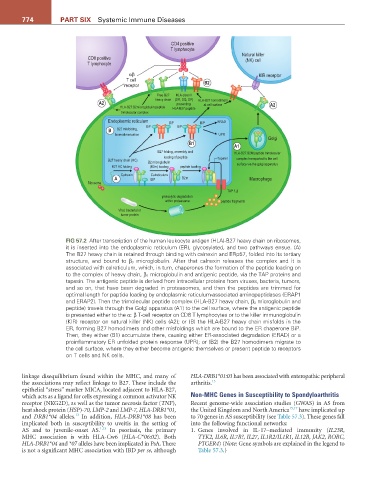
                       FiG 57.2  After transcription of the human leukocyte antigen (HLA)-B27 heavy chain on ribosomes,
                       it is inserted into the endoplasmic reticulum (ER), glycosylated, and two pathways ensue. (A)
                       The B27 heavy chain is retained through binding with calnexin and ERp57, folded into its tertiary
                       structure, and bound to  β 2  microglobulin. After that calnexin releases the complex and it is
                       associated with calreticulum, which, in turn, chaperones the formation of the peptide loading on
                       to the complex of heavy chain, β 2  microglobulin and antigenic peptide, via the TAP proteins and
                       tapasin. The antigenic peptide is derived from intracellular proteins from viruses, bacteria, tumors,
                       and so on, that have been degraded in proteasomes, and then the peptides are trimmed for
                       optimal length for peptide loading by endoplasmic reticulum-associated aminopeptidases (ERAP1
                       and ERAP2). Then the trimolecular peptide complex (HLA-B27 heavy chain, β 2  microglobulin and
                       peptide) travels through the Golgi apparatus (A1) to the cell surface, where the antigenic peptide
                       is presented either to the α: β T-cell receptor on CD8 T lymphocytes or to the killer immunoglobulin
                       (KIR) receptor on natural killer (NK) cells (A2); or (B) the HLA-B27 heavy chain misfolds in the
                       ER, forming B27 homodimers and other misfoldings which are bound to the ER chaperone BiP.
                       Then, they either (B1) accumulate there, causing either ER-associated degradation (ERAD) or a
                       proinflammatory ER unfolded protein response (UPR); or (B2) the B27 homodimers migrate to
                       the cell surface, where they either become antigenic themselves or present peptide to receptors
                       on T cells and NK cells.


        linkage disequilibrium found within the MHC, and many of   HLA-DRB1*01:03 has been associated with enteropathic peripheral
        the associations may reflect linkage to B27. These include the   arthritis. 13
        epithelial “stress” marker MICA, located adjacent to HLA-B27,
        which acts as a ligand for cells expressing a common activator NK   Non-MHC Genes in Susceptibility to Spondyloarthritis
        receptor (NKG2D), as well as the tumor necrosis factor (TNF),   Recent genome-wide association studies (GWAS) in AS from
        heat shock protein (HSP)-70, LMP-2 and LMP-7, HLA-DRB1*01,   the United Kingdom and North America 15,17  have implicated up
                          13
        and  DRB1*04 alleles.  In addition,  HLA-DRB1*08 has been   to 70 genes in AS susceptibility (see Table 57.3). These genes fall
        implicated both in susceptibility to uveitis in the setting of   into the following functional networks:
        AS and to juvenile-onset  AS. 1,13  In psoriasis, the primary   1.  Genes involved in IL-17–mediated immunity (IL23R,
        MHC association is with HLA-Cw6 (HLA-C*06:02). Both       TYK2, IL6R, IL7R?, IL27, IL1R2/IL1R1, IL12B, JAK2, RORC,
        HLA-DRB1*04 and *07 alleles have been implicated in PsA. There   PTGER4) (Note: Gene symbols are explained in the legend to
        is not a significant MHC association with IBD per se, although   Table 57.3.)

