


Page 877 - Clinical Immunology_ Principles and Practice ( PDFDrive )
P. 877
CHaPter 62  Immunohematological Disorders                 849


                                                                    have been attempts in the past to classify this pattern as
                                                                    pseudo-Felty syndrome, but the clinical findings and course
                                                                    are often indistinguishable from “classic” Felty syndrome.
                                                                  2.  About half the patients with clinically apparent T-LGL leukemia
                                                                    have circulating rheumatoid factor and immune complexes
                                                                    in their blood; about a third, usually patients expressing
                                                                    HLA-DR4, develop clinically significant arthritis, sometimes
                                                                    requiring antiinflammatory agents.
                                                                    Although the reason why clonal T-LGL disorders and autoim-
                                                                  munity often coexist is unclear, the tendency toward overlap is
                                                                  clear. Since the pathophysiology and therapy of both conditions
                                                                  are similar, these problems in classification usually have little
                                                                  impact on the initial management of neutropenia. When a patient
                                                                  with “Felty syndrome” develops aggressive T-LGL leukemia or
                                                                  a patient with T-LGL manifests severe rheumatological symptoms,
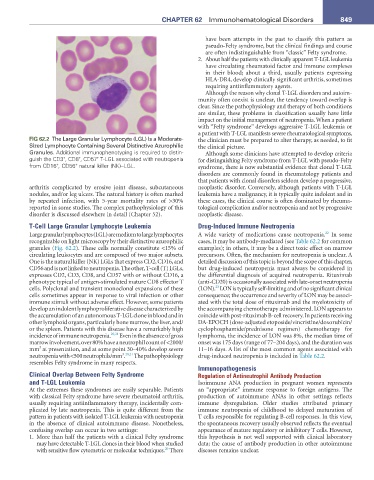
           FIG 62.2  The Large Granular Lymphocyte (LGL) Is a Moderate-  the clinician must be prepared to alter therapy, as needed, to fit
           Sized Lymphocyte Containing Several Distinctive Azurophilic   the clinical picture.
           Granules. Additional immunophenotyping is required to distin-  Although some clinicians have attempted to develop criteria
           guish the CD3 , CD8 , CD57  T-LGL associated with neutropenia   for distinguishing Felty syndrome from T-LGL with pseudo-Felty
                      +
                                 +
                           +
           from CD16 , CD56  natural killer (NK)–LGL.             syndrome, there is now substantial evidence that clonal T-LGL
                          +
                    +
                                                                  disorders are commonly found in rheumatology patients and
                                                                  that patients with clonal disorders seldom develop a progressive,
           arthritis  complicated by  erosive  joint disease, subcutaneous   neoplastic disorder. Conversely, although patients with T-LGL
           nodules, and/or leg ulcers. The natural history is often marked   leukemia have a malignancy, it is typically quite indolent and in
           by repeated infection, with 5-year mortality rates of  >30%   these cases, the clinical course is often dominated by rheuma-
           reported in some studies. The complex pathophysiology of this   tological complication and/or neutropenia and not by progressive
           disorder is discussed elsewhere in detail (Chapter 52).  neoplastic disease.
           T-Cell Large Granular Lymphocyte Leukemia              Drug-Induced Immune Neutropenia
                                                                                                           22
           Large granular lymphocytes (LGL) are medium to large lymphocytes   A wide variety of medications cause neutropenia.  In some
           recognizable on light microscopy by their distinctive azurophilic   cases, it may be antibody-mediated (see Table 62.2 for common
           granules (Fig. 62.2). These cells normally constitute <15% of   examples); in others, it may be a direct toxic effect on marrow
           circulating leukocytes and are composed of two major subsets.   precursors. Often, the mechanism for neutropenia is unclear. A
           One is the natural killer (NK) LGLs that express CD2, CD16, and   detailed discussion of this topic is beyond the scope of this chapter,
           CD56 and is not linked to neutropenia. The other, T-cell (T) LGLs,   but drug-induced neutropenia must always be considered in
           expresses CD2, CD3, CD8, and CD57 with or without CD16, a   the differential diagnosis of acquired neutropenia. Rituximab
           phenotype typical of antigen-stimulated mature CD8 effector T   (anti-CD20) is occasionally associated with late-onset neutropenia
                                                                        23
           cells. Polyclonal and transient monoclonal expansions of these   (LON).  LON is typically self-limiting and of no significant clinical
           cells sometimes appear in response to viral infection or other   consequence; the occurrence and severity of LON may be associ-
           immune stimuli without adverse effect. However, some patients   ated with the total dose of rituximab and the myelotoxicity of
           develop an indolent lymphoproliferative disease characterized by   the accompanying chemotherapy administered. LON appears to
           the accumulation of an autonomous T-LGL clone in blood and in   coincide with post-rituximab B-cell recovery. In patients receiving
           other lymphoid organs, particularly bone marrow, the liver, and/  DA-EPOCH (dose-adjusted etoposide/vincristine/doxorubicin/
           or the spleen. Patients with this disease have a remarkably high   cyclophosphamide/prednisone regimen) chemotherapy for
           incidence of immune neutropenia. 20,21  Even in the absence of gross   lymphoma, the incidence of LON was 8%, the median time of
           marrow involvement, over 80% have a neutrophil count of <2000/  onset was 175 days (range of 77–204 days), and the duration was
              3
           mm  at presentation, and at some point 30–40% develop severe   11–16 days. A list of the most common agents associated with
                                         3 20,21
           neutropenia with <500 neutrophils/mm .   The pathophysiology   drug-induced neutropenia is included in Table 62.2.
           resembles Felty syndrome in many respects.
                                                                  Immunopathogenesis
           Clinical Overlap Between Felty Syndrome                Regulation of Antineutrophil Antibody Production
           and T-LGL Leukemia                                     Isoimmune  ANA production in pregnant women represents
           At the extremes these syndromes are easily separable. Patients   an  “appropriate” immune response to foreign antigens. The
           with classical Felty syndrome have severe rheumatoid arthritis,   production of autoimmune  ANAs in other settings reflects
           usually requiring antiinflammatory therapy, incidentally com-  immune dysregulation. Older studies attributed primary
           plicated by late neutropenia. This is quite different from the   immune neutropenia of childhood to delayed maturation of
           pattern in patients with isolated T-LGL leukemia with neutropenia   T cells responsible for regulating B-cell responses. In this view,
           in the absence of clinical autoimmune disease. Nonetheless,   the spontaneous recovery usually observed reflects the eventual
           confusing overlap can occur in two settings:           appearance of mature regulatory or inhibitory T cells. However,
           1.  More than half the patients with a clinical Felty syndrome   this hypothesis is not well supported with clinical laboratory
             may have detectable T-LGL clones in their blood when studied   data; the cause of antibody production in other autoimmune
                                                       20
             with sensitive flow cytometric or molecular techniques.  There   diseases remains unclear.

