


Page 957 - Clinical Immunology_ Principles and Practice ( PDFDrive )
P. 957
924          Part Seven  Organ-Specific Inflammatory Disease


             $                                                  &


             %                                                  '

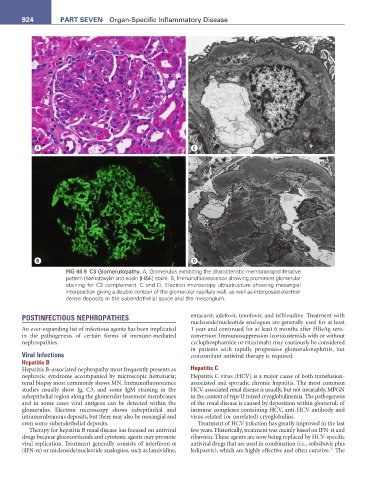
                       FIG 68.9  C3 Glomerulopathy. A, Glomerulus exhibiting the characteristic membranoproliferative
                       pattern (hematoxylin and eosin [H&E] stain). B, Immunofluorescence showing prominent glomerular
                       staining for C3 complement. C and D, Electron microscopy ultrastructure showing mesangial
                       interposition giving a double contour of the glomerular capillary wall, as well as interposed electron
                       dense deposits in the subendothelial space and the mesangium.


        POSTINFECTIOUS NEPHROPATHIES                           entacavir, adefovir, tenofovir, and telbivudine. Treatment with
                                                               nucleoside/nucleotide analogues are generally used for at least
        An ever-expanding list of infectious agents has been implicated   1 year and continued for at least 6 months after HBeAg sero-
        in the pathogenesis of certain forms of immune-mediated   conversion. Immunosuppression (corticosteroids with or without
        nephropathies.                                         cyclophosphamide or rituximab) may cautiously be considered
                                                               in patients with rapidly progressive glomerulonephritis, but
        Viral Infections                                       concomitant antiviral therapy is required.
        Hepatitis B
        Hepatitis B–associated nephropathy most frequently presents as   Hepatitis C
        nephrotic syndrome accompanied by microscopic hematuria;   Hepatitis C virus (HCV) is a major cause of both transfusion-
        renal biopsy most commonly shows MN. Immunofluorescence   associated and sporadic chronic hepatitis. The most common
        studies usually show Ig, C3, and some IgM staining in the   HCV-associated renal disease is usually, but not invariably, MPGN
        subepithelial region along the glomerular basement membranes   in the context of type II mixed cryoglobulinemia. The pathogenesis
        and in some cases viral antigens can be detected within the   of the renal disease is caused by deposition within glomeruli of
        glomerulus. Electron microscopy shows subepithelial and   immune complexes containing HCV, anti-HCV antibody and
        intramembranous deposits, but there may also be mesangial and   virus-related (or unrelated) cryoglobulins.
        even some subendothelial deposits.                        Treatment of HCV infection has greatly improved in the last
           Therapy for hepatitis B renal disease has focused on antiviral   few years. Historically, treatment was mainly based on IFN-α and
        drugs because glucocorticoids and cytotoxic agents may promote   ribavirin. These agents are now being replaced by HCV-specific
        viral replication. Treatment generally consists of interferon-α   antiviral drugs that are used in combination (i.e., sofosbuvir plus
                                                                                                             23
        (IFN-α) or nucleoside/nucleotide analogues, such as lamividine,   ledipasvir), which are highly effective and often curative.  The

