


Page 995 - Clinical Immunology_ Principles and Practice ( PDFDrive )
P. 995
960          Part seven  Organ-Specific Inflammatory Disease


                                              Environmental modifiers

                                  100%
                                                             Autoantibodies to
                                                             insulin, GAD65, IA2, ZnT8
                                     Beta-cell function  susceptibility  Immune cells   insulin response (iv glucose)
                                                                   Loss of first phase
                                                                            Loss of glucose
                                          Genetic
                                                                          tolerance (oral glucose)
                                                       invade
                                                                   Pre-
                                                      the islets
                                                     beta-cell injury  diabetes
                                                                         Diabetes
                                                  Birth  Months          Years
                                                 Autoimmune disorder    Metabolic disorder
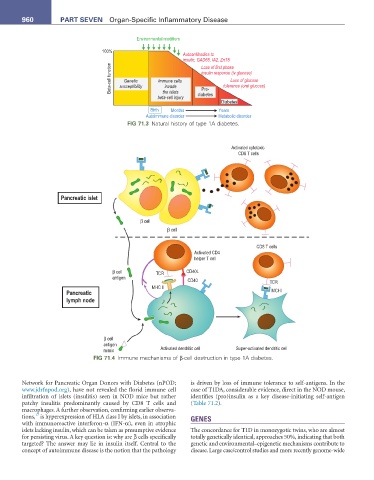
                                           FIG 71.3  Natural history of type 1A diabetes.


                                                                             Activated cytotoxic
                                                                               CD8 T cells


                     Pancreatic islet


                                               β cell
                                                        β cell


                                                                                     CD8 T cells
                                                                 Activated CD4
                                                                 helper T cell

                                      β cell        TCR       CD40L
                                      antigen
                                                              CD40                       TCR
                                                   MHC II
                       Pancreatic                                                         MCHI
                       lymph node


                                   β cell
                                   antigen
                                   mimic              Activated dendritic cell  Super-activated dendritic cell
                                FIG 71.4  Immune mechanisms of β-cell destruction in type 1A diabetes.


        Network for Pancreatic Organ Donors with Diabetes (nPOD;   is driven by loss of immune tolerance to self-antigens. In the
        www.jdrfnpod.org), have not revealed the florid immune cell   case of T1DA, considerable evidence, direct in the NOD mouse,
        infiltration of islets (insulitis) seen in NOD mice but rather   identifies (pro)insulin as a key disease-initiating self-antigen
        patchy insulitis predominantly caused by CD8 T cells and   (Table 71.2).
        macrophages. A further observation, confirming earlier observa-
             17
        tions,  is hyperexpression of HLA class I by islets, in association   GENES
        with immunoreactive interferon-α (IFN-α), even in atrophic
        islets lacking insulin, which can be taken as presumptive evidence   The concordance for T1D in monozygotic twins, who are almost
        for persisting virus. A key question is: why are β cells specifically   totally genetically identical, approaches 50%, indicating that both
        targeted? The answer may lie in insulin itself. Central to the   genetic and environmental–epigenetic mechanisms contribute to
        concept of autoimmune disease is the notion that the pathology   disease. Large case/control studies and more recently genome-wide

