


Page 996 - Clinical Immunology_ Principles and Practice ( PDFDrive )
P. 996
CHaPter 71  Type 1 Diabetes             961


            TABLE 71.1  the nonobese Diabetic                     T1DA but denotes susceptibility for a subtype of multiple sclerosis
            (nOD) Mouse as a Model of Human type                  and for narcolepsy. The second most important contribution is
            1a Diabetes                                           from the insulin gene (INS) locus (IDDM2), which maps to a
                                                                  variable number of tandem repeats (VNTR) 5’ of the coding
            Feature               nOD Mouse   Human               sequence. Apart from the HLA locus, IDDM2 is still the only locus
            Preclinical stage     Yes         Yes                 for which genome-wide association is reflected by linkage, which
            Gender                F > M       M > F after puberty  might be explained by disease heterogeneity. Long (class III) and
            Genetic susceptibility                                short (class I) variable number tandem repeat (VNTR) alleles
              MHC class II fi57 non-Asp  Yes (I-Ag )  Yes (HLA-DQ8)  are associated, respectively, with higher and lower transcription
                                        7
              Polygenic non-MHC   Yes         Yes                 of proinsulin messenger RNA (mRNA) in medullary thymic
            Environmental influence on   Yes  Yes                 epithelial cells (mTECs) under the control of the autoimmune
             gene penetrance                                                       20                              21
            Disease transmission via   Yes    Yes                 regulator gene (AIRE)  and with lower and higher T1DA risk.
             bone marrow                                          This leads to the inference that IDDM2 controls the extent of
            Mononuclear cell infiltration   Marked  Moderate      deletion of proinsulin-specific T cells during their intrathymic
             of islets (insulitis)                                development and predicts that the long VNTR would be associated
            Other organs          Yes         Sometimes           with less proinsulin-specific T cells in the periphery; there is
            Impaired immune regulation  Yes   Yes                 evidence for and against this, perhaps because of the difficulty
            Autoantigens:                                         of measuring islet antigen-specific T cells in human blood. The
              (Pro)insulin        Yes         Yes
              Glutamic acid       Yes         Yes                 INS polymorphism is unique to humans. Mice, instead, have
               decarboxylase (GAD)                                two insulin genes; INSI is expressed in the β cell and INSII in
            Clinical response to   Yes        Not yet shown       the thymus, and expression of the latter is impaired in the NOD
             autoantigen-specific therapy                         mouse. In summary, IDDM2 provides a genetic mechanism for
                                                                  autoimmunity targeting proinsulin and the β cell.
                                                                    Many of the other candidate genes are involved in immune
                                                                  function and are associated with other autoimmune diseases.
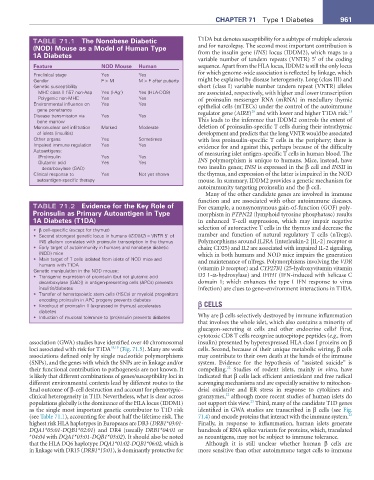
            TABLE 71.2  evidence for the Key role of              For example, a nonsynonymous gain-of-function (GOF) poly-
            Proinsulin as Primary autoantigen in type             morphism in PTPN22 (lymphoid tyrosine phosphatase) results
            1a Diabetes (t1Da)                                    in  enhanced  T-cell  suppression,  which  may  impair  negative
            •  β cell–specific (except for thymus)                selection of autoreactive T cells in the thymus and decrease the
            •  Second strongest genetic locus in humans (IDDM2) = VNTR 5’ of   number and function of natural regulatory T cells (nTregs).
              INS allelism correlates with proinsulin transcription in the thymus  Polymorphisms around IL2RA (interleukin-2 [IL-2] receptor α
            •  Early target of autoimmunity in humans and nonobese diabetic   chain; CD25) and IL2 are associated with impaired IL-2 signaling,
              (NOD) mice                                          which in both humans and NOD mice impairs the generation
            •  Main target of T cells isolated from islets of NOD mice and   and maintenance of nTregs. Polymorphisms involving the VDR
              humans with T1DA
            Genetic manipulation in the NOD mouse:                (vitamin D receptor) and CYP27B1 (25-hydroxyvitamin vitamin
            •  Transgenic expression of proinsulin (but not glutamic acid   D3 1-α-hydroxylase) and IFIH1 (IFN-induced with helicase C
              decarboxylase [GAD]) in antigen-presenting cells (APCs) prevents   domain  1;  which  enhances  the  type I  IFN  response  to  virus
              insulitis/diabetes                                  infection) are clues to gene–environment interactions in T1DA.
            •  Transfer of hematopoietic stem cells (HSCs) or myeloid progenitors
              encoding proinsulin in APC progeny prevents diabetes
            •  Knockout of proinsulin II (expressed in thymus) accelerates   β CELLS
              diabetes
            •  Induction of mucosal tolerance to (pro)insulin prevents diabetes  Why are β cells selectively destroyed by immune inflammation
                                                                  that involves the whole islet, which also contains a minority of
                                                                  glucagon-secreting  α cells and other endocrine cells? First,
                                                                  cytotoxic CD8 T cells recognize autoepitope peptides (e.g., from
           association (GWA) studies have identified over 40 chromosomal   insulin) presented by hyperexpressed HLA class I proteins on β
           loci associated with risk for T1DA 18,19  (Fig. 71.5). Many are weak   cells. Second, because of their unique metabolic wiring, β cells
           associations defined only by single nucleotide polymorphisms   may contribute to their own death at the hands of the immune
           (SNPs), and the genes with which the SNPs are in linkage and/or   system. Evidence for the hypothesis of  “assisted suicide” is
                                                                           22
           their functional contribution to pathogenesis are not known. It   compelling.  Studies of rodent islets, mainly  in vitro, have
           is likely that different combinations of genes/susceptibility loci in   indicated that β cells lack efficient antioxidant and free radical
           different environmental contexts lead by different routes to the   scavenging mechanisms and are especially sensitive to mitochon-
           final outcome of β-cell destruction and account for phenotypic–  drial oxidative and ER stress in response to cytokines and
                                                                           22
           clinical heterogeneity in T1D. Nevertheless, what is clear across   granzymes,  although more recent studies of human islets do
                                                                                   23
           populations globally is the dominance of the HLA locus (IDDM1)   not support this view.  Third, many of the candidate T1D genes
           as the single most important genetic contributor to T1D risk   identified in GWA studies are transcribed in β cells (see Fig.
                                                                                                                   23
           (see Table 71.1), accounting for about half the lifetime risk. The   71.4) and encode proteins that interact with the immune system.
           highest risk HLA haplotypes in Europeans are DR3 (DRB1*03:01-  Finally, in response to inflammation, human islets generate
           DQA1*05:01-DQB1*02:01) and DR4 (usually  DRB1*04:01 or   hundreds of RNA splice variants for proteins, which, translated
           *04:04 with DQA1*03:01-DQB1*03:02). It should also be noted   as neoantigens, may not be subject to immune tolerance.
           that the HLA DQ6 haplotype DQA1*01:02-DQB1*06:02, which is   Although it is still unclear whether human  β cells are
           in linkage with DR15 (DRB1*15:01), is dominantly protective for   more sensitive than other autoimmune target cells to immune

