


Page 1416 - Hall et al (2015) Principles of Critical Care-McGraw-Hill
P. 1416
CHAPTER 103: Thyroid Disease 989
with T as opposed to T was discussed earlier. In hypothyroid patients
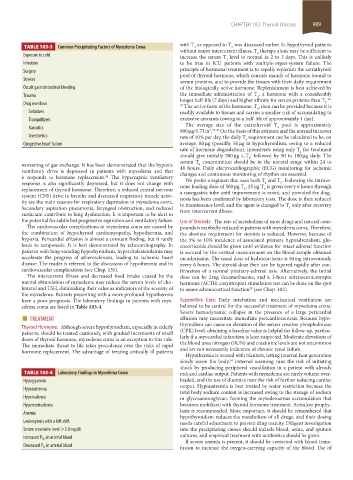
TABLE 103-3 Common Precipitating Factors of Myxedema Coma 3 4
without major intercurrent illness, T therapy alone may be sufficient to
4
Exposure to cold increase the serum T level to normal in 2 to 3 days. This is unlikely
3
Infection to be true in ICU patients with multiple-organ-system failure. The
Surgery principle of hormonal treatment is to rapidly replenish the extrathyroid
pool of thyroid hormone, which consists mainly of hormone bound to
Strokes serum proteins, and to provide the tissues with their daily requirement
Occult gastrointestinal bleeding of the biologically active hormone. Replenishment is best achieved by
Trauma the immediate administration of T , a hormone with a considerably
4
longer half-life (7 days) and higher affinity for serum proteins than T . 25-
Drug overdose 27 The active form of the hormone, T , then can be provided because it is
3
3
Sedatives readily available to tissues and carries a smaller risk of accumulating to
Tranquillizers excessive amounts (owing to a half-life of approximately 1 day).
The average size of the extrathyroid T pool is approximately
Narcotics 4
800 µg/1.73 m . On the basis of this estimate and the normal turnover
2 27-30
Anesthetics rate of 10% per day, the daily T requirement can be calculated to be, on
4
Congestive heart failure average, 80 µg (possibly 50 µg in hypothyroidism, owing to a reduced
rate of hormone degradation). Intensivists using only T for treatment
4
should give initially 500 µg l-T , followed by 50 to 100 µg daily. The
4
serum T concentration should be in the normal range within 24 to
worsening of gas exchange. It has been demonstrated that the hypoxic 48 hours. Daily electrocardiographic (ECG) monitoring for ischemic
4
ventilatory drive is depressed in patients with myxedema and that changes and continuous monitoring of rhythm are essential.
it responds to hormone replacement. The hypercapnic ventilatory We prefer a regimen that uses both T and T . Following the intrave-
26
response is also significantly depressed, but it does not change with nous loading dose of 500 µg T , 25 µg T is given every 6 hours through
4
3
replacement of thyroid hormone. Therefore, a reduced central nervous a nasogastric tube until improvement is noted, and provided the diag-
3
4
system (CNS) drive to breathe and decreased respiratory muscle activ- nosis has been confirmed by laboratory tests. The dose is then reduced
ity are the main reasons for respiratory depression in myxedema coma. to maintenance level, and the agent is changed to T only after recovery
Secondary aspiration pneumonia, laryngeal obstruction, and reduced from intercurrent illness. 4
surfactant contribute to lung dysfunction. It is important to be alert to
the potential for subtle but progressive aspiration and ventilatory failure. Use of Steroids: The rate of metabolism of most drugs and natural com-
The cardiovascular complications in myxedema coma are caused by pounds is markedly reduced in patients with myxedema coma. Therefore,
the combination of hypothyroid cardiomyopathy, hypothermia, and the absolute requirement for steroids is reduced. However, because of
hypoxia. Pericardial effusion is almost a constant finding, but it rarely the 5% to 10% incidence of associated primary hypoadrenalism, glu-
leads to tamponade. It is best demonstrated by echocardiography. In cocorticoids should be given until evidence for intact adrenal function
patients with long-standing hypothyroidism, hypercholesterolemia may is secured by the cortisol measurement on the blood sample obtained
accelerate the progress of atherosclerosis, leading to ischemic heart on admission. The usual dose of hydrocortisone is 50 mg intravenously
disease. The reader is referred to the discussion of hypothermia and its every 6 hours. The steroid dose then can be tapered rapidly after con-
cardiovascular complications (see Chap. 131). firmation of a normal pituitary-adrenal axis. Alternatively, the initial
The intercurrent illness and decreased food intake caused by the dose can be 2 mg dexamethasone, and a 1-hour adrenocorticotropin
mental obtundation of myxedema may reduce the serum levels of cho- hormone (ACTH, cosyntropin) stimulation test can be done on the spot
lesterol and TSH, diminishing their value as indicators of the severity of to assess adrenocortical function (see Chap. 102).
29
the myxedema. Patients presenting with a more profound hypothermia
have a poor prognosis. The laboratory findings in patients with myx- Supportive Care: Early intubation and mechanical ventilation are
edema coma are listed in Table 103-4. believed to be central for the successful treatment of myxedema coma.
■ TREATMENT Severe hemodynamic collapse in the presence of a large pericardial
effusion may necessitate immediate pericardiocentesis. Because hypo-
Thyroid Hormone: Although severe hypothyroidism, especially in elderly thyroidism can cause an elevation of the serum creatine phosphokinase
patients, should be treated cautiously, with gradual increments of small (CPK) level, obtaining a baseline value is helpful for follow-up, particu-
doses of thyroid hormone, myxedema coma is an exception to this rule. larly if a myocardial infarction is later suspected. Moderate elevations of
The immediate threat to life takes precedence over the risks of rapid the blood urea nitrogen (BUN) and creatinine levels are not uncommon
hormone replacement. The advantage of treating critically ill patients and are not necessarily indicative of chronic renal failure.
Hypothermia is treated with blankets, letting internal heat generation
slowly warm the body. External warming runs the risk of initiating
24
shock by producing peripheral vasodilation in a patient with already
TABLE 103-4 Laboratory Findings in Myxedema Coma reduced cardiac output. Patients with myxedema are rarely volume over-
Hypoglycemia loaded, and the use of diuretics runs the risk of further reducing cardiac
output. Hyponatremia is best treated by water restriction because the
Hyponatremia
total body sodium content is increased owing to the storage of sodium
Hyperkalemia in glycosaminoglycan, forming the myxedematous accumulation that
Hypercortisolemia becomes mobilized with thyroid hormone treatment. Antiulcer prophy-
laxis is recommended. More important, it should be remembered that
Anemia
hypothyroidism reduces the metabolism of all drugs, and their dosing
Leukocytosis with a left shift needs careful adjustment to prevent drug toxicity. Diligent investigation
Serum creatinine level >2.0 mg/dL into the precipitating causes should include blood, urine, and sputum
in arterial blood cultures, and empirical treatment with antibiotics should be given.
If severe anemia is present, it should be corrected with blood trans-
Increased P CO 2
in arterial blood
fusion to increase the oxygen-carrying capacity of the blood. Use of
Decreased P O 2
section08.indd 989 1/14/2015 8:28:36 AM

