


Page 1494 - Hall et al (2015) Principles of Critical Care-McGraw-Hill
P. 1494
CHAPTER 108: Acute Pancreatitis  1033


                                                                           The clinical course after an episode of acute pancreatitis is quite vari-
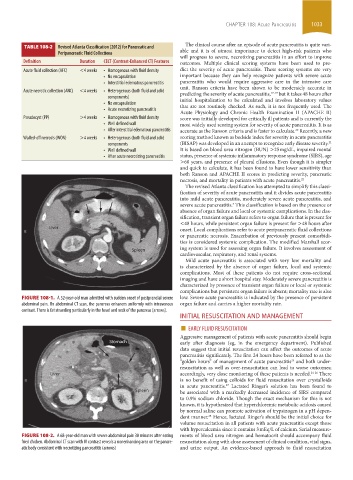
                      TABLE 108-2     Revised Atlanta Classification (2012) for Pancreatic and
                                Peripancreatic Fluid Collections          able and it is of utmost importance to detect high-risk patients who
                                                                          will progress to severe, necrotizing pancreatitis in an effort to improve
                    Definition         Duration  CECT (Contrast-Enhanced CT) Features  outcomes. Multiple clinical scoring systems have been used to pre-
                    Acute fluid collection (AFC)  <4 weeks  •  Homogenous with fluid density  dict the severity of acute pancreatitis. These scoring systems are very
                                                •  No encapsulation       important because they can help recognize patients with severe acute
                                                •  Interstitial edematous pancreatitis  pancreatitis who would require aggressive care in the intensive care
                                                                          unit. Ranson criteria have been shown to be moderately accurate in
                    Acute necrotic collection (ANC)  <4 weeks  •  Heterogenous (both fluid and solid   predicting the severity of acute pancreatitis, 17-19  but it takes 48 hours after
                                                 components)              initial hospitalization to be calculated and involves laboratory values
                                                •  No encapsulation       that are not routinely checked. As such, it is not frequently used. The
                                                •  Acute necrotizing pancreatitis
                                                                          Acute Physiology and Chronic Health Examination II (APACHE II)
                    Pseudocyst (PP)    >4 weeks  •  Homogenous with fluid density  score was initially developed for critically ill patients and is currently the
                                                •  Well defined wall      most widely used scoring system for severity of acute pancreatitis. It is as
                                                •  After interstitial edematous pancreatitis  accurate as the Ranson criteria and is faster to calculate.  Recently, a new
                                                                                                                 20
                    Walled-off necrosis (WON)  >4 weeks  •  Heterogenous (both fluid and solid   scoring method known as bedside index for severity in acute pancreatitis
                                                                                                                            21
                                                 components               (BISAP) was developed in an attempt to recognize early disease severity.
                                                •  Well defined wall      It is based on blood urea nitrogen (BUN) >25 mg/dL, impaired mental
                                                •  After acute necrotizing pancreatitis  status, presence of systemic inflammatory response syndrome (SIRS), age
                                                                          >60 years, and presence of pleural effusions. Even though it is simpler
                                                                          and quick to calculate, it has been found to have lower sensitivity than
                                                                          both Ranson and APACHE II scores in predicting severity, pancreatic
                                                                          necrosis, and mortality in patients with acute pancreatitis. 22
                                                                           The revised Atlanta classification has attempted to simplify this classi-
                                                                          fication of severity of acute pancreatitis and it divides acute pancreatitis
                                                                          into mild acute pancreatitis, moderately severe acute pancreatitis, and
                                                                          severe acute pancreatitis.  This classification is based on the presence or
                                                                                           4
                                                                          absence of organ failure and local or systemic complications. In the clas-
                                                                          sification, transient organ failure refers to organ failure that is present for
                                                                          <48 hours, while persistent organ failure is present for >48 hours after
                             Liver                                        onset. Local complications refer to acute peripancreatic fluid collections
                                                                          or pancreatic necrosis. Exacerbation of previously present comorbidi-
                                                                          ties is considered systemic complication. The modified Marshall scor-
                                                         Spleen           ing system is used for assessing organ failure. It involves assessment of
                                                                          cardiovascular, respiratory, and renal systems.
                                                                           Mild acute pancreatitis is associated with very low mortality and
                                                                          is characterized by the absence of organ failure, local and systemic
                                                                          complications. Most of these patients do not require cross-sectional
                                                                          imaging and have a short hospital stay. Moderately severe pancreatitis is
                                                                          characterized by presence of transient organ failure or local or systemic
                                                                          complications but persistent organ failure is absent; mortality rate is also
                    FIGURE 108-1.  A 52-year-old man admitted with sudden onset of postprandial severe   low. Severe acute pancreatitis is indicated by the presence of persistent
                    abdominal pain. On abdominal CT scan, the pancreas enhances uniformly with intravenous   organ failure and carries a higher mortality rate.
                    contrast. There is fat stranding particularly in the head and neck of the pancreas (arrows).
                                                                          INITIAL RESUSCITATION AND MANAGEMENT
                                                                              ■  EARLY FLUID RESUSCITATION


                                                                          Aggressive management of patients with acute pancreatitis should begin
                                                  Stomach                 early after diagnosis (eg, in the emergency department). Published
                                                                          data suggest that initial resuscitation can affect the outcomes of acute
                                                                          pancreatitis significantly. The first 24 hours have been referred to as the
                                                                          “golden hours” of management of acute pancreatitis  and both under-
                                                                                                               23
                                                                          resuscitation as well as over-resuscitation can lead to worse outcomes;
                             Liver                                        accordingly, very close monitoring of these patients is needed. 24-26  There
                                                                          is no benefit of using colloids for fluid resuscitation over crystalloids
                                                                          in acute pancreatitis.  Lactated Ringer’s solution has been found to
                                                                                         27
                                                          Spleen          be associated with a markedly decreased incidence of SIRS compared
                                                                          to 0.9% sodium chloride. Though the exact mechanism for this is not
                                                                          known, it is hypothesized that hyperchloremic metabolic acidosis caused
                                                                          by normal saline can promote activation of trypsinogen in a pH depen-
                                                                          dent manner.  Hence, lactated Ringer’s should be the initial choice for
                                                                                   28
                                                                          volume resuscitation in all patients with acute pancreatitis except those
                                                                          with hypercalcemia since it contains 3 mEq/L of calcium. Serial measure-
                    FIGURE 108-2.  A 68-year-old man with severe abdominal pain 30 minutes after eating   ments of blood urea nitrogen and hematocrit should accompany fluid
                    fried chicken. Abdominal CT scan with IV contrast reveals a nonenhancing area on the pancre-  resuscitation along with close assessment of clinical condition, vital signs,
                    atic body consistent with necrotizing pancreatitis (arrows)  and  urine  output.  An  evidence-based  approach  to  fluid   resuscitation


            section09.indd   1033                                                                                      1/14/2015   9:27:21 AM

