


Page 1498 - Hall et al (2015) Principles of Critical Care-McGraw-Hill
P. 1498
CHAPTER 109: Mesenteric Ischemia  1037


                      TABLE 109-1    Potential Causes of Acute Mesenteric Ischemia
                    Occlusive Disease
                      Embolism       Cardiac diseases (atrial fibrillation, post-MI, valvular disease,
                                     SBE, dilated left ventricle, myxoma)
                                     Extracardiac arterial diseases                                               Celiac branches
                      Arterial thrombosis  Acute on chronic atherosclerosis
                                     Low cardiac output states
                      Intrinsic arterial dis-  Occlusive atherosclerosis                                             Arch of riolan
                    eases            Aortic dissection (type A or B)
                                     Atherosclerotic aneurysm
                                     Arteritis and autoimmune diseases
                                     Fibromuscular dysplasia
                      Venous thrombosis  Thrombophilia
                                     Extrinsic compression
                      Iatrogenic     After aortoiliac surgery
                                     Catheter related (dissection, embolism)
                                     Irradiation arteritis
                                     Vasoconstrictive agents (epinephrine, norepinephrine,
                                     dopamine)
                                                                                                 Distal SMA branches
                      Trauma         Penetrating
                                     Blunt (including deceleration injuries)
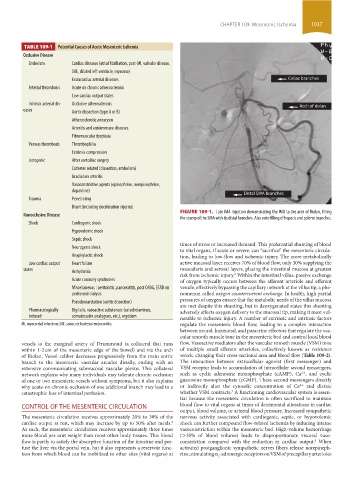
                                                                          FIGURE 109-1.  Late IMA injection demonstrating the IMA to the arch of Riolan, filling
                    Nonocclusive Disease
                                                                          the stump of the SMA with its distal branches. Also note filling of hepatic and splenic branches.
                      Shock          Cardiogenic shock
                                     Hypovolemic shock
                                     Septic shock
                                                                          times of stress or increased demand. This preferential shunting of blood
                                     Neurogenic shock
                                                                          to vital organs, if acute or severe, can “sacrifice” the mesenteric circula-
                                     Anaphylactic shock                   tion, leading to low-flow and ischemic injury. The more metabolically
                      Low cardiac output   Heart failure                  active mucosal layer receives 70% of blood flow, only 30% supplying the
                    states           Arrhythmia                           muscularis and serosal layers, placing the intestinal mucosa at greatest
                                                                          risk from ischemic injury.  Within the intestinal villus, passive exchange
                                                                                            6
                                     Acute coronary syndromes             of oxygen typically occurs between the afferent arteriole and efferent
                                     Miscellaneous : peritonitis ,pancreatitis, post CABG, ESRD on   venule, effectively bypassing the capillary network at the villus tip, a phe-
                                     peritoneal dialysis                  nomenon called oxygen countercurrent exchange. In health, high partial
                                     Pseudocoarctation (aortic dissection)  pressures of oxygen ensure that the metabolic needs of the villus mucosa
                                                                          are met despite this shunting, but in deoxygenated states this shunting
                       Pharmacologically   Digitalis, vasoactive substances (catecholamines,   adversely affects oxygen delivery to the mucosal tip, making it most vul-
                      induced          somatostatin analogues, etc.), ergotism  nerable to ischemic injury. A number of extrinsic and intrinsic factors
                    MI, myocardial infarction; SBE, subacute bacterial endocarditis.  regulate the mesenteric blood flow, leading to a complex interaction
                                                                          between neural, hormonal, and paracrine effectors that regulate the vas-
                                                                          cular smooth muscle tone in the mesenteric bed and control local blood
                    vessels to the marginal artery of Drummond (a collateral that runs   flow. Vasoactive mediators alter the vascular smooth muscle (VSM) tone
                    within 1-2 cm of the mesenteric edge of the bowel) and via the arch   of  multiple  small  afferent  arterioles,  collectively  known  as  resistance
                    of Riolan. Vessel caliber decreases progressively from the main aortic   vessels, changing their cross-sectional area and blood flow (Table 109-2).
                    branch to the mesenteric vascular arcades distally, ending with an   The interaction between extracellular agonist (first messenger) and
                    extensive communicating submucosal vascular plexus. This collateral   VSM receptor leads to accumulation of intracellular second messengers,
                    network explains why many individuals may tolerate chronic occlusion   such as cyclic adenosine monophosphate (cAMP), Ca , and cyclic
                                                                                                                   2+
                    of one or two mesenteric vessels without symptoms, but it also explains   guanosine monophosphate (cGMP). These second messengers directly
                                                                                                                  2+
                    why acute-on-chronic occlusion of one additional branch may lead to a   or indirectly alter the cytosolic concentration of Ca  and dictate
                                                                                           7
                    catastrophic loss of intestinal perfusion.            whether VSM contracts.  A functioning cardiovascular system is essen-
                                                                          tial because the mesenteric circulation is often sacrificed to maintain
                    CONTROL OF THE MESENTERIC CIRCULATION                 blood flow to vital organs at times of detrimental alterations in cardiac
                                                                          output, blood volume, or arterial blood pressure. Increased sympathetic
                    The mesenteric circulation receives approximately 20% to 30% of the   nervous  activity  associated  with  cardiogenic,  septic,  or  hypovolemic
                                                                       6
                    cardiac output at rest, which may increase by up to 50% after meals.    shock can further compound flow-related ischemia by inducing intense
                    As such, the mesenteric circulation receives approximately three times   vasoconstriction within the mesenteric bed. High-volume hemorrhage
                    more blood per unit weight than most other body tissues. This blood   (>35% of blood volume) leads to disproportionate visceral vaso-
                    flow is partly to satisfy the absorptive function of the intestine and per-  constriction compared with the reduction in cardiac output.  When
                                                                                                                       8
                    fuse the liver via the portal vein, but it also represents a reservoir func-  activated postganglionic sympathetic nerves fibers release norepineph-
                    tion from which blood can be mobilized to other sites (vital organs) at   rine, stimulating α -adrenergic receptors on VSM of precapillary  arterioles
                                                                                       2


            section09.indd   1037                                                                                      1/14/2015   9:27:26 AM

