


Page 1556 - Hall et al (2015) Principles of Critical Care-McGraw-Hill
P. 1556
CHAPTER 112: Principles of Postoperative Critical Care  1075


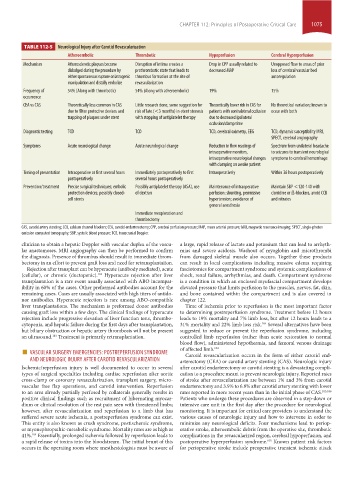
                      TABLE 112-5    Neurological injury after Carotid Revascularization
                                   Atheroembolic          Thrombotic                Hypoperfusion        Cerebral Hyperperfusion
                    Mechanism      Atherosclerotic plaques become    Disruption of intima creates a    Drop in CPP usually related to   Unopposed flow to areas of prior
                                   dislodged during the procedure by   prothrombotic state that leads to    decreased MAP  loss of cerebral vascular bed
                                   either spontaneous rupture or iatrogenic  thrombus formation at the site of    autoregulation
                                   manipulation and distally embolize  revascularization
                    Frequency of    54% (Along with thrombotic)  54% (Along with atheroembolic)  19%     15%
                    occurrence
                    CEA vs CAS     Theoretically less common in CAS    Little research done, some suggestion for   Theoretically lower risk in CAS for   No theoretical variation; known to
                                   due to filter protective devices and   risk of late (<3 months) in-stent stenosis   patients with contralateral occlusion   occur with both
                                   trapping of plaques under stent  with stopping of antiplatelet therapy  due to decreased ipsilateral
                                                                                    occlusion/clamp time
                    Diagnostic testing  TCD               TCD                       TCD, cerebral oximetry, EEG  TCD, dynamic susceptibility MRI,
                                                                                                         SPECT, cerebral angiography
                    Symptoms       Acute neurological change  Acute neurological change  Reduction in flow readings of    Spectrum from unilateral headache
                                                                                    intraoperative monitors,    to seizures to transient neurological
                                                                                    intraoperative neurological changes  symptoms to cerebral hemorrhage
                                                                                    with clamping on awake patient
                    Timing of presentation  Intraoperative or first several hours    Immediately postoperatively to first    Intraoperatively  Within 36 hours postoperatively
                                   postoperatively        several hours postoperatively
                    Prevention/treatment  Precise surgical techniques; embolic    Possibly antiplatelet therapy (ASA), use   Maintenance of intraoperative    Maintain SBP <120-140 with
                                   protection devices; possibly closed-  of dextran  perfusion: shunting, permissive   clonidine or ß-blockers, avoid CCB
                                   cell stents                                      hypertension; avoidance of    and nitrates
                                                                                    general anesthesia
                                                          Immediate reexploration and
                                                            thrombectomy
                    CAS, carotid artery stenting; CCB, calcium channel blockers; CEA, carotid endarterectomy; CPP, cerebral perfusion pressure; MAP, mean arterial pressure; MRI, magnetic resonance imaging; SPECT, single-photon
                    emission computed tomography; SBP, systolic blood pressure; TCD, transcranial Doppler.
                    clinician to obtain a hepatic Doppler with vascular duplex of the vascu-  a large, rapid release of lactate and potassium that can lead to arrhyth-
                    lar anastomoses. MRI angiography can then be performed to confirm   mias and severe acidosis. Washout of myoglobin and microthrombi
                    the diagnosis. Presence of thrombus should result in immediate throm-  from damaged skeletal muscle also occurs. Together these products
                    bectomy in an effort to prevent graft loss and need for retransplantation.  can result in local complications including massive edema requiring
                     Rejection after transplant can be hyperacute (antibody mediated), acute   fasciotomies for compartment syndrome and systemic complications of
                    (cellular), or chronic (ductopenic).  Hyperacute rejection after liver   shock, renal failure, arrhythmias, and death. Compartment syndrome
                                              103
                    transplantation is a rare event usually associated with ABO incompat-  is a condition in which an enclosed myofascial compartment develops
                    ibility in 60% of the cases. Other preformed antibodies account for the   elevated pressure that limits perfusion to the muscles, nerves, fat, skin,
                    remaining cases. Cases are usually associated with high titers of antido-  and  bone  contained  within  the  compartment  and  is  also  covered  in
                    nor antibodies. Hyperacute rejection is rare among ABO-compatible   chapter 122.
                    liver transplantations. The mechanism is preformed donor antibodies   Time of ischemia prior to reperfusion is the most important factor
                    causing graft loss within a few days. The clinical findings of hyperacute   to determining postreperfusion syndrome. Treatment before 12 hours
                    rejection include progressive elevation of liver function tests, thrombo-  leads to 19% mortality and 7% limb loss, but after 12 hours leads to a
                    cytopenia, and hepatic failure during the first days after transplantation,   31% mortality and 22% limb loss risk.  Several alternatives have been
                                                                                                     104
                    but biliary obstruction or hepatic artery thrombosis will not be present   suggested to reduce or prevent the reperfusion syndrome, including
                    an ultrasound.  Treatment is primarily retransplantation.  controlled limb reperfusion (rather than acute restoration to normal
                              103
                                                                          blood flow), administered hypothermia, and femoral venous drainage
                        ■  VASCULAR SURGERY EMERGENCIES: POSTREPERFUSION SYNDROME   of affected limb. 104
                                                                           Carotid revascularization occurs in the form of either carotid end-
                      AND NEUROLOGIC INJURY AFTER CAROTID REVASCULARIZATION  arterectomy (CEA) or carotid artery stenting (CAS). Neurologic injury
                    Ischemic/reperfusion injury is well documented to occur in several   after carotid endarterectomy or carotid stenting is a devastating compli-
                    types of surgical specialties including cardiac reperfusion after aortic   cation to a procedure meant to prevent neurologic injury. Reported rates
                    cross-clamp or coronary revascularization, transplant surgery, micro-  of stroke after revascularization are between 1% and 3% from carotid
                    vascular  free  flap  operations,  and  carotid  intervention.  Reperfusion   endarterectomy and 3.9% to 6.8% after carotid artery stenting with lower
                    to an area already partially perfused by collaterals generally results in   rates reported in more recent years than in the initial phase of CAS. 105,106
                    positive clinical findings such as recruitment of hibernating myocar-  Patients who undergo these procedures are observed in a step-down or
                    dium or clinical resolution of the rest pain seen with threatened limbs;   intensive care unit in the first day after the procedure for neurological
                    however, after revascularization  and  reperfusion  to a  limb  that  has   monitoring. It is important for critical care providers to understand the
                    suffered severe acute ischemia, a postreperfusion syndrome can exist.   various causes of neurologic injury and how to intervene in order to
                    This entity is also known as crush syndrome, postischemic syndrome,   minimize any neurological deficits. Four mechanisms lead to periop-
                    or myonephropathic-metabolic syndrome. Mortality rates are as high as   erative stroke, atheroembolic debris from the operative site, thrombotic
                    41%.  Essentially, prolonged ischemia followed by reperfusion leads to   complications in the revascularized region, cerebral hypoperfusion, and
                       104
                    a rapid release of toxins into the bloodstream. The initial brunt of this   postoperative hyperperfusion syndrome.  Known patient risk factors
                                                                                                       105
                    occurs in the operating room where anesthesiologists must be aware of   for perioperative stroke include preoperative transient ischemic attack


            section10.indd   1075                                                                                      1/20/2015   9:19:46 AM

