


Page 1794 - Hall et al (2015) Principles of Critical Care-McGraw-Hill
P. 1794
CHAPTER 127: Critical Illness in Pregnancy  1263


                                                                           Magnesium sulfate has been shown in numerous well-conducted
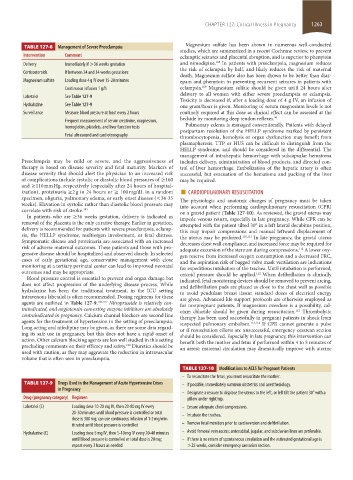
                      TABLE 127-8    Management of Severe Preeclampsia
                                                                          studies, which are summarized in a recent Cochrane review, to prevent
                    Intervention  Comment                                 eclamptic seizures and placental abruption, and is superior to phenytoin
                                                                                      108
                    Delivery      Immediately if >36 weeks gestation      and nimodipine.  In patients with preeclampsia, magnesium reduces
                                                                          the risk of eclampsia by half, and likely reduces the risk of maternal
                    Corticosteroids  If between 24 and 34 weeks gestations
                                                                          death. Magnesium sulfate also has been shown to be better than diaz-
                    Magnesium sulfate  Loading dose 4 g IV over 15-20 minutes  epam and phenytoin in preventing recurrent seizures in patients with
                                                                                 109
                                  Continuous infusion 1 g/h               eclampsia.  Magnesium sulfate should be given until 24 hours after
                    Labetalol     See Table 127-9                         delivery to all women with either severe preeclampsia or eclampsia.
                                                                          Toxicity is decreased if, after a loading dose of 4 g IV, an infusion of
                    Hydralazine   See Table 127-9                         one gram/hour is given. Monitoring of serum magnesium levels is not
                    Surveillance  Measure blood pressure at least every 2 hours  routinely required at this dose as clinical effect can be assessed at the
                                                                          bedside by monitoring deep tendon reflexes. 90
                                  Frequent measurement of serum creatinine, magnesium,
                                    hemoglobin, platelets, and liver function tests  Pulmonary edema is managed conventionally. Patients with delayed
                                                                          postpartum resolution of the HELLP syndrome marked by persistent
                                  Fetal ultrasound and cardiotocography   thrombocytopenia, hemolysis or organ dysfunction may benefit from
                                                                          plasmapheresis. TTP or HUS can be difficult to distinguish from the
                                                                          HELLP syndrome, and should be considered in the differential. The
                                                                          management of intrahepatic hemorrhage with subcapsular hematoma
                    Preeclampsia may be mild or severe, and the aggressiveness of   includes delivery, administration of blood products, and directed con-
                    therapy is based on disease severity and fetal maturity. Markers of   trol of liver hemorrhage. Embolization of the hepatic artery is often
                    disease severity that should alert the physician to an increased risk   successful, but evacuation of the hematoma and packing of the liver
                    of complications include systolic or diastolic blood pressures of ≥160   may be required.
                    and ≥110 mm Hg, respectively (especially after 24 hours of hospital-
                    ization), proteinuria ≥2 g in 24 hours or ≥ 100 mg/dL in a random     ■  CARDIOPULMONARY RESUSCITATION
                    specimen, oliguria, pulmonary edema, or early onset disease (<34-35   The physiologic and anatomic changes of pregnancy must be taken
                    weeks). Elevation in systolic rather than diastolic blood pressure may   into account when performing cardiopulmonary resuscitation (CPR)
                    correlate with risk of stroke. 105                    on a gravid patient (Table 127-10). As reviewed, the gravid uterus may
                     In patients who are  ≥36 weeks gestation, delivery is indicated as   impede venous return, especially in late pregnancy. While CPR can be
                    removal of the placenta is the only curative therapy. Earlier in gestation,   attempted with the patient tilted 30° in a left lateral decubitus position,
                    delivery is recommended for patients with severe preeclampsia, eclamp-  this may impair compressions and manual leftward displacement of
                    sia, the HELLP syndrome, multiorgan involvement, or fetal distress.   the uterus may be preferred. 110,111  In late pregnancy, the gravid uterus
                    Symptomatic disease and proteinuria are associated with an increased   decreases chest wall compliance, and increased force may be required for
                    risk of adverse maternal outcomes. These patients and those with pro-  adequate excursion of the sternum during compressions.  A lower oxy-
                                                                                                                  112
                    gressive disease should be hospitalized and observed closely. In selected   gen reserve from increased oxygen consumption and a decreased FRC,
                    cases of early gestational age, conservative management with close   and the aspiration risk of bagged valve mask ventilation are indications
                    monitoring at a tertiary perinatal center can lead to improved neonatal   for expeditious intubation of the trachea. Until intubation is performed,
                    outcomes and may be appropriate.                      cricoid pressure should be applied.  When defibrillation is clinically
                                                                                                    112
                     Blood pressure control is essential to prevent end organ damage but   indicated, fetal monitoring devices should be removed to prevent arcing,
                    does not affect progression of the underlying disease process. While   and defibrillation pads are placed as close to the chest wall as possible
                    hydralazine has been the traditional treatment, in the ICU setting   to avoid pendulant breast tissue; standard doses of electrical energy
                    intravenous labetalol is often recommended. Dosing regimens for these   are given. Advanced life support protocols are otherwise employed as
                    agents are outlined in Table 127-9. 106,107  Nitroprusside is relatively con-  for  nonpregnant  patients.  If  magnesium  overdose  is  a  possibility,  cal-
                    traindicated, and angiotensin-converting enzyme inhibitors are absolutely   cium chloride should be given during resuscitation.  Thrombolytic
                                                                                                                 112
                    contraindicated in pregnancy. Calcium channel blockers are second line   therapy has been used successfully in pregnant patients in shock from
                    agents for the treatment of hypertension in the setting of preeclampsia.   suspected pulmonary embolism. 113,114  If CPR cannot generate a pulse
                    Long acting oral nifedipine may be given, as there are some data regard-  or if resuscitation efforts are unsuccessful, emergency cesarean section
                    ing its safe use in pregnancy, but this does not have a rapid onset of   should be considered. Especially in late pregnancy, this intervention can
                    action. Other calcium blocking agents are less well studied in this setting   benefit both the mother and fetus if performed within 4 to 5 minutes of
                    precluding comments on their efficacy and safety.  Diuretics should be   an arrest: maternal circulation may dramatically improve with uterine
                                                       106
                    used with caution, as they may aggravate the reduction in intravascular
                    volume that is often seen in preeclampsia.
                                                                            TABLE 127-10    Modifications to ACLS for Pregnant Patients
                                                                          –  To resuscitate the fetus, you must resuscitate the mother.
                      TABLE 127-9     Drugs Used in the Management of Acute Hypertensive Crises    –  If possible, immediately summon obstetrics and anesthesiology.
                                in Pregnancy
                                                                          –  Designate a rescuer to displace the uterus to the left, or left tilt the patient 30° with a
                    Drug (pregnancy category) Regimen                       pillow under right hip.
                    Labetalol (C)    Loading dose 10-20 mg IV, then 20-80 mg IV every   –  Ensure adequate chest compressions.
                                     20-30 minutes until blood pressure is controlled or total   –  Intubate the trachea.
                                     dose is 300 mg; can use continuous infusion of 1-2 mg/min
                                     titrated until blood pressure is controlled   –  Remove fetal monitors prior to cardioversion and defibrillation.
                    Hydralazine (C)  Loading dose 5 mg IV, then 5-10 mg IV every 20-40 minutes   –  Avoid femoral vein access; antecubital, jugular, and subclavian lines are preferable.
                                     until blood pressure is controlled or total dose is 20 mg;   –  If there is no return of spontaneous circulation and the estimated gestational age is
                                     repeat every 3 hours as needed         >25 weeks, consider emergency caesarian section.


            section11.indd   1263                                                                                      1/19/2015   10:52:22 AM

