


Page 124 - Review of Medical Microbiology and Immunology ( PDFDrive )
P. 124
mebooksfree.com
mebooksfree.com
mebooksfree.com
mebooksfree.com
mebooksfree.com
mebooksfree.com
mebooksfree.com
mebooksfree.com mebooksfree.com mebooksfree.com Staphylococcus aureus: Pyogenic Diseases 113 mebooksfree.com
mebooksfree.com
CHAPTER 15 Gram-Positive Cocci
P-V leukocidin is a pore-forming toxin that kills cells,
especially white blood cells, by damaging cell membranes.
(1) Skin and soft tissue infections are very common.
The two subunits of the toxin assemble in the cell mem-
These include abscess (see Figure 15–1), impetigo (see Fig-
brane to form a pore through which cell contents leak out.
ure 15–4), furuncles, carbuncles (Figure 15–7), paronychia,
The gene encoding P-V leukocidin is located on a lysogenic
cellulitis, folliculitis (see Figure 15–3), hidradenitis suppu-
phage. P-V leukocidin is an important virulence factor for
CA-MRSA and plays a role in the severe skin and soft tissue
hordeolum), and postpartum breast infections (mastitis).
infection caused by this organism. A severe necrotizing
Lymphangitis can occur, especially on the forearm associ-
pneumonia is also caused by strains of S. aureus that pro- rativa, conjunctivitis, eyelid infections (blepharitis and
ated with an infection on the hand.
duce P-V leukocidin. Approximately 2% of clinical isolates
mebooksfree.com
mebooksfree.com
mebooksfree.com mebooksfree.com mebooksfree.com than hospital-acquired. In the United States, community- mebooksfree.com
Severe necrotizing skin and soft tissue infections are
of S. aureus produce P-V leukocidin.
caused by MRSA strains that produce P-V leukocidin.
(5) The enzymes include coagulase, fibrinolysin, hyal-
These infections are typically community-acquired rather
uronidase, proteases, nucleases, and lipases. Coagulase, by
clotting plasma, serves to wall off the infected site, thereby
acquired MRSA (CA-MRSA) strains are the most common
retarding the migration of neutrophils into the site. Staph-
cause of skin and soft tissue infections. These CA-MRSA
ylokinase is a fibrinolysin that can lyse thrombi.
strains are an especially common cause of infection among
the homeless and intravenous drug users. Athletes who
Staphylococcus epidermidis & Staphylococcus
engage in close personal contact such as wrestlers and foot-
saprophyticus
Unlike S. aureus, these two coagulase-negative staphylo-
MRSA (HA-MRSA) causes approximately 50% of all noso-
cocci do not produce exotoxins. Thus, they do not cause
comial S. aureus infections. Molecular analysis reveals that
food poisoning or toxic shock syndrome. They do, how- ball players are also at risk. Note that hospital-acquired
the CA-MRSA strains are different from the HA-MRSA strains.
ever, cause pyogenic infections. For example, S. epidermi-
mebooksfree.com
(2) Septicemia (sepsis) can originate from any localized
mebooksfree.com mebooksfree.com mebooksfree.com tures similar to those of sepsis caused by certain gram-negative mebooksfree.com
mebooksfree.com
dis is a prominent cause of pyogenic infections on
lesion, especially wound infection, or as a result of intrave-
prosthetic implants such as heart valves and hip joints, and
nous drug abuse. Sepsis caused by S. aureus has clinical fea-
S. saprophyticus causes urinary tract infections, especially
cystitis.
bacteria, such as Neisseria meningitidis (see Chapter 16).
(3) Endocarditis may occur on normal or prosthetic
Clinical Findings
heart valves, especially right-sided endocarditis (tricuspid
valve) in intravenous drug users. (Prosthetic valve endocar-
The important clinical manifestations caused by S. aureus
ditis is often caused by S. epidermidis.)
can be divided into two groups: pyogenic (pus-producing)
(4) Osteomyelitis and septic arthritis may arise either by
and toxin-mediated (Table 15–2). Staphylococcus aureus is a
major cause of skin, soft tissue, bone, joint, lung, heart, and
introduced locally at a wound site. Staphylococcus aureus is
kidney infections. Pyogenic diseases are the first group
a very common cause of these diseases, especially in
described, and toxin-mediated diseases are the second hematogenous spread from a distant infected focus or be
children.
group.
mebooksfree.com
mebooksfree.com mebooksfree.com mebooksfree.com mebooksfree.com Mode of Prevention mebooksfree.com
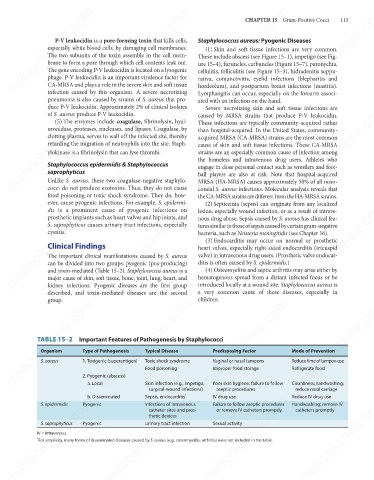
TABLE 15–2 Important Features of Pathogenesis by Staphylococci
Organism
Predisposing Factor
Type of Pathogenesis
Typical Disease
Vaginal or nasal tampons
1. Toxigenic (superantigen)
Toxic shock syndrome
S. aureus
Reduce time of tampon use
Food poisoning
2. Pyogenic (abscess)
a. Local
Poor skin hygiene; failure to follow
Skin infection (e.g., impetigo,
Cleanliness; handwashing;
surgical-wound infections) Improper food storage Refrigerate food
aseptic procedures
reduce nasal carriage
1
Sepsis, endocarditis
IV drug use
b. Disseminated
Reduce IV drug use
mebooksfree.com mebooksfree.com mebooksfree.com mebooksfree.com mebooksfree.com mebooksfree.com
Handwashing; remove IV
S. epidermidis
Infections of intravenous
Failure to follow aseptic procedures
Pyogenic
catheters promptly
or remove IV catheters promptly
catheter sites and pros-
thetic devices
Urinary tract infection
Pyogenic
Sexual activity
S. saprophyticus
IV = intravenous.
1
For simplicity, many forms of disseminated diseases caused by S. aureus (e.g., osteomyelitis, arthritis) were not included in the table.
mebooksfree.com mebooksfree.com mebooksfree.com mebooksfree.com mebooksfree.com mebooksfree.com

