


Page 373 - Review of Medical Microbiology and Immunology ( PDFDrive )
P. 373
mebooksfree.com
mebooksfree.com
mebooksfree.com
mebooksfree.com mebooksfree.com mebooksfree.com These new antigens can be either virus-encoded proteins, mebooksfree.com
mebooksfree.com
mebooksfree.com
mebooksfree.com
mebooksfree.com
mebooksfree.com
PART IV Clinical Virology
362
(3) Antigens different from those in normal cells appear.
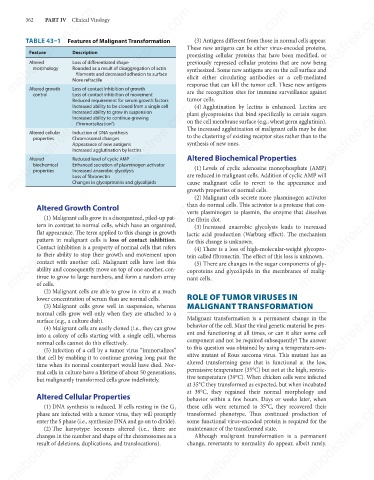
TABLE 43–1 Features of Malignant Transformation
Description
Feature
preexisting cellular proteins that have been modified, or
previously repressed cellular proteins that are now being
Altered
Loss of differentiated shape
morphology
Rounded as a result of disaggregation of actin
synthesized. Some new antigens are on the cell surface and
filaments and decreased adhesion to surface
More refractile
response that can kill the tumor cell. These new antigens
Loss of contact inhibition of growth
Altered growth
are the recognition sites for immune surveillance against
Loss of contact inhibition of movement
control
tumor cells.
Reduced requirement for serum growth factors elicit either circulating antibodies or a cell-mediated
mebooksfree.com
mebooksfree.com mebooksfree.com mebooksfree.com The increased agglutination of malignant cells may be due mebooksfree.com
mebooksfree.com
(4) Agglutination by lectins is enhanced. Lectins are
Increased ability to be cloned from a single cell
Increased ability to grow in suspension
plant glycoproteins that bind specifically to certain sugars
Increased ability to continue growing
on the cell membrane surface (e.g., wheat germ agglutinin).
(“immortalization”)
Induction of DNA synthesis
Altered cellular
to the clustering of existing receptor sites rather than to the
properties
Chromosomal changes
synthesis of new ones.
Appearance of new antigens
Increased agglutination by lectins
Altered Biochemical Properties
Reduced level of cyclic AMP
Altered
biochemical
Enhanced secretion of plasminogen activator
(1) Levels of cyclic adenosine monophosphate (AMP)
Increased anaerobic glycolysis
properties
are reduced in malignant cells. Addition of cyclic AMP will
Loss of fibronectin
cause malignant cells to revert to the appearance and
Changes in glycoproteins and glycolipids
growth properties of normal cells.
(2) Malignant cells secrete more plasminogen activator
mebooksfree.com
mebooksfree.com mebooksfree.com mebooksfree.com lactic acid production (Warburg effect). The mechanism mebooksfree.com
mebooksfree.com
than do normal cells. This activator is a protease that con-
Altered Growth Control
verts plasminogen to plasmin, the enzyme that dissolves
(1) Malignant cells grow in a disorganized, piled-up pat-
the fibrin clot.
tern in contrast to normal cells, which have an organized,
(3) Increased anaerobic glycolysis leads to increased
flat appearance. The term applied to this change in growth
pattern in malignant cells is loss of contact inhibition.
for this change is unknown.
Contact inhibition is a property of normal cells that refers
(4) There is a loss of high-molecular-weight glycopro-
to their ability to stop their growth and movement upon
tein called fibronectin. The effect of this loss is unknown.
contact with another cell. Malignant cells have lost this
(5) There are changes in the sugar components of gly-
ability and consequently move on top of one another, con-
tinue to grow to large numbers, and form a random array
nant cells.
of cells.
(2) Malignant cells are able to grow in vitro at a much coproteins and glycolipids in the membranes of malig-
ROLE OF TUMOR VIRUSES IN
lower concentration of serum than are normal cells.
mebooksfree.com
mebooksfree.com
mebooksfree.com mebooksfree.com mebooksfree.com Malignant transformation is a permanent change in the mebooksfree.com
MALIGNANT TRANSFORMATION
(3) Malignant cells grow well in suspension, whereas
normal cells grow well only when they are attached to a
surface (e.g., a culture dish).
behavior of the cell. Must the viral genetic material be pres-
(4) Malignant cells are easily cloned (i.e., they can grow
ent and functioning at all times, or can it alter some cell
into a colony of cells starting with a single cell), whereas
component and not be required subsequently? The answer
normal cells cannot do this effectively.
to this question was obtained by using a temperature-sen-
(5) Infection of a cell by a tumor virus “immortalizes”
sitive mutant of Rous sarcoma virus. This mutant has an
that cell by enabling it to continue growing long past the
altered transforming gene that is functional at the low,
time when its normal counterpart would have died. Nor-
permissive temperature (35°C) but not at the high, restric-
mal cells in culture have a lifetime of about 50 generations,
tive temperature (39°C). When chicken cells were infected
but malignantly transformed cells grow indefinitely.
at 35°C they transformed as expected, but when incubated
at 39°C, they regained their normal morphology and
Altered Cellular Properties
behavior within a few hours. Days or weeks later, when
mebooksfree.com
mebooksfree.com mebooksfree.com mebooksfree.com some functional virus-encoded protein is required for the mebooksfree.com
mebooksfree.com
these cells were returned to 35°C, they recovered their
(1) DNA synthesis is induced. If cells resting in the G
1
transformed phenotype. Thus continued production of
phase are infected with a tumor virus, they will promptly
enter the S phase (i.e., synthesize DNA and go on to divide).
maintenance of the transformed state.
(2) The karyotype becomes altered (i.e., there are
Although malignant transformation is a permanent
changes in the number and shape of the chromosomes as a
change, revertants to normality do appear, albeit rarely.
result of deletions, duplications, and translocations).
mebooksfree.com mebooksfree.com mebooksfree.com mebooksfree.com mebooksfree.com mebooksfree.com

